When most people picture Emirates Stadium, they imagine the roar before kick-off, the red shirts streaming down Holloway Road and 60,000 supporters living every pass. Yet away from Premier League weekends, the stadium plays a much quieter but equally important role.
Since opening in 2006, Emirates Stadium has become a major community asset for Islington and wider North London. Arsenal’s move from Highbury was never only about adding seats and corporate facilities. It also created new spaces for education, charity work, grassroots football and local engagement.
A football stadium spends far more days without a match than with one. The best modern grounds understand that those empty days are opportunities.
Arsenal in the Community
Arsenal’s community work actually predates Emirates Stadium by decades, with Arsenal in the Community established in 1985.
The programme was designed to strengthen the club’s relationship with local residents, particularly young people living near Highbury and later Emirates Stadium.
Its work focuses on areas including:
- Education and training
- Youth development
- Social inclusion
- Disability sport
- Mental health support
- Grassroots football
- Employment skills
The numbers are significant. Arsenal community programmes regularly reach thousands of local participants every year, making the club one of the more established community operators in English football.
For many people living around the stadium, their strongest connection with Arsenal is not necessarily a ticket on a Saturday afternoon. It might be a coaching session, a workshop, a school visit or a local project.
The Arsenal Hub: The Heart of Local Activity
A major part of the club’s community presence is The Arsenal Hub, located close to Emirates Stadium.
The facility opened in 2015 and was created as a dedicated space for local projects. It includes:
- Indoor sports facilities
- Community rooms
- Learning spaces
- Areas for local groups and activities
The Hub helped solve a challenge that many large stadiums face. A venue can dominate an area physically, but the real question is whether local residents feel connected to it.
By creating a permanent community space, Arsenal gave the stadium district a purpose beyond matchday.
Grassroots Football and Coaching Programmes
Football remains central to Emirates Stadium’s community identity.
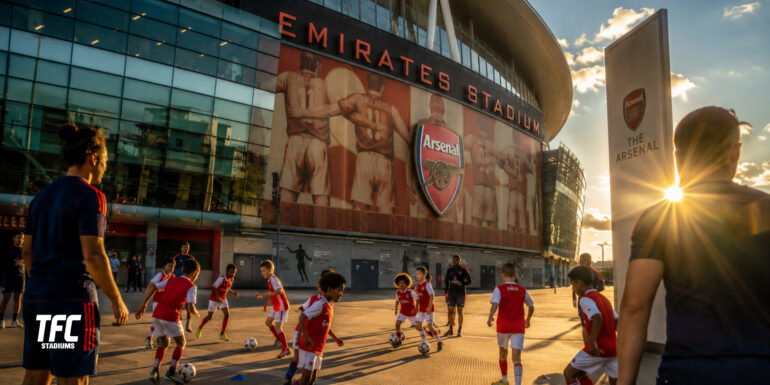
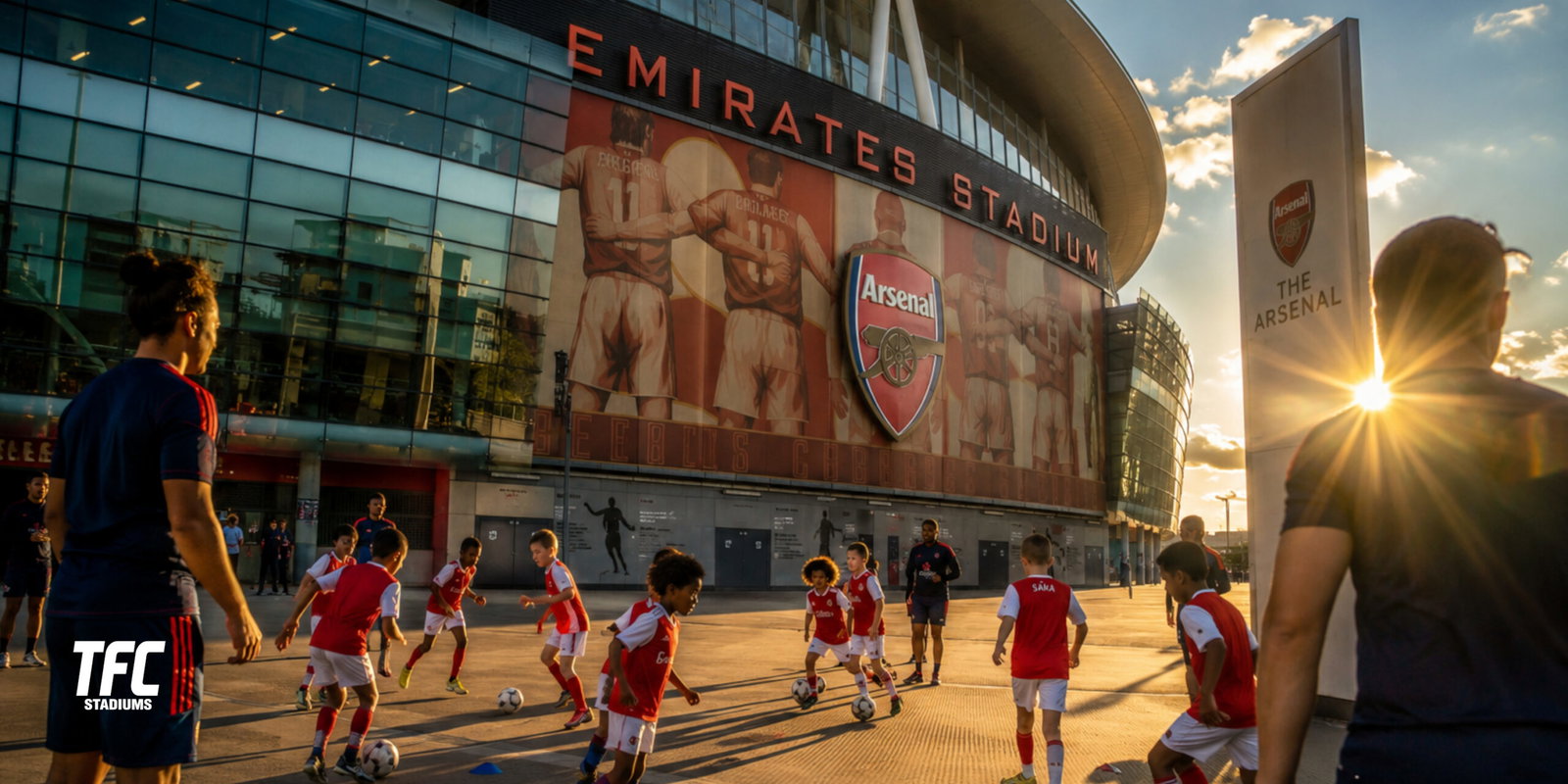
Arsenal delivers programmes designed to make the sport accessible for different ages, backgrounds and abilities.
Activities include:
- Youth football sessions
- Girls’ football development
- Holiday coaching camps
- Disability football opportunities
- School partnerships
The aim is not simply to find the next academy star. Most participants will never play professionally, and that is perfectly fine. Football’s biggest impact often happens away from the professional game.
A safe pitch, a regular session and good coaching can be far more valuable than a scout with a clipboard.
Education and Young People
One of the strongest parts of Arsenal’s community strategy has been education.
Through partnerships with local schools and organisations, Emirates Stadium and surrounding facilities support projects involving:
- Literacy
- Numeracy
- Career development
- Digital skills
- Leadership training
Football clubs have a unique advantage in this space. A teenager who may not be excited about a traditional classroom lesson might engage differently when the subject connects back to Arsenal.
Using football as the doorway into education has become one of the most effective models across modern sport.
Charity Events and Fundraising
Emirates Stadium also supports charity activity throughout the year.
The club’s charitable work includes:
- Fundraising campaigns
- Awareness events
- Community celebrations
- Support for vulnerable groups
- Partnerships with local organisations
The Arsenal Foundation has supported projects both locally and internationally, using the club’s global profile to raise money and attention.
The reach of a club like Arsenal is enormous. A campaign promoted through the stadium and fanbase can travel much further than a traditional local appeal.
Local Employment and Skills Programmes
A stadium the size of Emirates creates a significant local economy.
On matchdays, thousands of people are required across:
- Stewarding
- Hospitality
- Catering
- Security
- Retail
- Event operations
Community initiatives have also focused on improving employability, helping local residents develop workplace skills and confidence.
Large stadium developments are sometimes criticised for changing neighbourhoods without benefiting existing communities. Long-term employment projects are one way clubs can make sure investment reaches beyond the stadium walls.
Stadium Tours and Educational Experiences
Emirates Stadium tours are often viewed as a tourist attraction, but they also have educational value.
Visitors can learn about:
- Arsenal’s history
- Stadium design
- Sports business
- Media operations
- Matchday organisation
For young fans, seeing behind the scenes can change how they view football. A club is not just eleven players on the pitch. It is also engineers, grounds staff, analysts, chefs, camera operators and hundreds of other roles.
Modern football clubs are effectively small cities.
Community Use Beyond Football
One of the biggest advantages of Emirates Stadium is flexibility.
Away from Arsenal fixtures, the stadium and connected facilities can support:
- Conferences
- Local gatherings
- Educational events
- Cultural activities
- Charity functions
This matters financially and socially. A £390 million stadium cannot afford to sit silent for most of the year, especially in one of the busiest parts of London.
The most successful venues are no longer single-purpose arenas.
Relationship With Islington
Arsenal’s relationship with Islington is complicated, as almost every major football development relationship is.
The stadium brought investment, regeneration and improved facilities, but it also changed the character of the area around the old Highbury site.
The positive side is that Arsenal remained in its historic community. Many clubs have moved far outside their traditional homes when building modern stadiums. Arsenal managed to expand while staying within walking distance of where generations of supporters grew up.
That connection gives the community work more authenticity.
Emirates Stadium Is More Than a Football Ground
Emirates Stadium will always be judged first by what happens on the pitch. Supporters remember goals, trophies and unforgettable nights under the lights.
Yet its quieter work during the rest of the week arguably affects more people.
The best stadiums become landmarks because communities use them, not just because fans visit them. Emirates Stadium has developed into a year-round part of North London life, balancing the demands of elite football with a responsibility to the streets around it.
A great football ground should create memories on matchday. A truly successful one still matters when the final whistle has long gone.
About the Author