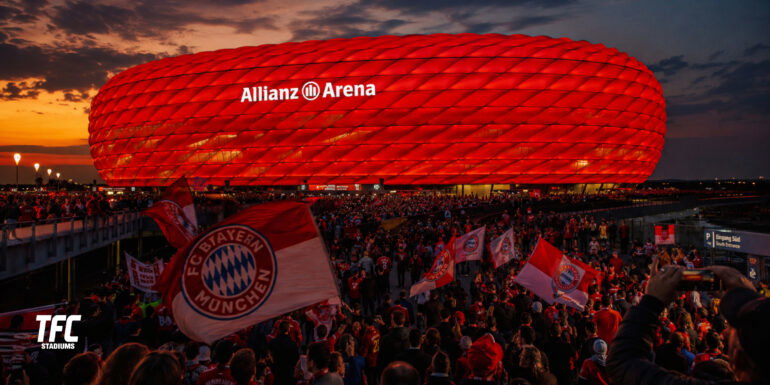
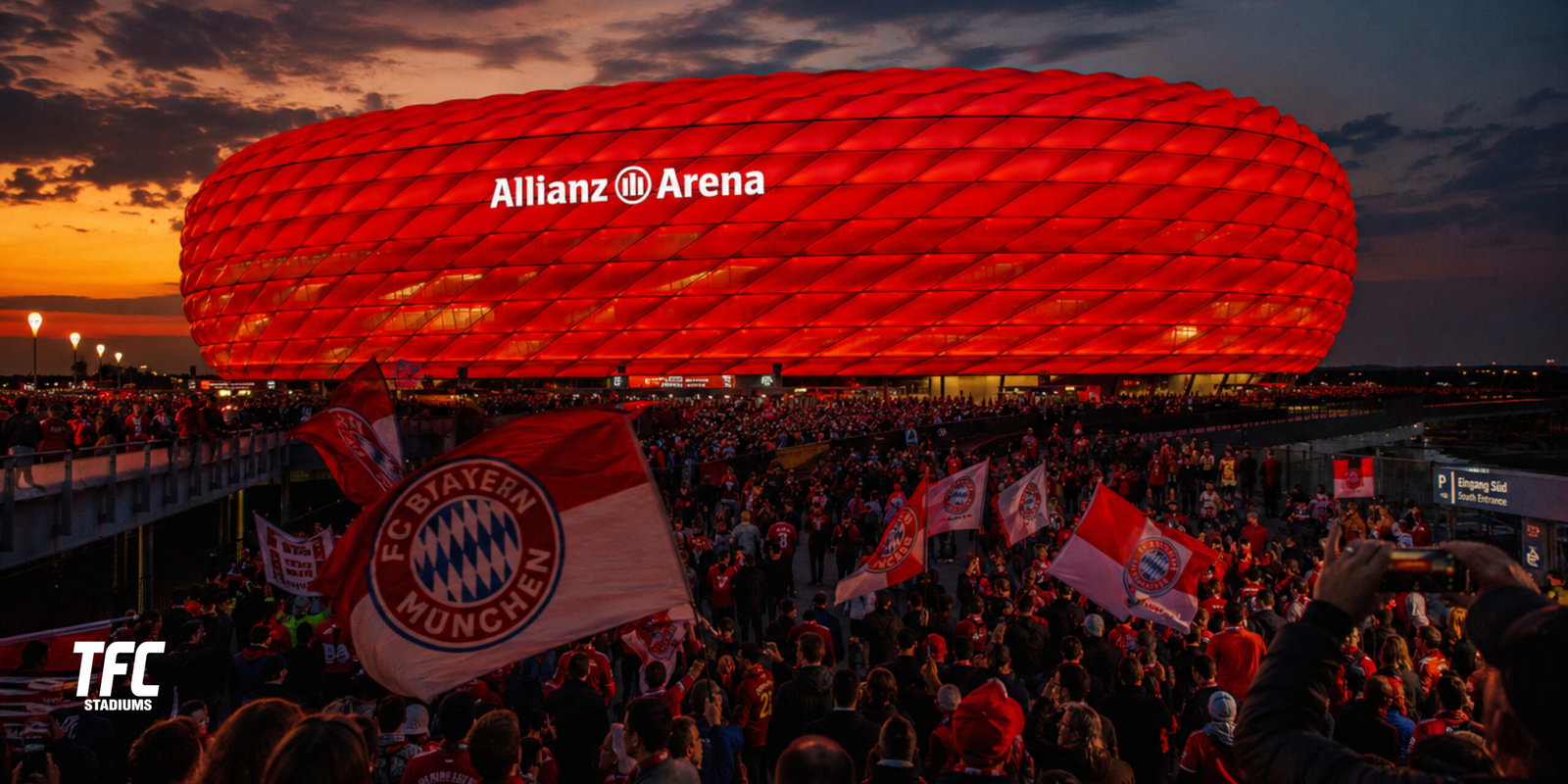
The Allianz Arena is often celebrated for its glowing exterior, futuristic architecture and spectacular European nights. Yet one of its most interesting stories is not about steel, lighting systems or Champions League drama. It is about ownership.
Unlike many of Europe’s biggest clubs, Bayern Munich operates within Germany’s distinctive football culture, where supporters continue to play a meaningful role in how clubs are governed. The Allianz Arena is more than a modern sporting venue. It represents a philosophy that values long term stability, financial discipline and fan influence over chasing short term success at any cost.
That approach has helped create one of the world’s healthiest football clubs while preserving an atmosphere that still feels remarkably authentic for a stadium welcoming around 75,000 supporters every match.
The German 50+1 Rule Explained
Understanding the Allianz Arena begins with understanding German football.
Germany’s famous 50+1 rule requires club members to retain majority voting control of professional football clubs. External investors can provide funding, but they generally cannot take full control.
The principle was introduced to protect clubs from reckless ownership, speculative investment and decisions that ignore supporters.
In simple terms:
| Feature | Germany | Many Other European Leagues |
|---|---|---|
| Majority voting rights | Club members | Private owners or shareholders |
| Fan influence | High | Often limited |
| Ownership changes | Difficult | Relatively straightforward |
| Long term financial planning | Strong emphasis | Varies widely |
The rule is not perfect and exceptions exist, but it has shaped German football for decades.
It also explains why matchdays often feel different compared with many other elite leagues.
Bayern Munich’s Ownership Structure
People sometimes assume Bayern Munich is owned by a billionaire.
It is not.
Instead, ownership is divided between the club itself and several strategic corporate partners.
Current ownership is approximately:
| Owner | Share |
|---|---|
| FC Bayern München eV (club members) | 75% |
| Allianz | 8.33% |
| Audi | 8.33% |
| Adidas | 8.33% |
This structure allows Bayern to attract significant commercial investment while ensuring voting control remains with the club’s membership.
It is an unusual balance between commercial success and supporter influence.
The corporate investors also happen to be among Germany’s strongest global brands, creating partnerships rather than outright ownership.
What Does Membership Actually Mean?
Membership at Bayern Munich is far more than buying a scarf and receiving a birthday email.
Members can:
- Vote in club elections
- Attend annual general meetings
- Influence important governance decisions
- Help shape the club’s future leadership
- Participate in club life beyond football
With hundreds of thousands of official members worldwide, Bayern has become one of the largest member-owned sporting organisations on Earth.
Of course, not every member turns up to debate transfer policy with spreadsheets in hand. Some simply want priority ticket access and the satisfaction of belonging to something larger than themselves.
Both motivations are perfectly respectable.
The Allianz Arena Reflects That Culture
The stadium itself reinforces many of these values.
Rather than feeling like an entertainment complex built primarily around corporate hospitality, the Allianz Arena still prioritises football.
Supporters remain central to the experience.
Features include:
- Large supporter sections
- Safe standing areas
- Strong acoustics that amplify chants
- Excellent sightlines across every tier
- Efficient movement through concourses
Even visitors attending their first Bayern match often notice how coordinated the atmosphere becomes before kick off.
There is organisation without feeling overly choreographed.
The noise is genuine because thousands of people actually want to sing for ninety minutes.
An unusual concept in some modern stadiums where half the crowd seems busy filming themselves eating loaded fries.
Financial Stability Without Gambling the Future
One reason Bayern has remained consistently successful is remarkably cautious financial management.
Rather than relying heavily on debt or repeated owner investment, Bayern generates enormous commercial income through:
- Sponsorship agreements
- Broadcasting revenue
- Matchday income
- Merchandise sales
- International commercial partnerships
This financial discipline helped Bayern fund the Allianz Arena while avoiding many of the financial crises experienced elsewhere in European football.
The stadium itself became a long term investment rather than an expensive gamble.
That philosophy has allowed Bayern to remain profitable across many seasons while continuing to compete for domestic and European honours.
The Stadium as a Revenue Engine
Although fan ownership is central, nobody should mistake Bayern for a romantic amateur organisation.
The Allianz Arena is an exceptionally efficient business.
It hosts:
- Bundesliga matches
- UEFA competitions
- International fixtures
- Corporate events
- Stadium tours
- Museum visits
- Hospitality experiences
The result is a venue that generates substantial revenue throughout the year rather than only on matchdays.
This income supports investment in players, facilities, youth development and club infrastructure without abandoning the financial discipline that supporters generally expect.
Standing Areas Still Matter
One of Germany’s biggest strengths remains its commitment to supporter culture.
The Allianz Arena continues to include large standing sections for domestic league matches.
These areas help create:
- Lower ticket prices
- Stronger vocal support
- Better atmosphere
- Greater accessibility for younger supporters
When UEFA competitions require all-seated configurations, the standing areas are converted accordingly.
This flexibility allows Bayern to satisfy international regulations while preserving domestic traditions.
Many supporters believe standing fans generate the heartbeat of German football.
Spend five minutes inside the Südkurve and it becomes difficult to argue otherwise.
Affordable Football Compared With Much of Europe
German football has long resisted the relentless ticket inflation seen elsewhere.
Although Bayern’s popularity inevitably pushes demand sky high, season tickets and many regular match tickets remain comparatively accessible by European elite standards.
Supporters benefit from:
- Controlled pricing
- Membership advantages
- Family friendly policies
- Continued emphasis on local attendance
The objective is straightforward.
Football should remain something ordinary supporters can attend regularly, not merely an occasional luxury purchase.
That philosophy strengthens loyalty across generations.
Does Fan Ownership Limit Investment?
Critics argue the 50+1 model makes it harder for German clubs to compete financially against state-backed clubs or billionaire ownership elsewhere.
There is some truth in that.
Without unlimited owner funding, German clubs often operate within stricter financial limits.
However, Bayern demonstrates the opposite side of the argument.
Through excellent commercial management, world class sponsorships and sustainable planning, the club consistently ranks among Europe’s highest earners without depending on a wealthy benefactor.
Rather than choosing between competitiveness and sustainability, Bayern has largely managed to achieve both.
That is considerably easier to admire than trying to explain how a club suddenly discovers £400 million down the back of the sofa every transfer window.
Why Visiting Fans Notice the Difference
Visitors frequently comment on several aspects of the Allianz Arena experience:
- Respect between home and away supporters
- Excellent organisation
- Fast entry procedures
- Efficient transport links
- Loud but welcoming atmosphere
- High quality facilities
Much of that experience stems from the culture surrounding German football rather than simply the architecture.
The building is impressive.
The people inside it are what truly give it character.
The Future of Fan Ownership
German football continues to debate outside investment, private equity and evolving commercial opportunities.
Pressure exists to modernise further as financial competition across Europe intensifies.
Yet many supporters remain fiercely protective of member ownership.
For them, football clubs are community institutions first and commercial businesses second.
The Allianz Arena stands as perhaps the clearest symbol of that balance.
It embraces innovation, attracts global sponsors and generates substantial revenue, yet it still operates within a structure where supporters retain genuine influence.
In an era when football ownership increasingly resembles international finance, that remains refreshingly unusual.
Takeaway
The Allianz Arena is regularly ranked among the finest stadiums in world football because of its architecture, technology and unforgettable atmosphere.
Those qualities certainly matter.
What makes the stadium truly distinctive, however, is the culture it represents.
Every packed Bundesliga match demonstrates that commercial success and supporter influence do not have to exist in opposition. Bayern Munich has shown that careful governance, strong financial management and active membership can produce sustained excellence both on and off the pitch.
The glowing façade may capture the headlines, but the real foundation of the Allianz Arena lies in the thousands of members who continue to shape the club’s future. That is a legacy that cannot be illuminated by LED panels alone.
About the Author