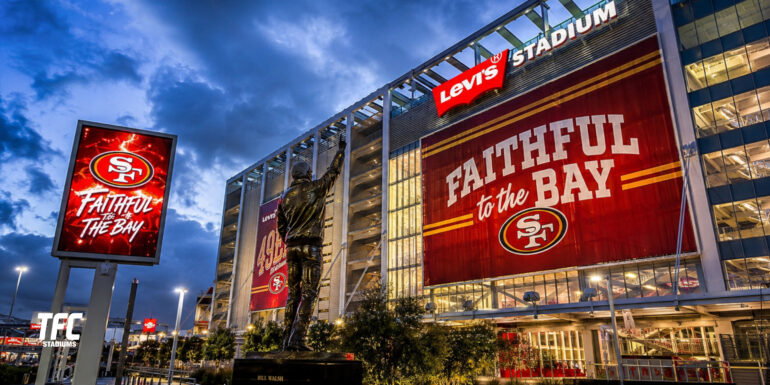
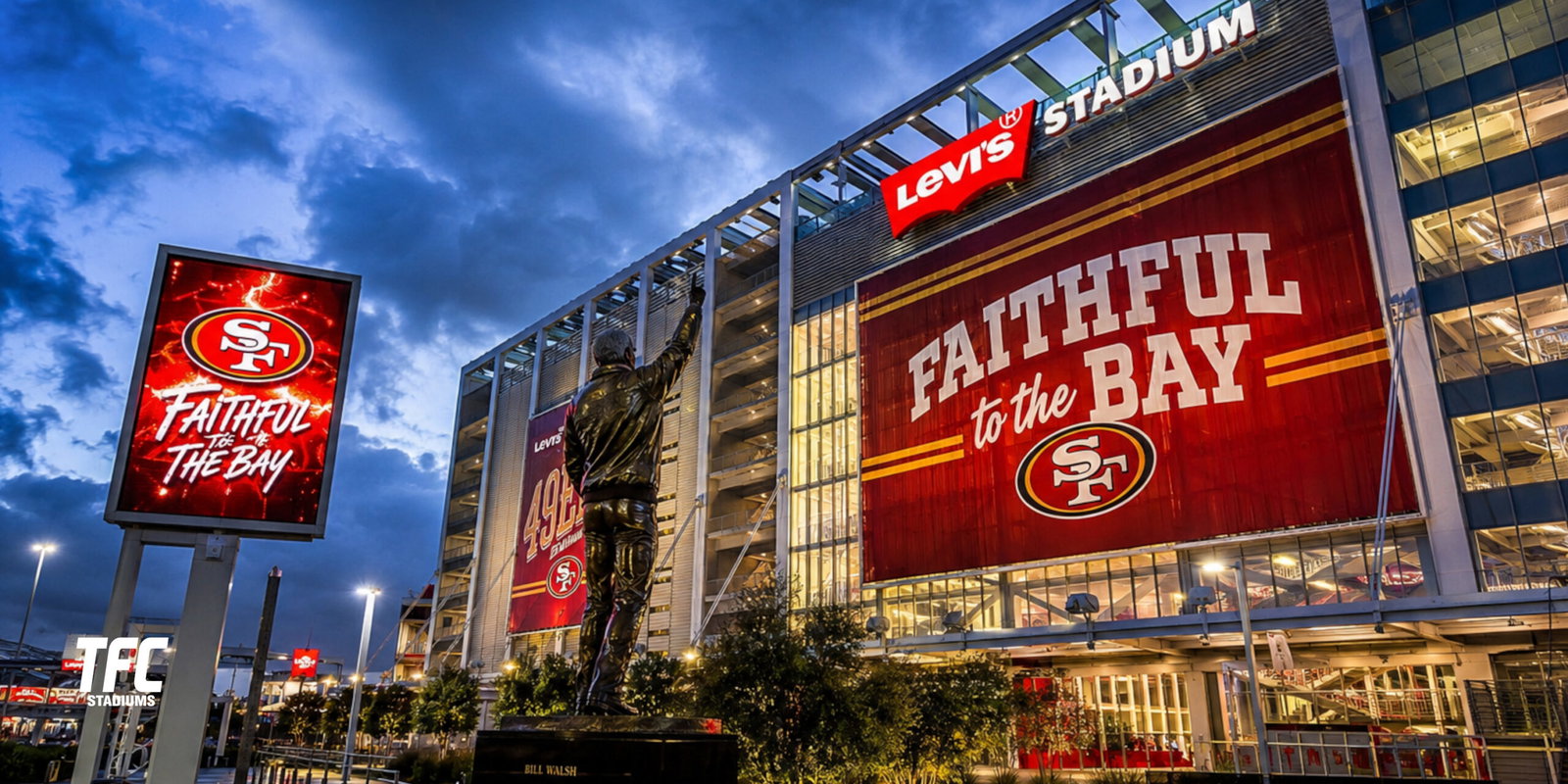
When Levi’s Stadium opened in 2014, it did more than give the San Francisco 49ers a new home. It sparked a bigger conversation about what the Bay Area had become.
The team that built its mythology at Candlestick Park, where wind, fog and chaos felt like unofficial members of the roster, had moved south into the heart of Silicon Valley. Out went the concrete bowl beside the bay. In came a billion-dollar stadium surrounded by tech campuses, corporate suites and California sunshine.
Some fans still argue that something was left behind in San Francisco. Others see Levi’s Stadium as the perfect symbol of the modern Bay Area, ambitious, innovative and constantly reinventing itself.
The truth probably sits somewhere in the middle, much like most Bay Area arguments that eventually end with someone mentioning property prices.
From Candlestick Grit to Silicon Valley Precision
The 49ers’ identity was built through legendary moments at Candlestick Park.
Joe Montana finding Dwight Clark for “The Catch”. Steve Young finally stepping out of Montana’s shadow. Defensive battles where the weather sometimes hit harder than the linebackers.
Candlestick represented an older San Francisco. It was imperfect, unpredictable and full of personality.
Levi’s Stadium represents a different era.
Built at a cost of around $1.3 billion, the venue arrived during a period when the Bay Area was becoming globally associated with technology and innovation. Its location in Santa Clara placed the 49ers closer to companies shaping the future of communication, entertainment and digital culture.
The move changed the scenery, but it also reflected the region around it.
The Bay Area was no longer only cable cars, neighbourhood bars and foggy football afternoons. It was also data centres, startups and billion-dollar ideas.
A Stadium Built Around Technology
Few NFL venues leaned into the digital age as strongly as Levi’s Stadium when it opened.
The stadium was designed around connectivity, with extensive Wi-Fi coverage, mobile integration and digital services intended to make game day smoother.
Fans could:
• Access instant highlights
• Order food through mobile services
• Navigate the venue digitally
• Stay connected with thousands of other devices operating at once
For better or worse, this was very Bay Area.
Some fans want football served with mud, noise and a questionable hot dog wrapped in foil. Silicon Valley asked, “What if that hot dog came with an app?”
That contrast is exactly why Levi’s Stadium remains interesting. It sits between football tradition and the tech culture surrounding it.
The Economic Impact of Levi’s Stadium
Levi’s Stadium quickly became much more than eight or nine regular season NFL Sundays.
The venue helped establish Santa Clara as a major events destination, bringing in:
• Super Bowl 50
• College football championships
• International football matches
• Major concerts
• Corporate events
• WrestleMania
Large events bring visitors into hotels, restaurants and local businesses across the South Bay. The stadium effectively expanded the Bay Area’s entertainment map.
For decades, San Francisco was the region’s obvious cultural centre. Levi’s Stadium helped show that the wider Bay Area had multiple identities.
San Jose, Santa Clara and Silicon Valley were no longer just places where people worked. They became places where major cultural moments happened.
Sustainability and the Bay Area Image
A major part of Levi’s Stadium’s identity comes from its environmental focus.
The stadium opened with sustainability built into its public image, including:
• Solar technology
• A green roof area
• Energy efficiency initiatives
• Water conservation efforts
This matters because the Bay Area often sees itself as a place where innovation should solve problems, not simply create bigger buildings.
Of course, no 68,000-seat stadium is a tiny environmental footprint. Flying teams, moving crowds and hosting massive events all come with challenges.
Still, Levi’s Stadium showed how future sports venues could start treating sustainability as part of the design rather than a marketing line added afterwards.
The 49ers Fan Experience Debate
No conversation about Levi’s Stadium is complete without admitting one thing.
Fans argue about it. A lot.
Some miss Candlestick’s atmosphere. They believe the old stadium had a raw football energy that cannot be recreated with luxury spaces and modern architecture.
Critics point to:
• The distance from San Francisco
• Expensive tickets
• Corporate seating culture
• Early issues with heat exposure in certain areas
Those complaints are not imaginary. A franchise with five Super Bowl championships carries emotional weight, and fans do not treat history like a piece of furniture you can simply move to another room.
But winning helps.
Deep playoff runs, packed crowds and the arrival of new franchise stars have helped Levi’s Stadium build its own memories. Stadium identity takes time. Even legendary venues were once just new buildings waiting for history.
A Stage for a Global Bay Area
Modern stadiums are not just local landmarks anymore. They are international stages.
Levi’s Stadium has become part of the Bay Area’s global branding. When huge events arrive, television audiences see a region associated with technology, wealth, creativity and ambition.
That reflects the modern Bay Area experience.
It is a place of contradictions:
• Old neighbourhood culture alongside global corporations
• Historic sports traditions alongside constant change
• Local pride mixed with worldwide influence
Levi’s Stadium captures all of that.
Sometimes beautifully. Sometimes awkwardly.
Very Bay Area, really.
The Future of Levi’s Stadium
The next chapter for Levi’s Stadium will focus on keeping pace with fan expectations.
Modern sports venues face increasing competition from the living room experience. Huge televisions, instant replays and comfortable couches are undefeated opponents.
To keep attracting fans, stadiums need to offer something bigger:
• Better atmosphere
• Improved technology
• Unique experiences
• Stronger connections to team history
The challenge for Levi’s Stadium is not proving it belongs in Silicon Valley. It already does.
The challenge is making sure it always feels like home for 49ers fans.
Final Thoughts: A Stadium That Mirrors the Bay Area
Levi’s Stadium may never replace Candlestick Park emotionally for some supporters. That is understandable. Sports memories are stubborn things.
But the stadium tells the story of where the Bay Area went in the 21st century.
It moved, expanded, modernised and sometimes annoyed people along the way. Pretty much exactly like the Bay Area itself.
Football has always been about more than the field. Stadiums become reflections of the communities around them.
Levi’s Stadium reflects a region still chasing what comes next, while carrying a little red and gold history along for the ride.
About the Author