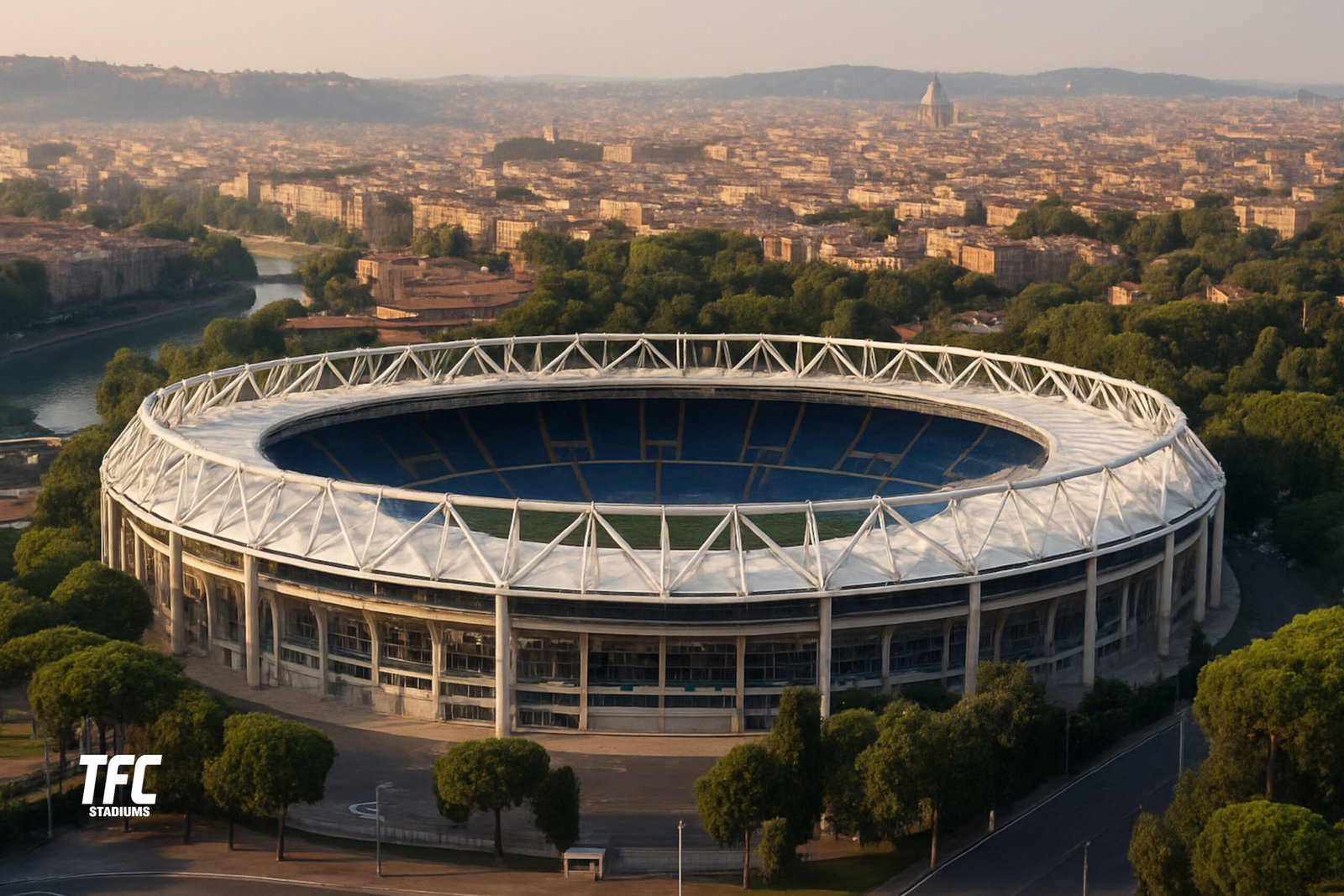
The Stadio Olimpico in Rome is one of the most recognised stadiums in the world. It carries a unique identity as both a modern sports arena and a venue tied to the heritage of Italian football and athletics. Its reputation has been built over decades of hosting iconic events, from European finals to international tournaments, and it remains a landmark on the global stage.
Origins and Legacy
Opened in 1953, the Stadio Olimpico was initially constructed as part of Italy’s push to create a national sporting hub. The stadium’s role expanded during the 1960 Olympic Games, which placed Rome firmly at the centre of international sport. Over time, it became the shared home of AS Roma and SS Lazio, embedding it into the weekly rituals of Serie A.
Football on the Global Stage
The Olimpico has been central to European and international football. It has hosted four European Cup and Champions League finals, including Liverpool’s famous victory in 1984 and Barcelona’s triumph in 2009. Italy’s national team has also played some of its most significant matches there, with the stadium serving as a stage for UEFA Euro 1980, the 1990 FIFA World Cup, and Euro 2020 fixtures.
Athletics and Multi-Sport Events
Beyond football, the stadium is closely tied to athletics. The Golden Gala, part of the Diamond League, brings elite athletes to Rome each year, while past editions of the World Athletics Championships have further reinforced its standing. This adaptability has kept the Stadio Olimpico relevant across a wide sporting spectrum.
Cultural and Political Importance
The stadium has hosted more than just sport. From concerts by some of the biggest global performers to large-scale political and cultural gatherings, the Olimpico has proven its versatility. Its ability to shift from an arena for local derbies to a venue for international spectacles has made it central to Rome’s identity.
Renovations and Modern Appeal
The Olimpico has undergone multiple renovations, most notably ahead of the 1990 World Cup and again in preparation for Euro 2020. These updates improved facilities, safety, and capacity, allowing the venue to meet modern demands while retaining its historical atmosphere. Though not the most technologically advanced stadium by today’s standards, its character and legacy continue to resonate worldwide.
Reputation Today
The Stadio Olimpico’s global reputation lies in its blend of tradition, adaptability, and prestige. It may not boast the ultra-modern features of new arenas, but its history and status give it a weight few stadiums can match. For many, watching a match in Rome is as much about experiencing the Olimpico as it is about the football itself.
About the Author