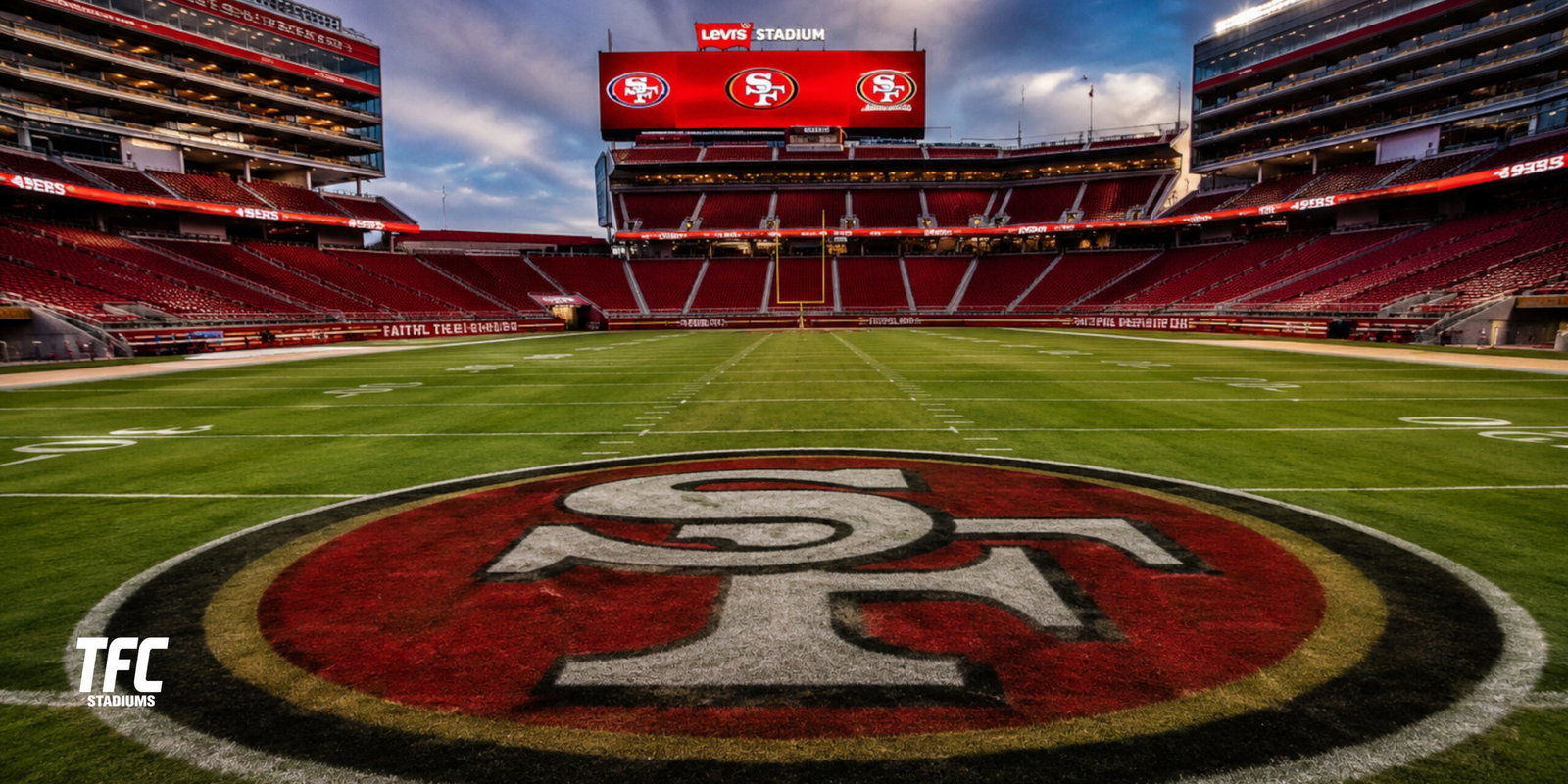
Levi’s Stadium has hosted playoff football, international soccer, concerts loud enough to rattle nearby office windows, and enough preseason overreactions to fuel sports radio for decades. Through all of it, the turf has to survive. That sounds simple until you remember that eighty thousand people stomping around a stadium is not exactly a relaxing spa day for grass.
Most fans barely think about the field unless someone slips on third-and-short or a kicker starts glaring at divots like they personally insulted his family. Yet modern NFL turf management has become one of the most technical and expensive operations inside any stadium. Levi’s Stadium is no exception.
The San Francisco 49ers treat the playing surface almost like a living athlete. It is monitored, repaired, watered, tested and adjusted constantly. Frankly, some backup quarterbacks probably receive less attention.
Why Turf Management Matters So Much
An NFL field is not just decoration. It affects:
- Player speed
- Injury risk
- Ball movement
- Footing during cuts and tackles
- Heat retention
- Drainage during bad weather
- Event scheduling flexibility
When a field goes wrong, everybody notices. Players complain publicly. Coaches quietly panic. Grounds crews suddenly become the most discussed people in the building. Nobody wants to trend online because a superstar wide receiver slipped during a game-winning route.
Levi’s Stadium has faced criticism over its turf conditions at various points since opening in 2014. Early issues with sod stability drew attention from players and media alike. Since then, the organisation has invested heavily in improving consistency and durability.
That is the reality of modern sports venues. Stadiums are no longer used once a week. They are entertainment machines expected to host football, concerts, corporate events and international matches with barely enough time for the grass to recover.
The Grass Used at Levi’s Stadium
Levi’s Stadium uses a natural grass surface rather than artificial turf. Specifically, the field has typically relied on Bermuda grass varieties suited to California’s warm climate.
Natural grass remains popular with many NFL players because it is generally viewed as softer and more forgiving on joints and ligaments. The NFL Players Association has repeatedly highlighted player preference for grass over synthetic surfaces.
California climate helps, but Santa Clara heat presents its own challenge. Levi’s Stadium can become brutally hot during afternoon games. The east side of the stadium often sits directly under intense sunlight, while shade patterns across the field create uneven growing conditions.
Grass does not particularly enjoy confusion. One side baking like Arizona asphalt while another sits cooler and shaded can create inconsistent growth and moisture retention.
Grounds crews compensate through:
- Precision irrigation
- Different mowing heights
- Supplemental nutrients
- Constant moisture testing
- Replacing worn patches rapidly
This is less “watering the lawn” and more agricultural science with a headset and pressure from national television audiences.
How the Grounds Crew Maintains the Field
Managing an NFL field is a full-time operation. Levi’s Stadium employs dedicated turf specialists who monitor the surface year-round, not just during football season.
The weekly maintenance cycle often includes:
Daily Inspections
Crews inspect high-traffic areas constantly, especially:
- Between the hash marks
- Around the line of scrimmage
- Team sidelines
- End zones
Those sections absorb repeated impacts from cleats, tackles and equipment carts.
A quarterback might throw forty passes in a game. Linemen basically spend three hours trying to uproot the earth itself.
Mowing and Surface Control
Grass height matters more than most fans realise.
Shorter grass creates faster playing conditions but can stress the turf. Slightly longer grass improves durability and root strength. Grounds crews balance both depending on weather, upcoming events and wear levels.
The mowing pattern also affects aesthetics. Those clean striped patterns seen on television are created by bending grass blades in different directions to reflect light differently.
Yes, sports turf people are artists now.
Irrigation Systems
Levi’s Stadium uses advanced irrigation systems to control moisture precisely.
Too dry, the field hardens and increases wear. Too wet, players lose footing and chunks start tearing free during cuts.
Grounds crews test moisture levels regularly before games and practices. Watering schedules are adjusted according to temperature, sunlight exposure and event timing.
California water regulations also influence stadium operations. Conservation matters, particularly during drought periods. Modern irrigation systems are designed to reduce waste while still keeping the surface healthy.
Aeration and Root Health
Heavy use compacts soil over time. Compacted soil prevents roots from growing properly and limits drainage.
To counter this, crews aerate the field by creating small holes throughout the surface. This allows oxygen, nutrients and water to reach the roots more effectively.
It looks mildly alarming if you see it in progress. Like someone attacked the field with giant golf spikes.
But it is essential for keeping natural grass stable across a long season.
Handling Concerts and Non-Football Events
This is where things become complicated.
Levi’s Stadium hosts major concerts and entertainment events throughout the year. Massive staging equipment, heavy vehicles and thousands of fans standing directly on protective flooring can stress the turf badly.
Protective coverings are used during events, but grass still suffers from:
- Reduced sunlight
- Trapped heat
- Limited airflow
- Weight compression
After large concerts, grounds crews may need to replace entire sections of sod.
That process can happen incredibly fast. Modern stadium crews can remove damaged areas and install fresh turf within days if necessary.
Fans often assume the field simply “grows back.” It does not. Sometimes it is closer to emergency surgery with forklifts.
The Battle Against Heat
Levi’s Stadium has developed a reputation for intense heat during daytime games.
The stadium’s design creates major sunlight exposure on certain seating sections and parts of the field. Surface temperatures can rise significantly during early-season games.
Heat impacts turf health in several ways:
- Faster moisture evaporation
- Increased stress on root systems
- Uneven growth patterns
- Greater wear in dry areas
Grounds crews must constantly monitor hydration levels during hot stretches.
This becomes especially important before nationally televised games where footing consistency is critical. Nobody wants highlights dominated by players sliding around like they are on an ice rink in cleats.
Technology Behind Modern NFL Turf
NFL turf management now involves serious data analysis.
Levi’s Stadium crews use technology to monitor:
- Soil moisture
- Surface hardness
- Grass density
- Root depth
- Weather forecasts
- Drainage efficiency
Sensors and testing equipment help staff identify problems before they become visible during games.
Some stadiums even use grow lights and climate-control techniques to support grass recovery in shaded sections. Levi’s Stadium benefits from California sunlight, but environmental management still plays a major role.
Modern turf management sits somewhere between farming, engineering and Formula One pit strategy.
How Levi’s Turf Compares Around the NFL
Levi’s Stadium generally ranks better today than during its earlier years, though natural grass surfaces always face scrutiny from players and media.
Across the NFL, teams continue debating grass versus synthetic turf.
Natural grass advantages include:
- Softer feel
- Cooler surface temperatures
- Better player preference ratings
- Potentially reduced injury concerns
Artificial turf advantages include:
- Greater durability
- Easier event scheduling
- Lower replacement frequency
- Consistent appearance
For stadium operators, synthetic turf often makes business easier. For many players, grass feels safer and more comfortable.
Levi’s Stadium has continued backing natural grass despite the extra complexity. That says quite a lot considering how many concerts and events the venue hosts annually.
Preparing for Major Events Like the Super Bowl
Levi’s Stadium previously hosted Super Bowl 50 and remains a major venue for international sporting events.
For events at that scale, turf preparation intensifies dramatically.
Crews may:
- Replace large sections of turf
- Adjust mowing patterns for television presentation
- Increase surface testing frequency
- Coordinate with NFL field inspectors
- Restrict access to protect key areas
The field becomes part of the broadcast spectacle. Every stripe, logo and patch of grass is expected to look immaculate in ultra-high-definition.
Millions of viewers may never consciously notice great turf. They absolutely notice bad turf.
That is the curse of groundskeeping. Perfection is invisible. Mistakes become memes within twelve seconds.
Takeaway
The turf at Levi’s Stadium is one of the most heavily managed surfaces in American sports. What looks like ordinary grass from the upper deck is actually the result of constant maintenance, scientific monitoring and an endless fight against heat, wear and event scheduling chaos.
Modern stadium turf crews operate under ridiculous pressure. Players expect flawless footing. Owners expect multi-use flexibility. Fans expect the field to look pristine every Sunday.
And the grass itself is expected to survive California heat, NFL linemen and pop concerts with equal dignity.
Honestly, it deserves its own contract extension.
About the Author