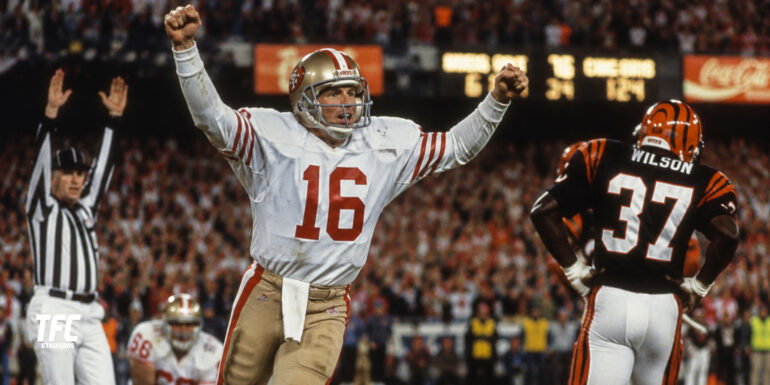
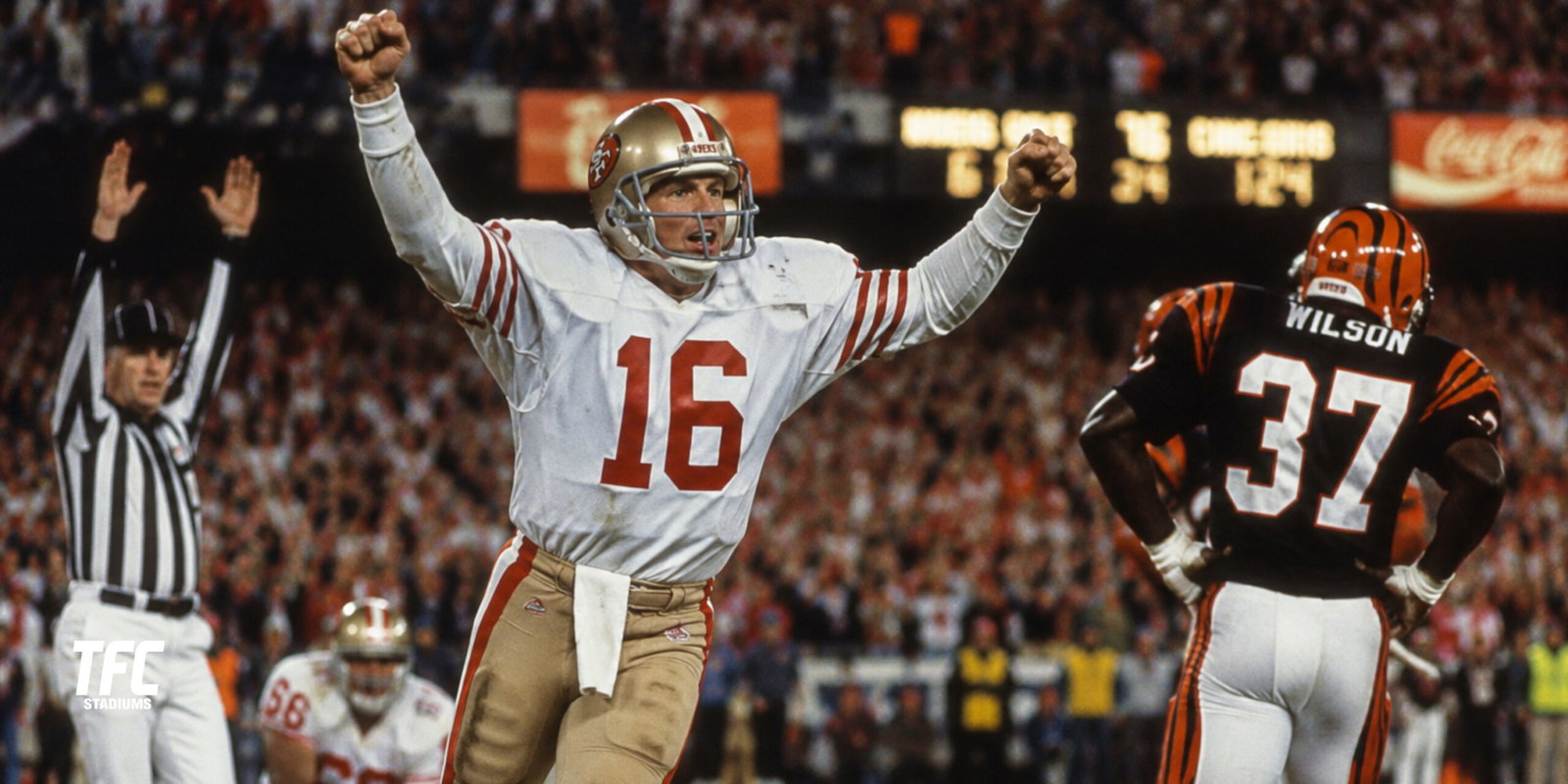
Super Bowl XXIII arrived in Miami on 22 January 1989 and delivered exactly what the NFL hopes for every February. Not just a champion, but a story.
Played at what was then known as Joe Robbie Stadium, today’s Hard Rock Stadium, the matchup between the San Francisco 49ers and Cincinnati Bengals became one of the greatest examples of late-game execution in football history.
For almost four quarters, Cincinnati frustrated one of the league’s most talented teams. Then Joe Montana did what Joe Montana seemed built to do. He turned pressure into calm, chaos into rhythm, and a desperate final possession into a championship-winning masterpiece.
The 49ers won 20-16, but the score barely explains the tension inside the stadium that night.
Why Hard Rock Stadium Hosted Super Bowl XXIII
Hard Rock Stadium opened in 1987 and Super Bowl XXIII was the venue’s first opportunity to host the NFL’s biggest event.
Miami was already familiar Super Bowl territory thanks to the Orange Bowl, but this represented a new era. The modern stadium offered:
- Better luxury facilities
- Improved sightlines
- Greater commercial opportunities
- A purpose-built home for major sporting events
Attendance reached 75,129 fans, proving the new venue could handle one of the largest events in American sport.
It also began a long association between the stadium and the Super Bowl. The Miami climate, tourism infrastructure, and football history made it an almost perfect championship location.
Road To Super Bowl XXIII
San Francisco 49ers
The 49ers entered the season with questions despite their incredible talent. A 10-6 regular season record looked modest, but by playoff time Bill Walsh’s side had transformed.
Key figures:
| Role | Name |
|---|---|
| Head Coach | Bill Walsh |
| Quarterback | Joe Montana |
| Wide Receiver | Jerry Rice |
| Running Back | Roger Craig |
| Defensive Leader | Ronnie Lott |
The 49ers dominated the postseason, beating the Minnesota Vikings and Chicago Bears by a combined score of 62-12.
This was a team peaking at exactly the wrong time for everyone else.
Cincinnati Bengals
The Bengals were not simply supporting actors in the Montana story. Cincinnati finished 12-4 and entered the game as one of the NFL’s most balanced teams.
Key figures:
| Role | Name |
| Head Coach | Sam Wyche |
| Quarterback | Boomer Esiason |
| Running Back | Ickey Woods |
| Offensive Tackle | Anthony Muñoz |
| Defensive Leader | David Fulcher |
Their innovative no-huddle offence had caused problems throughout the season. The Bengals were aggressive, unpredictable, and completely capable of ruining San Francisco’s farewell party for Bill Walsh.
First Half: Defence Takes Control
Anyone expecting a shootout quickly had to adjust.
The opening half became a tactical fight. Cincinnati’s defence disrupted San Francisco’s timing, while the Bengals struggled to consistently move the ball against a physical 49ers unit.
At halftime, the score was only:
49ers 3, Bengals 3
For a game featuring Montana, Rice, Craig, and Esiason, it was surprisingly brutal. The stars were there, but every yard had to be earned.
Jerry Rice’s Record-Breaking Performance
While Montana’s final drive became the lasting image, Jerry Rice produced one of the greatest receiving performances in Super Bowl history.
His numbers:
| Statistic | Total |
| Receptions | 11 |
| Receiving Yards | 215 |
| Touchdowns | 1 |
Rice repeatedly beat Cincinnati coverage and stretched the field. His 215 receiving yards set a Super Bowl record at the time.
He was named Super Bowl MVP, and deservedly so. Montana wrote the final chapter, but Rice carried much of the story.
Stanford Jennings Changes The Game
Early in the second half, Cincinnati found its breakthrough.
Bengals return specialist Stanford Jennings fielded a kickoff and produced a stunning 93-yard touchdown return.
Suddenly Cincinnati led 13-6.
It was exactly the type of play underdogs dream about. One mistake, one moment of speed, and a game changes instantly.
Joe Montana’s Legendary Final Drive
With 3:20 remaining, San Francisco trailed 16-13 and started from its own eight-yard line.
The situation:
- 92 yards needed
- No margin for error
- Super Bowl title on the line
Montana famously kept the huddle relaxed, reportedly pointing out celebrity John Candy in the crowd before beginning the drive.
Then came classic 49ers football.
Short throws. Perfect timing. Calm decisions.
The drive lasted 11 plays and ended with Montana finding John Taylor for a 10-yard touchdown pass with 34 seconds remaining.
Final score:
San Francisco 49ers 20
Cincinnati Bengals 16
Championship secured.
Key Statistics From Super Bowl XXIII
| Category | 49ers | Bengals |
| Final Score | 20 | 16 |
| Total Yards | 452 | 229 |
| Passing Yards | 341 | 123 |
| First Downs | 23 | 15 |
| Turnovers | 3 | 1 |
| Time Of Possession | 34:48 | 25:12 |
The numbers show San Francisco controlled much of the game statistically, but turnovers and Cincinnati’s special teams kept the result balanced until the final minute.
The End Of The Bill Walsh Era
Super Bowl XXIII was also the final game of Bill Walsh’s coaching career.
His West Coast offence changed professional football by prioritising:
- Timing routes
- Short passing accuracy
- Quarterback decision-making
- Space creation
Walsh finished with three Super Bowl championships and left behind one of the NFL’s most influential coaching systems.
Walking away immediately after winning a title remains one of the ultimate sporting exits.
What Super Bowl XXIII Meant For Hard Rock Stadium
Hosting this game instantly gave the young Miami venue credibility.
The stadium would go on to stage several more Super Bowls, national championships, international football matches, and major entertainment events.
Super Bowl XXIII helped establish it as more than a local NFL stadium. It became one of America’s premier event venues.
Legacy: One Of The NFL’s Greatest Finishes
Super Bowl XXIII remains special because it combined everything a championship game needs:
- A legendary quarterback under pressure
- A brilliant opponent refusing to collapse
- A record-setting individual performance
- A final drive remembered decades later
Cincinnati came painfully close to winning its first Super Bowl. San Francisco confirmed its dynasty.
For the 49ers, it was another ring. For Montana, it was another piece of evidence in the argument about football greatness.
For Hard Rock Stadium, it was the night its Super Bowl story truly began.
About the Author