Wanda Metropolitano, home of Atlético Madrid, is more than a football ground. Opened in 2017 after a complete redevelopment of the old Estadio Olímpico de Madrid, it has quickly become one of the most striking modern stadiums in Europe. Its design balances elegance, functionality, and atmosphere, offering both a stage for football and a symbol of the club’s ambition.
Design Concept
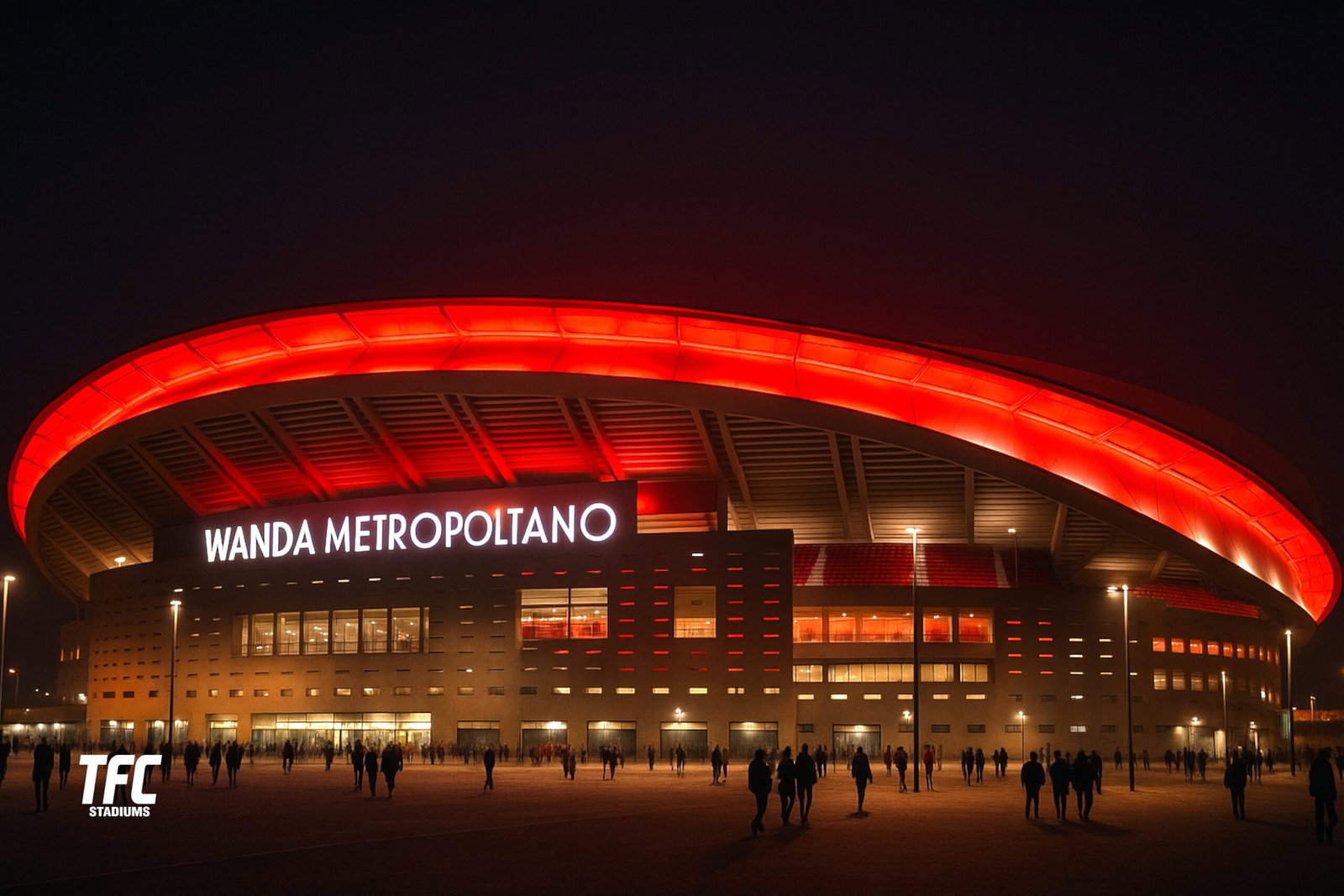
The architectural vision was to create a stadium that looked bold without being overbearing. The roof is the key visual feature, a sweeping ring of steel and fabric that covers almost every seat. From above, it resembles a crown, while at night the illumination makes the structure glow red and white. It is both practical and theatrical, keeping fans sheltered while giving the stadium an unmistakable silhouette.
The stands are arranged in a steep bowl design, ensuring excellent sightlines. Unlike some modern arenas that prioritise corporate facilities at the expense of atmosphere, the Metropolitano was built with noise and intensity in mind. The acoustics amplify chants, keeping the spirit of the old Vicente Calderón alive.
Materials and Structure
The use of lightweight ETFE (ethylene tetrafluoroethylene) panels in the roof allows natural light to filter through. This helps maintain a sense of openness during the day while keeping fans shaded. The structure rests on an elliptical steel frame that gives both strength and flexibility, essential in a stadium that regularly holds more than 68,000 supporters.
Concrete and glass dominate the exterior, giving it a modernist, almost minimalist finish. The wide esplanades around the stadium are designed for crowd movement and safety, a lesson drawn from older grounds that often struggled with congestion.
Fan Experience and Accessibility
The Metropolitano is built with the supporter at the centre. The concourses are wide, food outlets plentiful, and transport links well integrated, with the Madrid Metro delivering fans directly to the stadium. Accessibility was a clear priority, with over 4,000 parking spaces and numerous entrances to avoid bottlenecks.
Inside, the steepness of the stands makes even the highest seats feel close to the action. Hospitality areas are present, but they do not dominate the architecture, ensuring the stadium remains a football-first venue rather than a commercial complex that happens to host matches.
A Stadium of Identity
What sets the Wanda Metropolitano apart is that it feels distinctly Atlético. The design mirrors the club’s identity: sharp, modern, and passionate without excess. It does not try to copy the architectural experiments of other new European stadiums. Instead, it takes a straightforward idea and executes it with confidence.
Legacy and Impact
Since its opening, the Metropolitano has hosted Champions League finals, concerts, and international fixtures. Yet its lasting impression is as a home ground that feels both grand and intimate. It shows how a new stadium can retain character while offering modern comfort.
About the Author