There are moments in football that never really end.
The final whistle goes. The medals are handed out. The captain lifts the trophy. Yet for supporters, the celebration only truly begins when the team comes home.
For Aston Villa fans, home means Villa Park.
Few stadiums in England have welcomed back more trophy-winning sides. League champions, FA Cup winners, League Cup heroes and European champions have all returned through its gates to celebrate with generations of supporters. Every parade has reflected its era, from horse-drawn processions in Victorian Birmingham to modern open-top buses winding through streets packed with claret and blue.
The trophies matter, of course. What stays with supporters even longer is seeing players share those moments with the people who followed them through every difficult season, every disappointing cup exit and every rebuilding project.
As a Villa fan, those are the images that stay with you. Long after you forget who scored in the semi-final, you remember thousands of smiling faces outside Villa Park, scarves held high and children sitting on their parents’ shoulders seeing silverware for the first time.
Villa Park and Celebration Go Hand in Hand
Villa Park has always been far more than a football ground.
Since opening in 1897, it has become one of England’s great sporting landmarks, hosting FA Cup semi-finals, internationals and countless historic club matches. Yet its most emotional occasions have usually come after the football has finished.
When Aston Villa return with a trophy, Villa Park becomes the city’s meeting place.
Supporters gather hours before the players arrive. Songs begin long before anyone appears on stage. Every generation has its own stories to tell while waiting for the latest heroes to emerge with silverware held above their heads.
Unlike celebrations held purely in city centres, Villa Park adds something more personal. The stadium represents decades of shared memories, making every homecoming feel like a reunion.
The Early FA Cup Triumphs Built Villa’s Reputation
Long before football became a global television spectacle, Aston Villa established themselves as one of England’s premier cup clubs.
The club won seven FA Cups between 1887 and 1957.
| Year | Opponent | Result |
|---|---|---|
| 1887 | West Bromwich Albion | 2 to 0 |
| 1895 | West Bromwich Albion | 1 to 0 |
| 1897 | Everton | 3 to 2 |
| 1905 | Newcastle United | 2 to 0 |
| 1913 | Sunderland | 1 to 0 |
| 1920 | Huddersfield Town | 1 to 0 |
| 1957 | Manchester United | 2 to 1 |
Those victories transformed Aston Villa into one of the giants of English football.
Celebrations looked very different from today’s carefully organised events. Players travelled home by train, crowds gathered outside stations, brass bands performed and civic leaders welcomed the team back to Birmingham.
By the time Villa defeated Manchester United in the 1957 FA Cup Final, the celebrations had become one of the biggest events the city had seen for years.
That victory remains Villa’s most recent FA Cup success, giving every homecoming from Wembley a special place in club folklore.
Rotterdam 1982 Changed Aston Villa Forever
Every great football club has one result that changes how it is viewed around the world.
For Aston Villa, that night came on 26 May 1982.
Against the odds, Villa defeated Bayern Munich 1-0 in Rotterdam to become champions of Europe.
Peter Withe scored the only goal while reserve goalkeeper Nigel Spink produced one of the most remarkable performances in European Cup Final history after replacing the injured Jimmy Rimmer early in the match.
When the squad returned to Birmingham carrying the European Cup, Villa Park became the centre of one of the biggest celebrations in the club’s history.
Thousands lined the streets.
Thousands more gathered around the stadium.
For supporters who had followed Villa through decades of domestic success, this represented something entirely different. Aston Villa were no longer simply one of England’s biggest clubs. They were champions of Europe.
Even today, Rotterdam remains the benchmark against which every Villa triumph is measured.
League Cup Success Kept the Trophy Tradition Alive
While European glory occupies a special place in Villa history, the League Cup also provided memorable celebrations across several generations.
Villa lifted the trophy in:
- 1961
- 1975
- 1977
- 1994
- 1996
The victories during the Ron Saunders era reflected a club climbing rapidly back towards the top of English football.
The successes of the 1990s introduced a new generation of supporters to trophy celebrations.
Players such as Dean Saunders, Dalian Atkinson, Dwight Yorke, Ian Taylor, Tommy Johnson and Savo Milošević became heroes whose names still prompt smiles from supporters who packed Villa Park after those Wembley victories.
Modern football sometimes encourages people to dismiss domestic cups. Villa supporters know better.
Every trophy matters because every trophy creates memories.
Istanbul 2026 and a New Generation of European Champions
For forty-four years, Rotterdam stood alone.
Then came Istanbul.
On 20 May 2026, Aston Villa defeated SC Freiburg 3-0 in the UEFA Europa League Final to win their first major trophy for three decades and their first European honour since 1982.
Youri Tielemans opened the scoring with a superb volley before Emiliano Buendía doubled Villa’s advantage just before half time. Morgan Rogers completed a memorable evening with the third goal as Unai Emery once again demonstrated why he is regarded as one of European football’s finest knockout managers.
For many younger supporters, this was the first opportunity to experience what previous generations had always described.
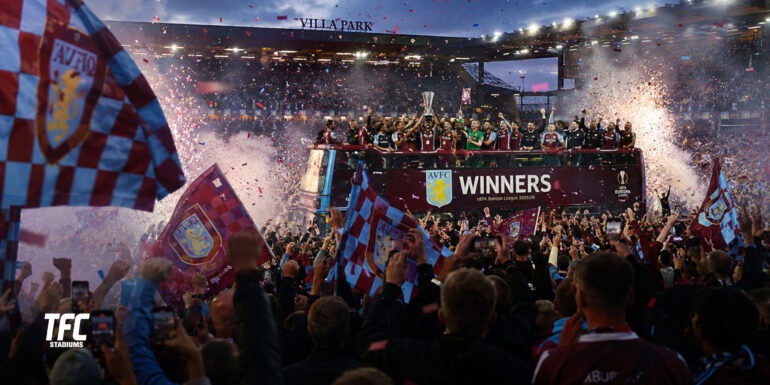
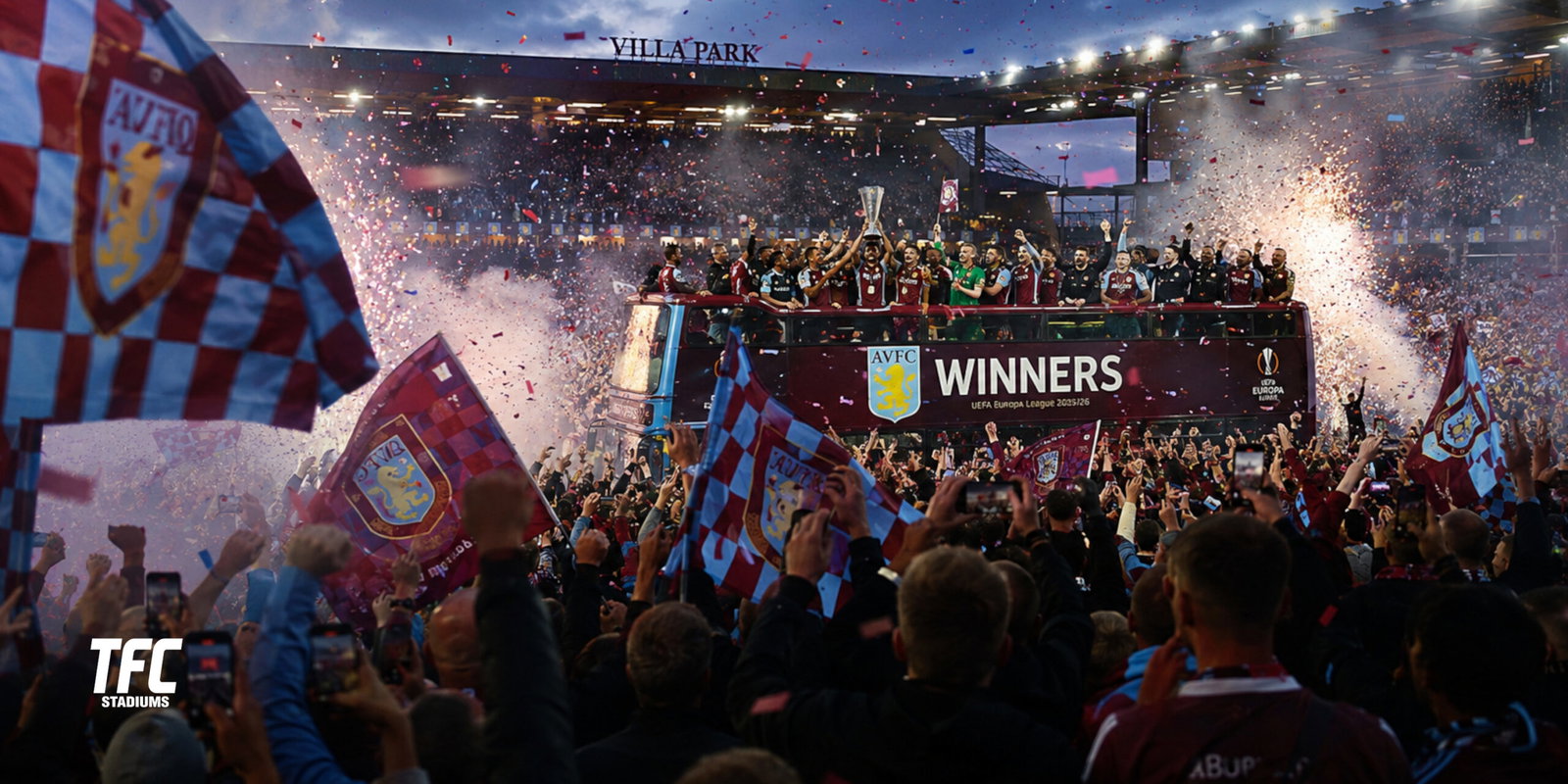
The celebrations started in Istanbul but reached another level when the team returned to Birmingham.
Villa Park was transformed into a sea of claret and blue.
Supporters who had witnessed the European Cup in 1982 stood alongside children experiencing their first major trophy celebration. Stories passed naturally from one generation to another. The gap between old and young disappeared for one glorious evening.
As a fan, that might have been my favourite part. Winning trophies is wonderful, but watching grandparents explain to grandchildren why they had waited so long for another European success felt genuinely special.
Football has a remarkable habit of connecting generations.
This was one of those moments.
Why Villa’s Cup Parades Feel Different
Every successful club celebrates.
Villa celebrations carry a distinct identity.
The Holte End provides the soundtrack.
Players rarely appear detached from the occasion. They celebrate alongside supporters rather than performing for television cameras.
The atmosphere feels authentic because so much patience sits behind every success.
Aston Villa supporters have experienced relegation, financial uncertainty, promotion campaigns and years spent trying to rebuild. That journey gives every trophy an added emotional weight.
Perhaps that is why Villa’s greatest celebrations never feel manufactured.
They feel earned.
Birmingham Celebrates With the Club
Cup parades have always stretched beyond Villa Park.
Businesses decorate windows in claret and blue.
Schools become filled with shirts the following morning.
Families who may disagree about almost everything suddenly agree on one thing.
The Villa have brought another trophy home.
Football remains one of the few occasions capable of creating that kind of city-wide celebration.
Villa’s history belongs to Birmingham as much as it belongs to the football club itself.
How Victory Parades Have Evolved
| Earlier Celebrations | Modern Celebrations |
| Railway station welcomes | Open-top bus parades |
| Brass bands | Live music and stadium events |
| Local newspaper coverage | Worldwide broadcasts and social media |
| Civic receptions | Fan festivals at Villa Park |
| Thousands attending | Millions following globally |
Technology has changed how supporters experience these occasions.
Supporters across the world can now watch celebrations live, while drones capture scenes previous generations could only imagine.
Yet the essence remains exactly the same.
Fans simply want to see their captain holding a trophy.
Aston Villa’s Major Honours
| Competition | Titles |
| First Division / Premier League | 7 |
| FA Cup | 7 |
| League Cup | 5 |
| European Cup | 1 |
| UEFA Europa League | 1 |
| UEFA Super Cup | 1 |
Few English clubs can point to a trophy cabinet as varied or historically significant.
Domestic success laid the foundations.
European triumphs cemented Villa’s place among football’s great institutions.
Final Thoughts
Villa Park has witnessed celebrations spanning almost 140 years.
Victorian FA Cup winners, the European champions of Rotterdam, the League Cup heroes of the 1990s and Unai Emery’s Europa League winners have all returned to the same stadium to share silverware with the people who made every journey worthwhile.
Some supporters waited decades to experience another European parade after 1982. The triumph in Istanbul finally gave a new generation its own defining memory.
Football constantly looks forward. There is always another season, another transfer window and another fixture list waiting around the corner.
But every so often, time stands still.
When Aston Villa return to Villa Park carrying another trophy, the result becomes part of history, the celebrations become part of club folklore and every supporter present knows they are witnessing a story that will be told for decades to come.
About the Author