There are stadiums that host football games, and then there are stadiums that completely rewrite a city’s identity.
AT&T Stadium belongs firmly in the second category.
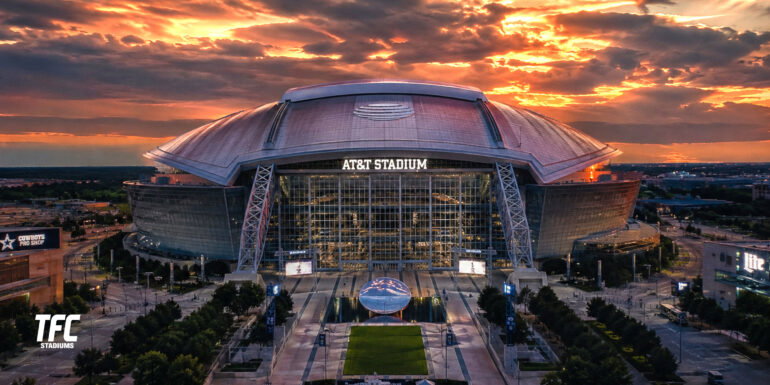
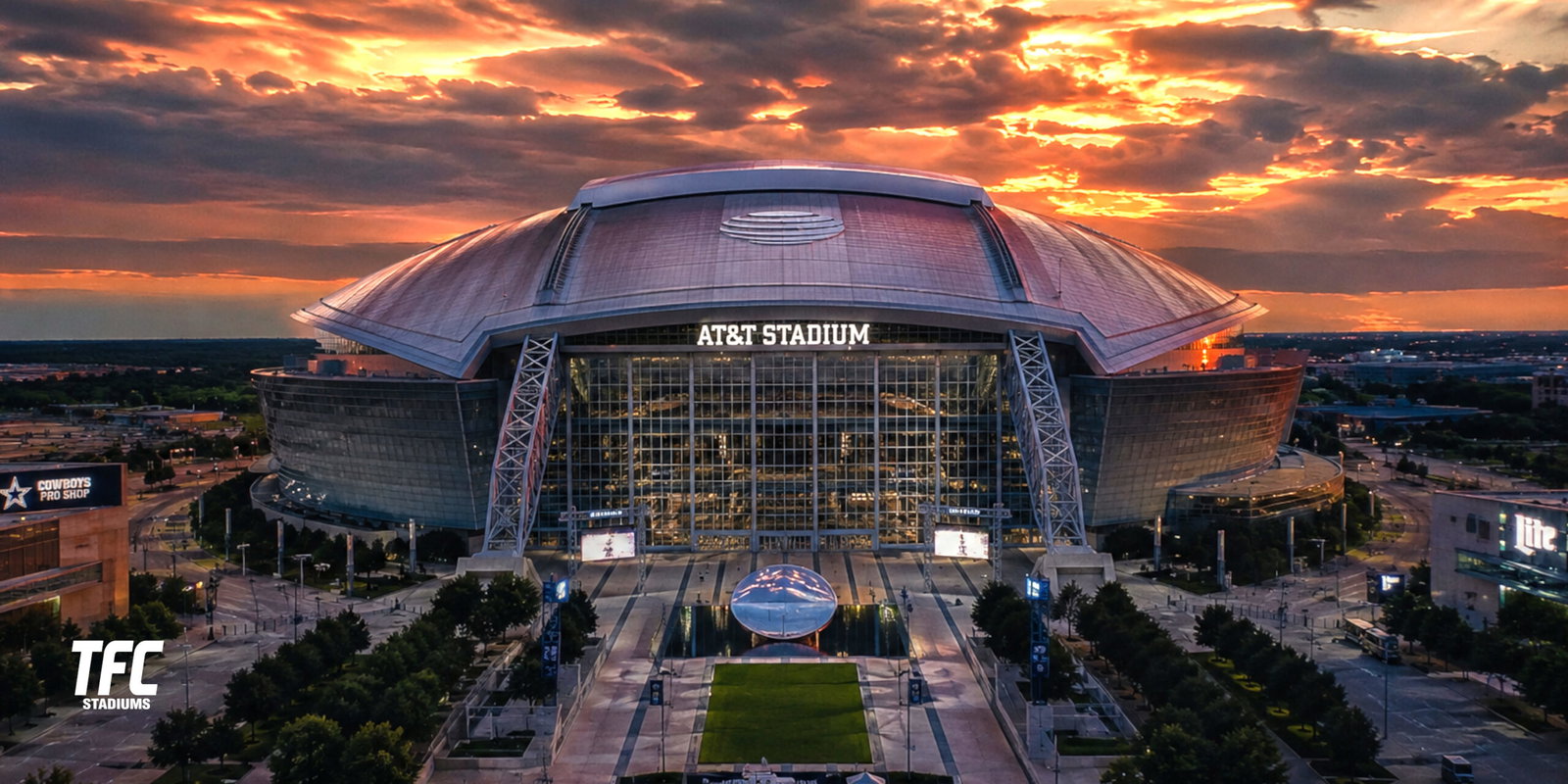
When it opened in 2009, the home of the Dallas Cowboys instantly became one of the most recognisable sports venues on the planet. With its enormous retractable roof, colossal video board and almost theatrical scale, it looked less like a football stadium and more like something NASA might have built if they suddenly developed an interest in tailgating.
For Arlington, Texas, the impact went far beyond Sunday football. The stadium fundamentally changed how the city was viewed by tourists, businesses, investors and sporting organisations across the world.
Today, Arlington is no longer simply the place between Dallas and Fort Worth. For millions of visitors every year, it has become a destination in its own right.
Arlington Before AT&T Stadium
Before construction began, Arlington already had strengths.
The city was home to Six Flags Over Texas, Globe Life Park, the University of Texas at Arlington and a growing population. It attracted visitors, particularly during baseball season, but it lacked a defining landmark capable of drawing worldwide attention throughout the year.
Dallas carried the international reputation.
Fort Worth had the cowboy culture.
Arlington often felt like the middle child that happened to have excellent parking.
The decision to build a new home for the Dallas Cowboys changed everything.
A Multi-Billion Dollar Investment
AT&T Stadium cost approximately $1.3 billion, making it one of the most expensive sports venues ever constructed when it opened.
Funding combined private investment from Cowboys owner Jerry Jones with public financing approved by Arlington voters through increased sales, hotel and car rental taxes.
The project generated thousands of construction jobs over several years while injecting substantial spending into the regional economy before the first kickoff even took place.
More importantly, it created confidence.
Large developments often encourage additional investment, and that is exactly what happened around the stadium district.
Creating a Sports and Entertainment District
AT&T Stadium did not exist in isolation.
It became the anchor for what has evolved into one of America’s busiest sports and entertainment zones.
Within a relatively small area visitors can find:
- AT&T Stadium
- Globe Life Field
- Choctaw Stadium
- Texas Live!
- Live by Loews Hotel
- Arlington Convention Campus
- Esports venues
- Restaurants, hotels and retail developments
Rather than attracting visitors for a single event, Arlington increasingly attracts people for weekends or even longer stays.
That has a multiplier effect throughout the local economy.
One football game may last four hours.
The hotel stay, restaurant visits, shopping and entertainment often continue for several days.
Tourism Has Reached New Heights
One of the clearest impacts has been tourism.
AT&T Stadium hosts far more than NFL games.
Annual events include:
- Dallas Cowboys home games
- College football
- International football
- Concerts
- Monster Jam
- Supercross
- Boxing
- WrestleMania
- Major conventions
- Corporate events
- High school championships
The stadium also offers year-round public tours, attracting visitors even during the NFL off season.
That means Arlington benefits from a much steadier flow of visitors than cities dependent on one sporting calendar.
The Economic Ripple Effect
Economic studies have estimated that Cowboys home games alone generate tens of millions of dollars in local spending each season.
That spending reaches businesses throughout Arlington.
Hotels experience higher occupancy.
Restaurants become packed before and after events.
Bars remain busy.
Retail stores benefit from visiting fans.
Ride share companies, taxi operators and local transport providers all see increased demand.
Even businesses that appear unrelated often experience stronger sales during major event weekends.
When more than 90,000 people arrive in one area, almost everyone ends up buying something.
A Magnet for Global Sporting Events
One of AT&T Stadium’s greatest strengths is flexibility.
Its size and technology allow organisers to host events that many other stadiums simply cannot accommodate.
Major events have included:
| Event | Impact |
|---|---|
| Super Bowl XLV | Worldwide television audience |
| NCAA Final Four | Hundreds of thousands of visitors |
| Copa América | International tourism |
| Gold Cup | Regional football fans |
| WrestleMania | Global sports entertainment audience |
| FIFA World Cup 2026 | Expected to be one of the tournament’s showcase venues |
Each event introduces Arlington to millions of viewers around the world.
That exposure would cost enormous sums if purchased through traditional advertising.
Instead, the city receives repeated international visibility simply by hosting major events.
Infrastructure Improvements
Large stadium projects rarely succeed without investment in surrounding infrastructure.
Roads were upgraded.
Traffic management systems improved.
Parking capacity expanded.
Public safety operations were modernised to handle huge crowds.
These improvements benefit residents throughout the year rather than only during major events.
Of course, anyone leaving after a Cowboys game might still question whether traffic engineering has reached perfection.
Moving 90,000 people at the same time remains a challenge no matter how many traffic lights you install.
Employment Opportunities
AT&T Stadium supports employment in several ways.
Permanent jobs include:
- Stadium operations
- Security
- Marketing
- Facility management
- Hospitality
- Event management
Seasonal employment expands dramatically during major events.
Local businesses also hire additional staff to cope with increased visitor demand.
The result is a broader employment ecosystem extending well beyond the stadium itself.
Rising Property Values and Development
Large entertainment districts often encourage nearby commercial investment.
Arlington has seen significant growth in:
- Hotels
- Mixed-use developments
- Restaurants
- Office space
- Residential projects
- Entertainment venues
Developers generally prefer investing where visitor numbers are strong and infrastructure already exists.
AT&T Stadium helped provide both.
Building Arlington’s Global Brand
Perhaps the most difficult impact to measure is branding.
Before 2009, many international sports fans had never heard of Arlington.
Today, millions immediately associate the city with one of the world’s most famous stadiums.
That recognition helps attract:
- Businesses
- Investors
- Sporting organisations
- Event promoters
- Convention organisers
- Tourists
A city’s reputation influences investment decisions more than many people realise.
Recognition creates confidence.
Confidence attracts capital.
The Challenges
The stadium has not solved every problem.
Large event days inevitably create congestion.
Traffic can be frustrating.
Parking prices remain a common complaint.
Public funding for stadium construction continues to divide opinion years later.
Some economists question whether stadiums consistently deliver the long-term economic returns promised before construction.
Supporters argue that traditional economic studies often underestimate tourism, branding and private investment generated over decades.
The truth probably sits somewhere in the middle.
AT&T Stadium has clearly delivered enormous benefits, but like any major infrastructure project, measuring every indirect impact is far from straightforward.
More Than Football
What separates AT&T Stadium from many NFL venues is its ability to remain active throughout the year.
Many stadiums sit largely unused outside the football season.
AT&T Stadium rarely enjoys that luxury.
Concerts fill the calendar.
International football arrives regularly.
Corporate events use the premium facilities.
High school championships become unforgettable experiences for young athletes.
Even tourists with no interest in American football frequently take stadium tours simply to admire the architecture.
Keeping the building busy helps spread economic benefits across the calendar rather than concentrating them into a handful of weekends.
Looking Ahead
Arlington’s future remains closely tied to its sports district.
The FIFA World Cup has already accelerated further investment, while additional hotels, entertainment venues and mixed-use developments continue to reshape the surrounding area.
The stadium itself remains one of the most technologically advanced venues in world sport, helping Arlington compete for events that many cities simply cannot host.
As sports and entertainment become increasingly global businesses, having one of the world’s most recognisable venues gives Arlington a competitive advantage that extends well beyond Texas.
TFC Takeaway
AT&T Stadium has changed Arlington in ways that extend far beyond football.
It has reshaped the local economy, attracted global attention, encouraged private investment and transformed a suburban city into one of America’s leading sports and entertainment destinations.
Not every prediction made before construction has come true, and debates over public funding remain perfectly valid. Even so, the broader picture is difficult to ignore. Arlington now hosts some of the biggest sporting events on Earth, welcomes millions of visitors each year and enjoys a global profile that would have seemed improbable just a generation ago.
For many cities, a stadium is simply somewhere people gather on game day.
For Arlington, AT&T Stadium became part of the city’s identity. It is the landmark that announced to the world that this was no longer just the place between Dallas and Fort Worth. It had become a destination all of its own, complete with giant scoreboards, unforgettable spectacles and enough barbecue aromas to make even the most disciplined diet surrender before kick-off.
About the Author