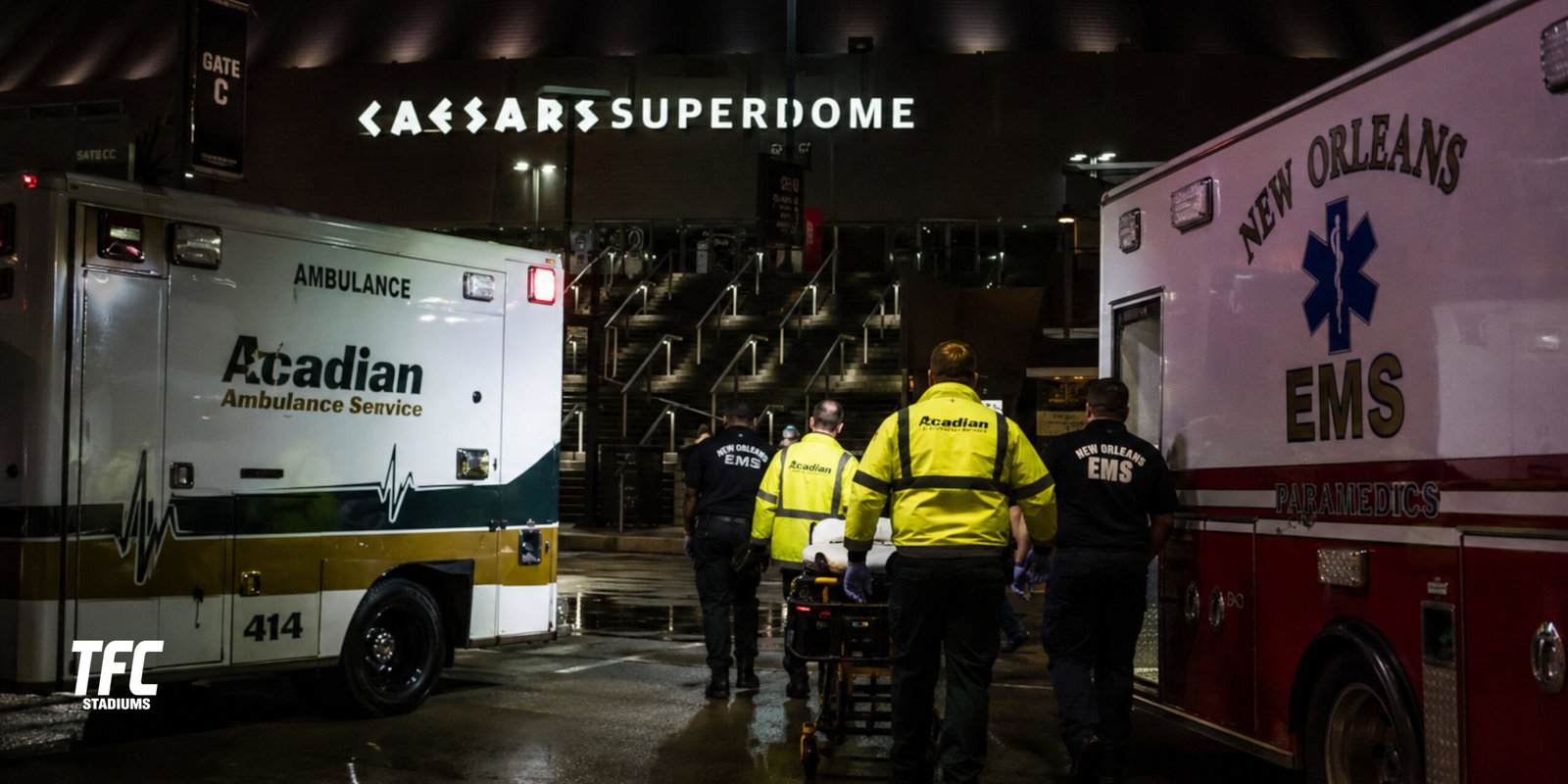
When people think about the Caesars Superdome, they picture deafening Saints crowds, Super Bowls, Final Fours, Taylor Swift concerts and the occasional moment when the building feels like it might actually lift off its foundations.
What most people never notice is the healthcare system quietly operating behind the scenes.
On any given event day, the Superdome functions almost like a small city. Tens of thousands of people gather under one roof, many climbing steep stairs, standing for hours, eating rich food, drinking alcohol and dealing with Louisiana’s famous humidity before they even reach their seats. Statistically, someone is going to need medical attention.
The challenge is making sure help arrives quickly without disrupting the event.
It is an operation that combines trained medical staff, emergency planning, technology and close cooperation with local hospitals. Most fans will never need it, which is exactly how everyone involved hopes it stays.
Why Stadium Medical Care Matters
Modern stadiums are expected to do far more than patch up scraped knees.
Medical teams prepare for everything from:
- Cardiac emergencies
- Heat exhaustion
- Slips and falls
- Allergic reactions
- Diabetic emergencies
- Seizures
- Asthma attacks
- Alcohol related illness
- Crowd injuries
- Severe trauma
While major emergencies remain relatively uncommon, the sheer size of the crowd means medical teams treat dozens of people during many large events.
Healthcare planning has become just as important as security planning.
A Network of First Aid Stations
Rather than relying on one central medical room, the Superdome uses multiple first aid stations positioned around the venue.
These facilities allow fans to receive treatment without travelling across the stadium.
Typical services include:
- Initial medical assessment
- Treatment for minor injuries
- Hydration
- Blood pressure monitoring
- Blood sugar testing
- Wound care
- Observation before returning to the event
For many visitors, treatment takes only a few minutes before they head straight back to watching the action.
Nobody wants to miss the fourth quarter because of a twisted ankle.
Trained Medical Personnel Throughout the Stadium
Medical coverage extends well beyond first aid rooms.
Event day staffing typically includes:
| Medical Resource | Purpose |
|---|---|
| Physicians | Clinical oversight |
| Registered nurses | Patient treatment |
| Emergency medical technicians | Rapid response |
| Paramedics | Advanced emergency care |
| Athletic trainers | Sports related injuries |
| Event medical supervisors | Coordination of incidents |
These teams work alongside stadium security and operations staff, allowing emergencies to be identified quickly.
The response system is designed so fans rarely need to search for help. Staff members can immediately contact medical personnel using the venue’s communications network.
Automated External Defibrillators Save Lives
Perhaps the most important equipment inside the stadium is something most fans never notice.
Automated External Defibrillators, better known as AEDs, are positioned throughout the Superdome.
Medical research consistently shows survival rates improve dramatically when defibrillation occurs within the first few minutes following sudden cardiac arrest.
Because of this, staff receive training in recognising cardiac emergencies while emergency response teams practise rapid deployment throughout the building.
Those first few minutes matter enormously.
Emergency Response Planning
Preparing for one injured fan is relatively straightforward.
Preparing for multiple simultaneous emergencies involving more than 70,000 spectators requires something entirely different.
Every event involves detailed planning covering:
- Medical staffing levels
- Ambulance access routes
- Emergency vehicle staging
- Crowd evacuation procedures
- Severe weather response
- Communications between agencies
- Hospital coordination
Large events often involve joint planning between stadium management, local emergency services, fire departments, police and regional healthcare providers.
Everyone knows their role before the gates even open.
Working With New Orleans Hospitals
The Superdome does not operate in isolation.
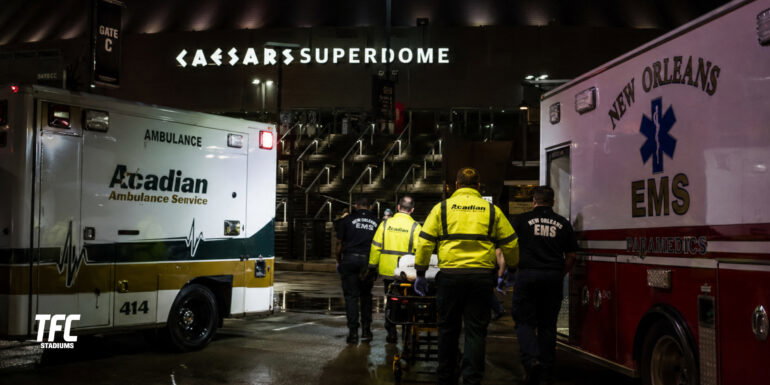
Patients requiring further treatment can be transferred rapidly to some of New Orleans’ leading medical centres.
The city benefits from several major hospitals with advanced trauma capabilities, allowing serious cases to receive specialist treatment quickly.
Clear transport routes are established before major events, helping ambulances avoid unnecessary delays even when surrounding roads are busy with spectators.
Heat, Humidity and Fan Health
Although the Superdome itself is fully climate controlled, many medical cases begin before fans even enter the building.
Louisiana weather has a habit of reminding visitors that air conditioning is one of humanity’s greatest inventions.
Long walks from parking areas, tailgating, high temperatures and humidity all increase the risk of dehydration.
Medical teams regularly encourage visitors to:
- Drink water before entering
- Eat throughout the day
- Avoid excessive alcohol
- Seek assistance early if feeling unwell
Many heat related illnesses can be resolved quickly when treated promptly.
Accessibility and Medical Support
Medical services also support fans with additional healthcare needs.
Staff assist guests requiring:
- Wheelchair support
- Medical emergencies involving disabilities
- Temporary mobility assistance
- Assistance reaching medical stations
- Coordination with accessible seating areas
Accessibility teams work closely with medical personnel to ensure visitors receive appropriate support throughout their visit.
Technology Behind Modern Stadium Healthcare
Medical care has become increasingly sophisticated over the past decade.
Today’s event operations often include:
- Digital incident reporting
- Radio linked response teams
- CCTV assisted emergency location
- Mobile communications between supervisors
- Real time coordination with security
Technology reduces response times while allowing medical leaders to monitor incidents across the entire venue.
For a stadium covering more than 13 acres under one roof, knowing exactly where help is needed can save valuable minutes.
Learning From Major Events
Few stadiums have hosted as many high profile events as the Superdome.
Its experience includes:
- Multiple Super Bowls
- NCAA Final Fours
- College Football Playoff games
- WrestleMania
- International football
- Major concerts
- Disaster response operations following Hurricane Katrina
Each event provides valuable operational lessons that feed into future planning.
Medical procedures are continually reviewed, refined and adapted as healthcare guidance evolves.
How Many Medical Incidents Occur?
Exact figures vary by event type.
Research across major North American stadiums suggests medical presentation rates generally range between five and 20 patients per 10,000 spectators, depending on factors including weather, alcohol consumption, crowd demographics and event duration.
At a sold out Superdome, this can translate into dozens of medical assessments during a single event.
Fortunately, the overwhelming majority involve minor illnesses or injuries rather than life threatening emergencies.
That statistic is a reminder of just how much preparation goes into keeping large crowds safe.
The Importance of Staff Training
One of the strongest predictors of successful emergency outcomes is not expensive equipment.
It is preparation.
Medical personnel, security staff, ushers, guest services and operations teams all receive ongoing training covering emergency recognition, communication procedures and crowd management.
Regular exercises help ensure everyone understands how incidents are managed before a real emergency occurs.
Like a well drilled football team, the best performances are usually the ones nobody notices.
Looking Ahead
Healthcare at major stadiums continues to evolve.
Future improvements are likely to include:
- Faster digital patient tracking
- Enhanced crowd monitoring
- AI assisted operational analysis
- Improved wearable communication systems
- Greater integration with local emergency networks
As stadiums become smarter, medical services are becoming faster, more connected and increasingly proactive.
Takeaway
The Caesars Superdome is famous for unforgettable sporting moments, legendary concerts and some of the loudest crowds anywhere in North America.
Hidden behind those memories is an equally impressive healthcare operation.
Thousands of hours of planning, highly trained professionals, strategically placed medical facilities and close coordination with New Orleans emergency services all combine to create a safer environment for every visitor.
Most fans will never visit a first aid station during their trip to the Superdome.
That is probably the greatest compliment the medical team could hope for.
About the Author