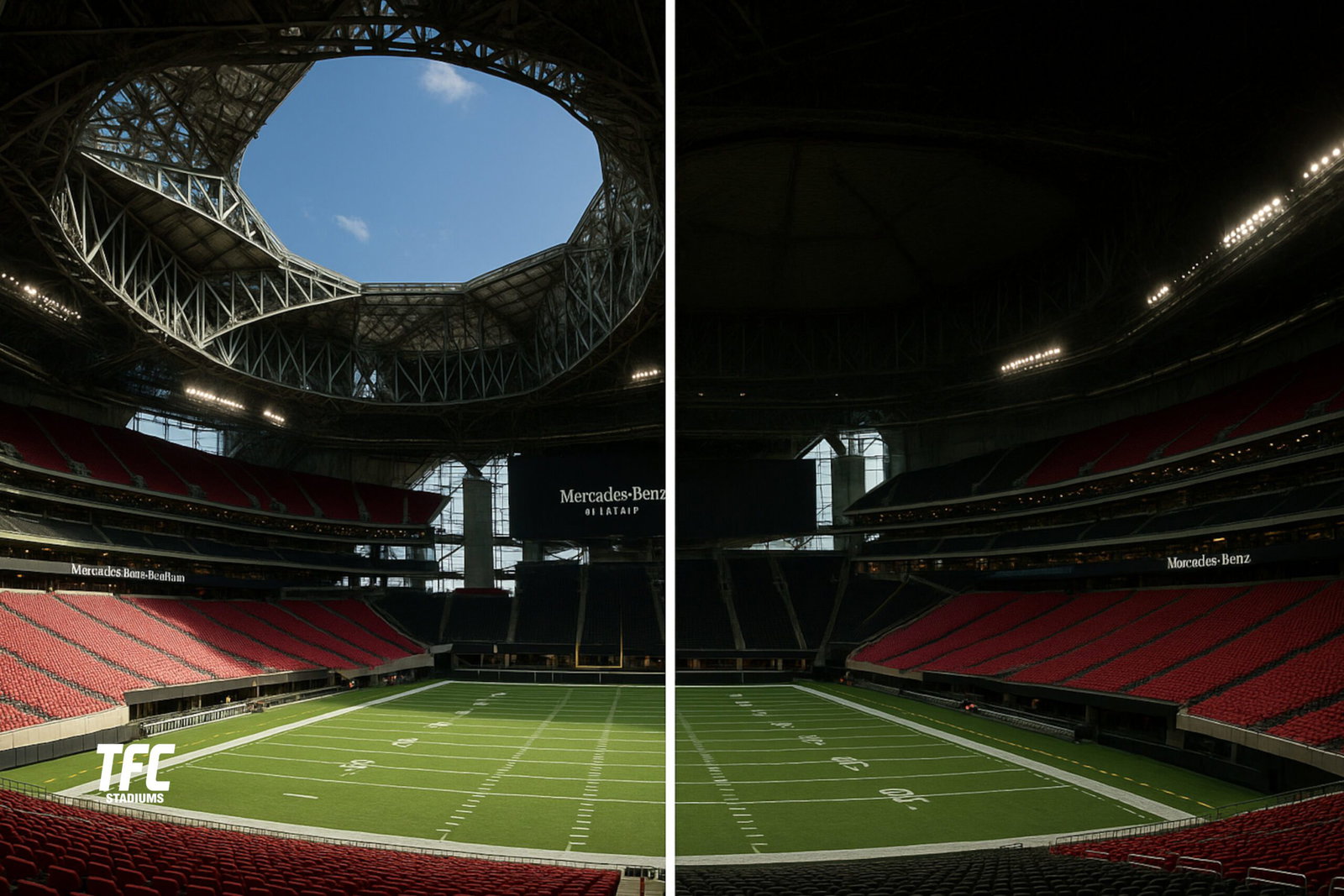
The Mercedes-Benz Stadium in Atlanta is a technical showpiece in modern stadium design. One of its most distinctive features is the retractable roof, which mimics the motion of a camera aperture. This isn’t just aesthetic flair. The design serves functional and environmental goals, combining architectural ambition with precise engineering.
A Concept Inspired by Geometry
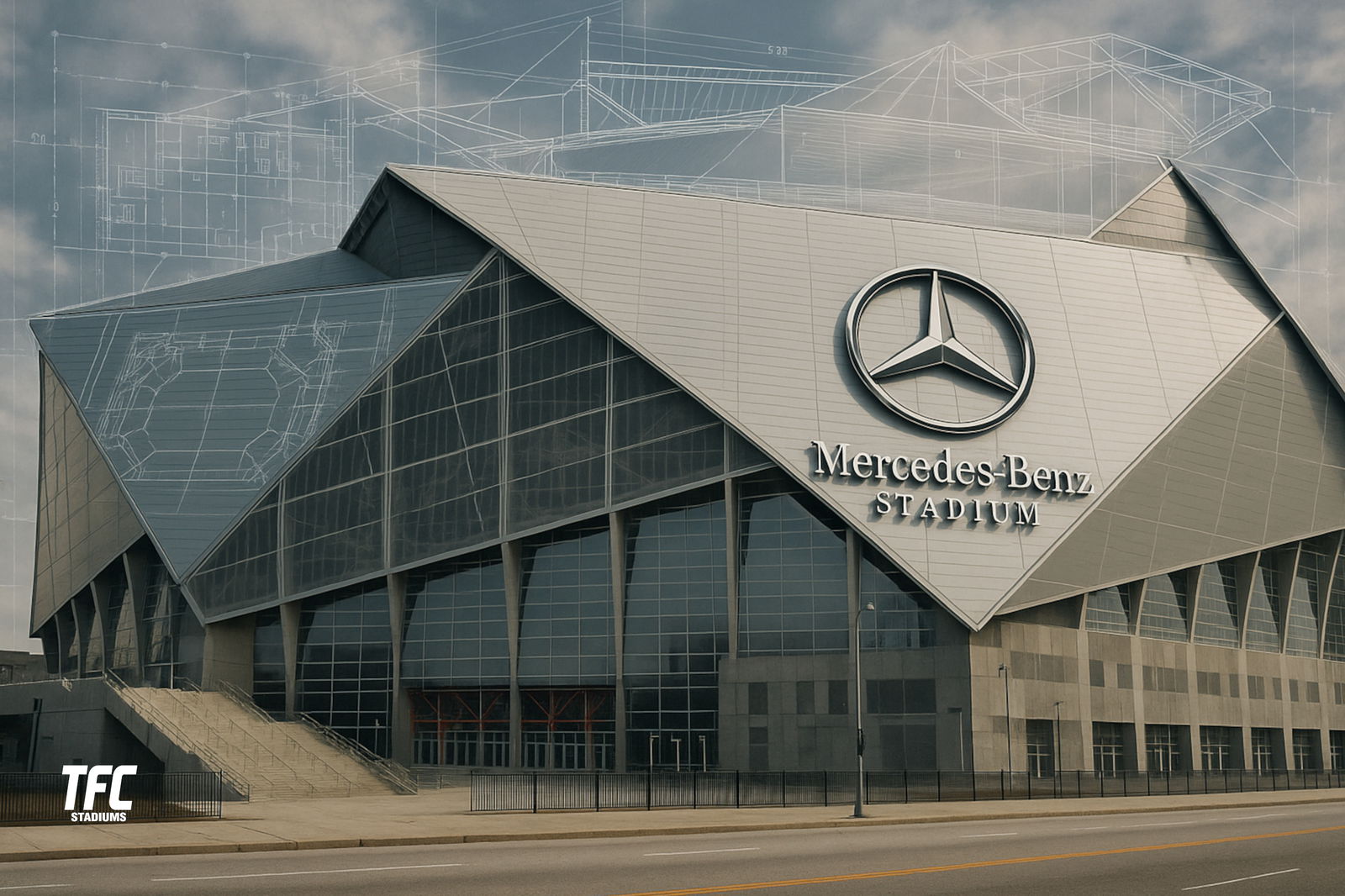
The roof consists of eight triangular steel petals, each weighing approximately 500 tons. When opening, these petals rotate along steel tracks to create a circular aperture at the centre of the stadium. The motion is smooth and symmetrical, resulting in an elegant spiral effect. The inspiration came from the oculus of ancient Roman architecture and the mechanics of a camera lens. It’s an ambitious blend of tradition and technology.
How the Mechanism Works
At its core, the roof operates on a system of rails, motors, and a sophisticated control program.
- Track Design: Each of the eight petals moves along an independent linear track mounted to the halo structure.
- Motorised Movement: The petals are powered by motors housed in the overhead spine of each segment. These motors synchronise to open or close the roof in roughly 8 minutes.
- Central Aperture: The final open configuration creates a 360-degree oculus about 120 metres in diameter, exposing the field to natural light and airflow.
The materials used for the panels include lightweight ethylene tetrafluoroethylene (ETFE), allowing for reduced structural strain and high durability.
Structural Integration and Challenges

The roof does not sit on top of the stadium as a separate element. Instead, it’s fully integrated into the circular truss frame. This required extreme precision during construction, as even slight misalignments would compromise the mechanics. Engineers also had to account for Atlanta’s climate, including heavy rain and heat, ensuring that the system could perform reliably throughout the year.
There were delays and cost overruns during the installation phase. The complexity of coordinating all eight moving sections with weather resistance and long-term durability meant the roof wasn’t fully operational at the time of the stadium’s initial opening in 2017. Nonetheless, once completed, it became a centrepiece of the design.
Environmental and Fan Benefits
The retractable roof plays a role in the stadium’s LEED Platinum certification. By allowing for natural light and ventilation, it reduces reliance on artificial lighting and air conditioning during open-roof events.
From a fan perspective, the design improves acoustics and visibility. The oculus shape avoids the “dome echo” often found in closed stadiums, and the retractable nature ensures flexibility for a variety of sports and entertainment events.
Summary
The Mercedes-Benz Stadium roof isn’t a gimmick. It represents a calculated marriage of aesthetics, function, and sustainability. By emulating a camera lens, it transforms the stadium from a passive structure into a responsive environment. It remains one of the most recognisable and technically ambitious roofs in global sport architecture.
About the Author