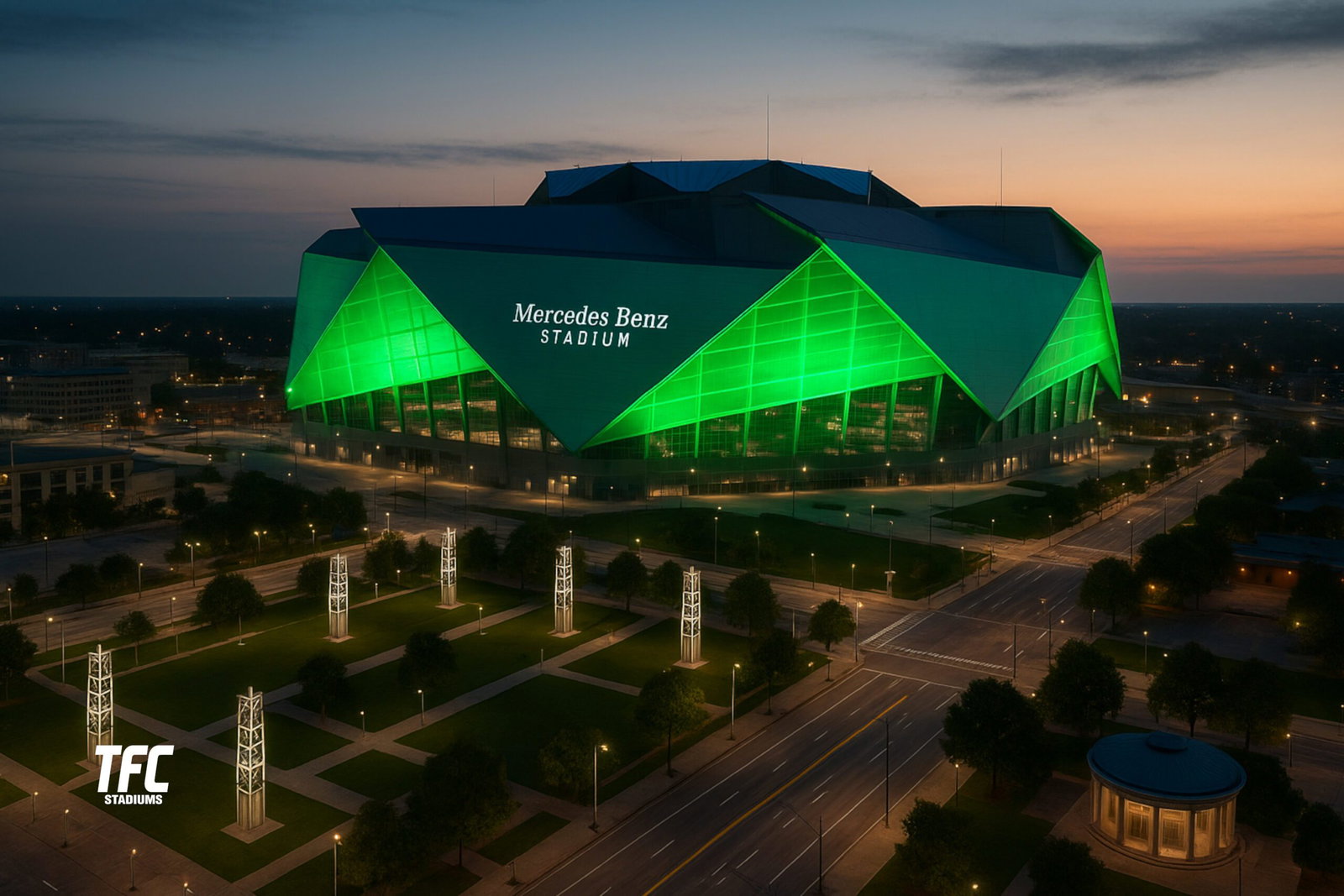
Mercedes-Benz Stadium in Atlanta, Georgia, is often cited as a benchmark for sustainable sports venues. It goes far beyond basic energy-saving measures and instead integrates sustainability into its very structure and purpose. Opened in 2017 as the home of the Atlanta Falcons and Atlanta United FC, the stadium was the first professional sports venue in the United States to achieve LEED Platinum certification. Its environmental credentials are not simply marketing points but a result of deliberate design and engineering decisions.
A Roof Designed for Efficiency and Light
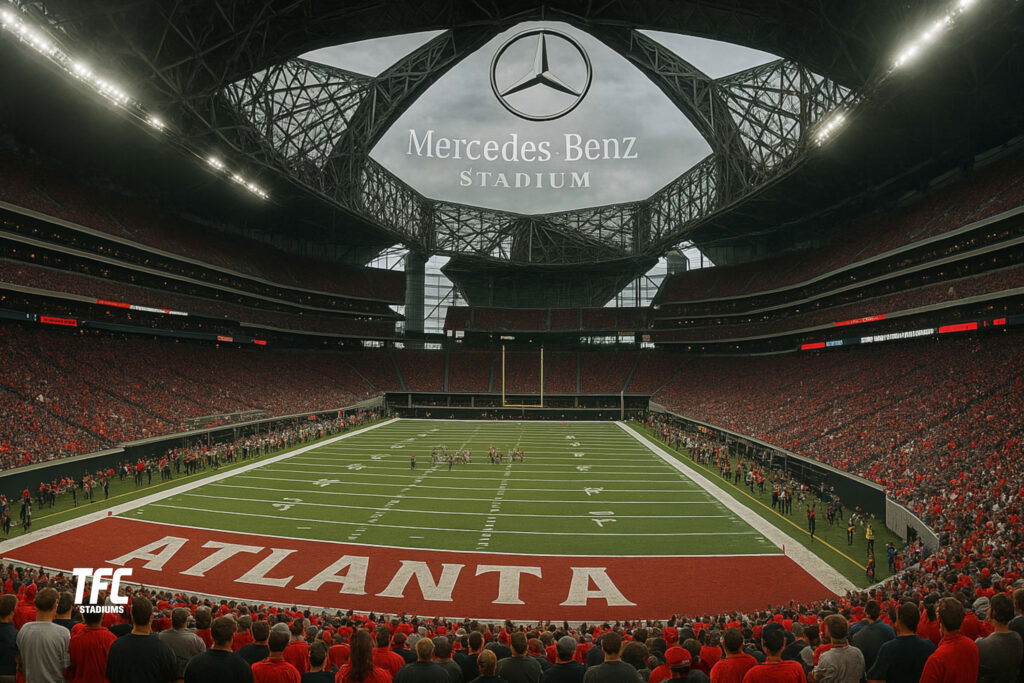
One of the most striking features of Mercedes-Benz Stadium is its retractable roof. Inspired by the oculus of the Roman Pantheon, it opens and closes in a circular motion, allowing for natural ventilation and reducing the need for artificial cooling during milder weather. The roof’s polycarbonate panels also allow daylight to filter through, which cuts the reliance on electric lighting during daytime events.
This daylighting strategy is extended throughout the building. Over 4,000 LED lights work in concert with light sensors to adjust interior lighting levels depending on the natural light available, creating significant energy savings across a venue that spans over 2 million square feet.
Water Conservation: A Model for Urban Stadiums
The stadium has a 680,000-gallon stormwater management system that captures rainfall from its roof and surrounding hardscape. This harvested water is used for irrigation and in the stadium’s cooling tower operations. Not only does this reduce municipal water demand, but it also prevents excessive runoff into Atlanta’s sewer system, a critical concern in a city prone to flash floods.
Fixtures inside the stadium use 47 percent less water than standard designs. This includes low-flow toilets, urinals, and sensor-controlled faucets, which work seamlessly in a high-capacity environment.
Energy Performance and Solar Power
Mercedes-Benz Stadium operates with 29 percent greater energy efficiency than a typical stadium of its size. It achieves this through a combination of features: energy-efficient HVAC systems, LED lighting, advanced building controls, and envelope insulation that maintains temperature consistency across the interior.
In addition, the stadium incorporates over 4,000 solar panels, generating enough renewable energy to power 10 Falcons games per year. These panels are mounted on the parking decks and surrounding structures rather than on the stadium roof, where the retractable system takes precedence.
Sustainable Materials and Local Sourcing
From the beginning, the design team prioritised low-impact materials. Over 30 percent of the materials used in the stadium’s construction were made from recycled content. Additionally, a significant portion of the raw materials were sourced within 500 miles of the site, reducing the environmental cost of transport.
The project also diverted over 90 percent of construction waste from landfills through reuse and recycling programmes, including concrete, steel, and wood materials.
Public Transport and Urban Access
The stadium is located directly adjacent to MARTA rail lines, making it easily accessible by public transport. There are also dedicated bike valet services and electric vehicle charging stations, encouraging fans to use greener forms of transit.
This location within the city centre plays a major role in reducing emissions tied to event-day travel, a factor that often undermines the environmental benefits of otherwise efficient stadiums situated in remote or car-dependent areas.
LEED Platinum Certification and Ongoing Impact
Mercedes-Benz Stadium was awarded LEED Platinum certification by the U.S. Green Building Council, the highest standard available under their framework. But sustainability did not end at certification. The stadium’s management continues to monitor and adapt operations through ongoing energy audits, waste diversion reporting, and outreach to community partners in sustainability.
It also runs a “Zero Waste” programme during events, which diverts 90 percent or more of game-day waste away from landfills through composting and recycling.
TFC Takeaway
Mercedes-Benz Stadium sets a precedent not only for stadium architecture but for the broader construction industry. It shows that even at a massive scale, environmentally responsible design can be both functional and commercially viable. Its example now influences other large venues around the world, proving that sustainability can be deeply embedded, not just added on.
About the Author