MetLife Stadium, located in East Rutherford, New Jersey, stands as one of the most modern and versatile sports venues in the United States. Serving as the shared home of the New York Giants and New York Jets, the stadium has become a defining fixture in the NFL calendar while also hosting concerts, international football matches, and major entertainment events.
Architecture and Design
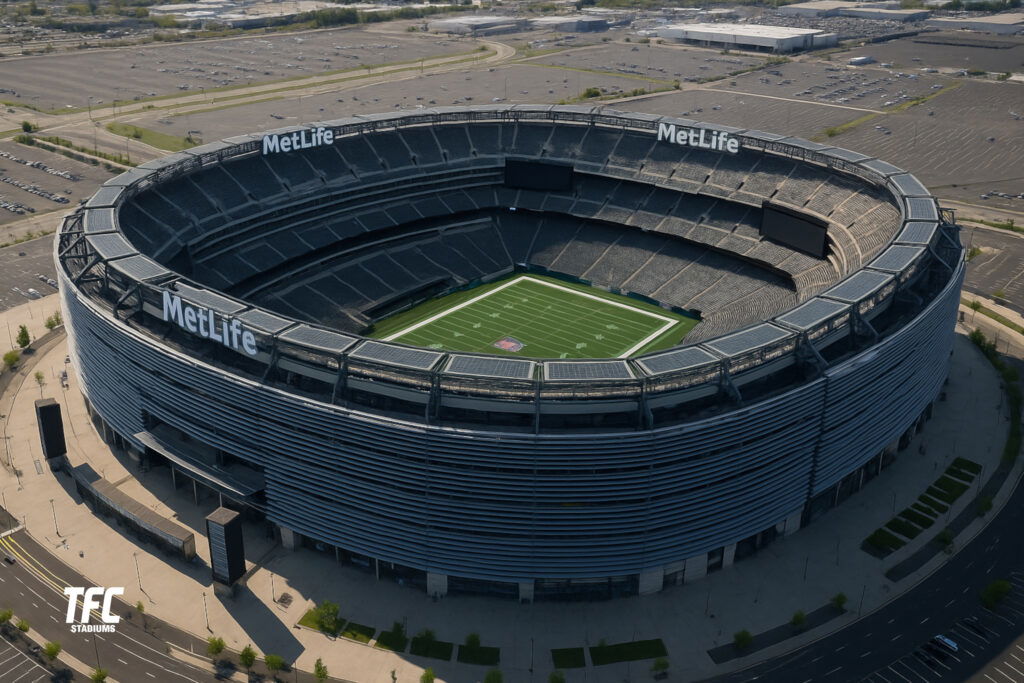
Opened in 2010, MetLife Stadium was designed by the architecture firm EwingCole in collaboration with 360 Architecture. It replaced the old Giants Stadium and introduced a more neutral, modern aesthetic intended to accommodate two franchises equally. The exterior is clad in aluminium louvers which subtly reflect the teams’ colours depending on who is playing. On game days, the building lights up in green for the Jets and blue for the Giants, a functional compromise in a rare stadium-sharing arrangement.
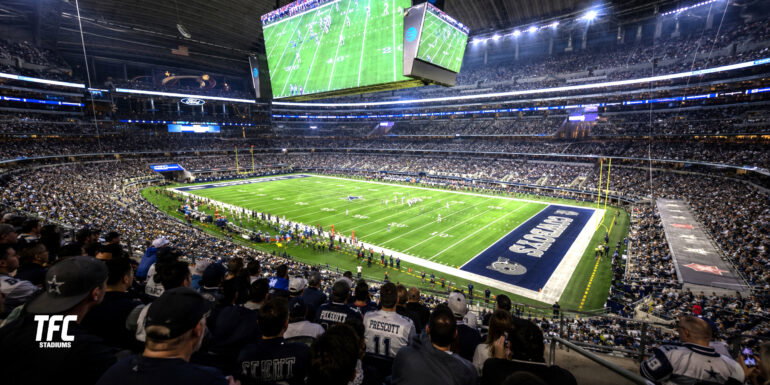
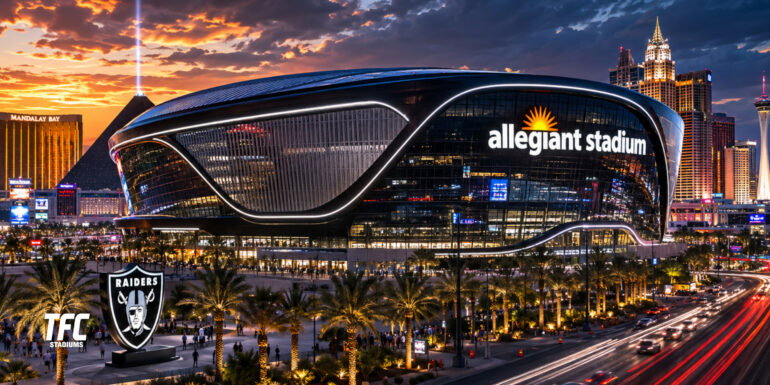
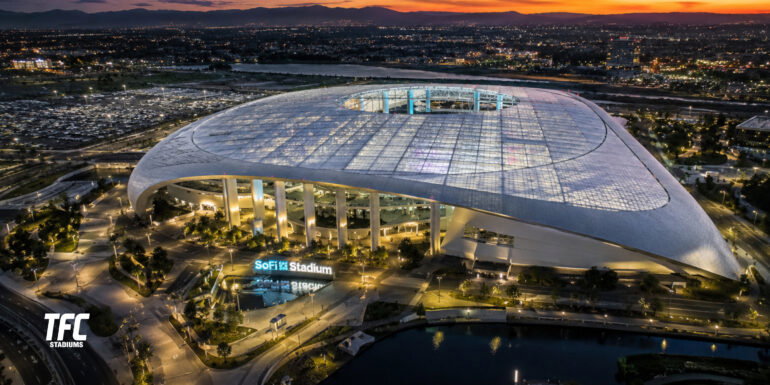
The design is focused on symmetry, sightline clarity, and functionality rather than traditional ornament. It avoids the grand visual flourishes of newer stadiums like SoFi or Allegiant but offers a practical and imposing structure. The stadium bowl is slightly elliptical, creating an even distribution of seats with strong views from every level.
Capacity and Seating Layout
MetLife Stadium can officially seat 82,500 fans, making it the largest stadium in the NFL. It features four tiers of seating: Lower Bowl, Mezzanine, Upper Bowl, and Club Level. The Mezzanine Club sections are particularly expansive and designed for both corporate and premium seating.
Luxury seating includes 200 suites and over 10,000 club seats. Each suite offers private entrances, concierge services, and direct access to lounges. Sightlines have been carefully calculated to reduce blind spots and bring fans closer to the action, even from higher levels.
The stadium also has over 2,000 HD monitors placed throughout concourses, bars, and suites, ensuring fans can follow the game without missing a moment while away from their seats.
Features and Technology
MetLife Stadium offers a range of features that reflect its status as a modern multi-purpose venue:
- Video Boards: Four 30-by-118-foot HD video screens are placed at each corner of the stadium, providing real-time replays, statistics, and entertainment.
- Wi-Fi and Connectivity: The entire stadium is equipped with high-capacity Wi-Fi, which has been regularly upgraded to accommodate increasing digital demand.
- Green Initiatives: The building includes a rooftop solar ring and has taken steps to reduce energy use, water consumption, and waste.
- Flexible Branding: Through advanced LED and lighting systems, the stadium can rapidly switch between Giants and Jets branding, from wall signage to concourse decor.
The facility also boasts expansive concourses, wide aisles, and more than 500 concession points to streamline the fan experience. It was built with evacuation and crowd control in mind, allowing full clearance of the stadium in under 12 minutes if necessary.
Events and Adaptability
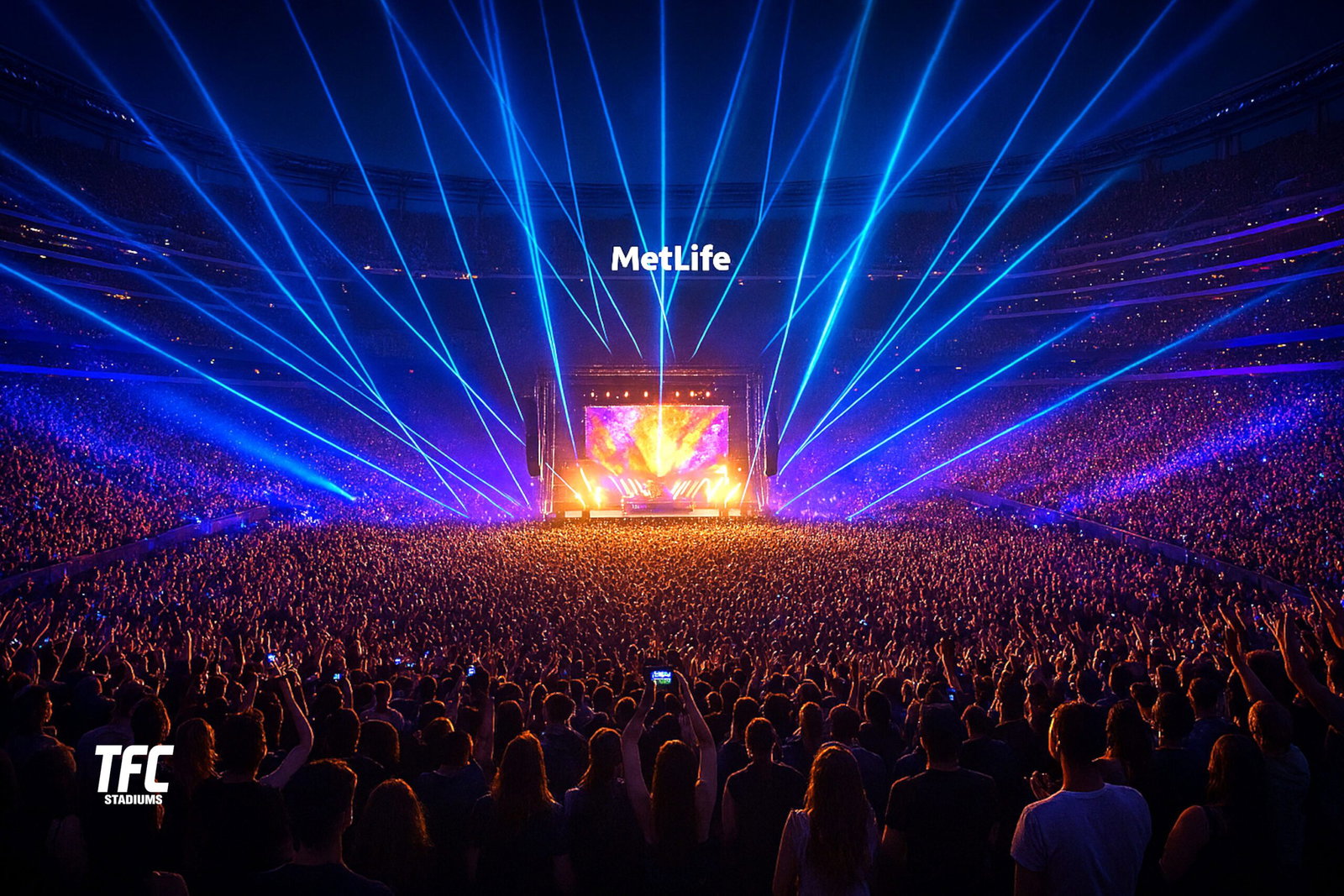
Since opening, MetLife has hosted events ranging from WrestleMania and major concerts to Copa América matches and Super Bowl XLVIII. Its layout is adaptable for football, soccer, lacrosse, and large-scale entertainment productions.
Concert configurations allow for crowds of up to 90,000, with removable seating and staging flexibility. The stadium is also a confirmed host venue for the 2026 FIFA World Cup, with matches expected to draw global attention.
Final Thoughts
MetLife Stadium might lack the dramatic skyline views or ultra-modern roof structures of some of its contemporaries, but it remains a technically advanced and operationally smooth stadium. Its ability to serve two NFL teams while accommodating a broad range of other events speaks to a careful balance of design, utility, and scale. With its strategic location near New York City and its upcoming role in the World Cup, MetLife remains a key stadium in the international spotlight.
About the Author