A Tale of Two National Stadiums
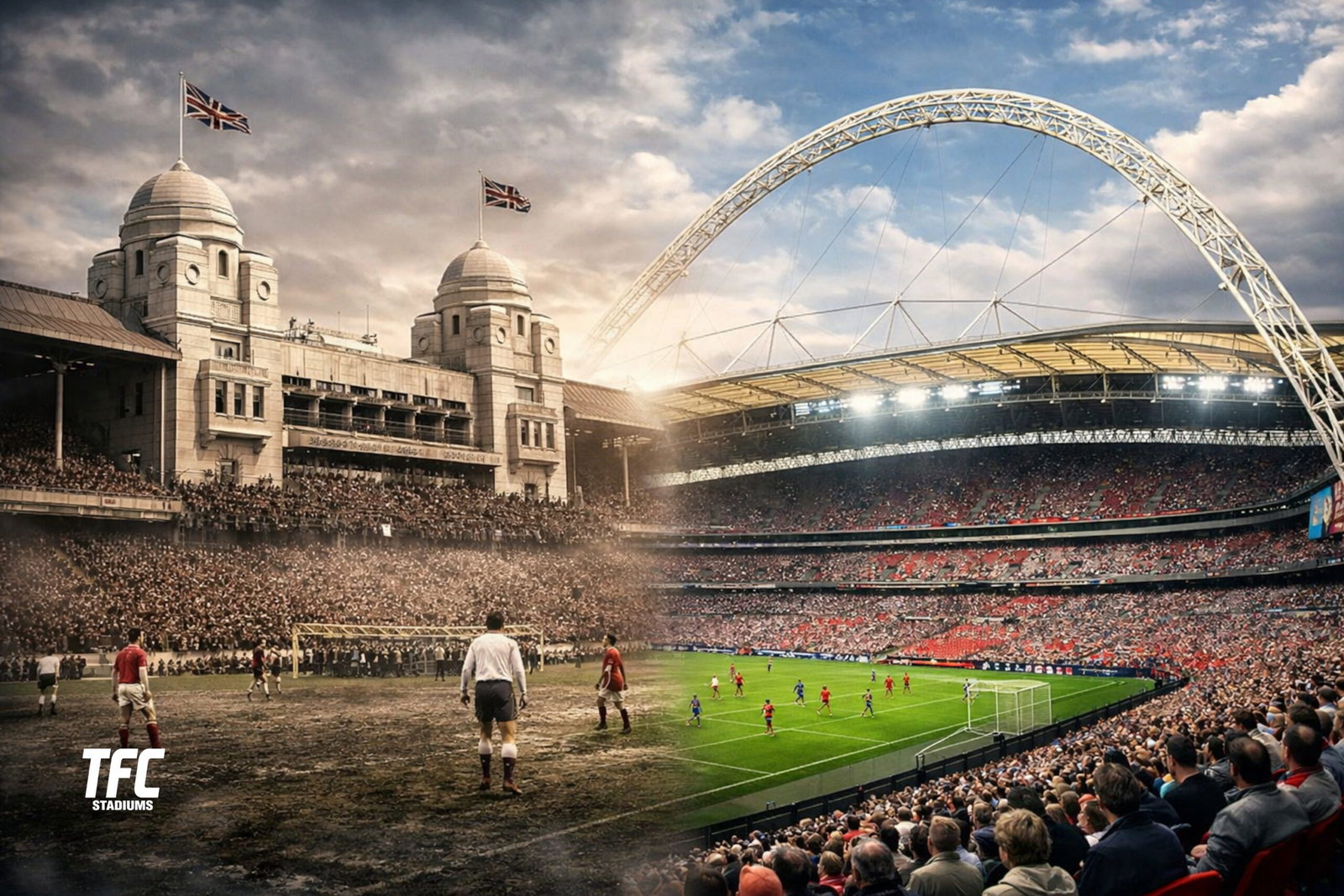
Few sporting venues have carried as much emotional weight as Wembley. The original ground was a place of myth, mud, and memory. The modern rebuild is a cathedral of steel and concrete, designed for the global age. Comparing them is not about deciding which was better, but understanding how English football and British sport changed around them.
Old Wembley Stadium 1923 to 2000
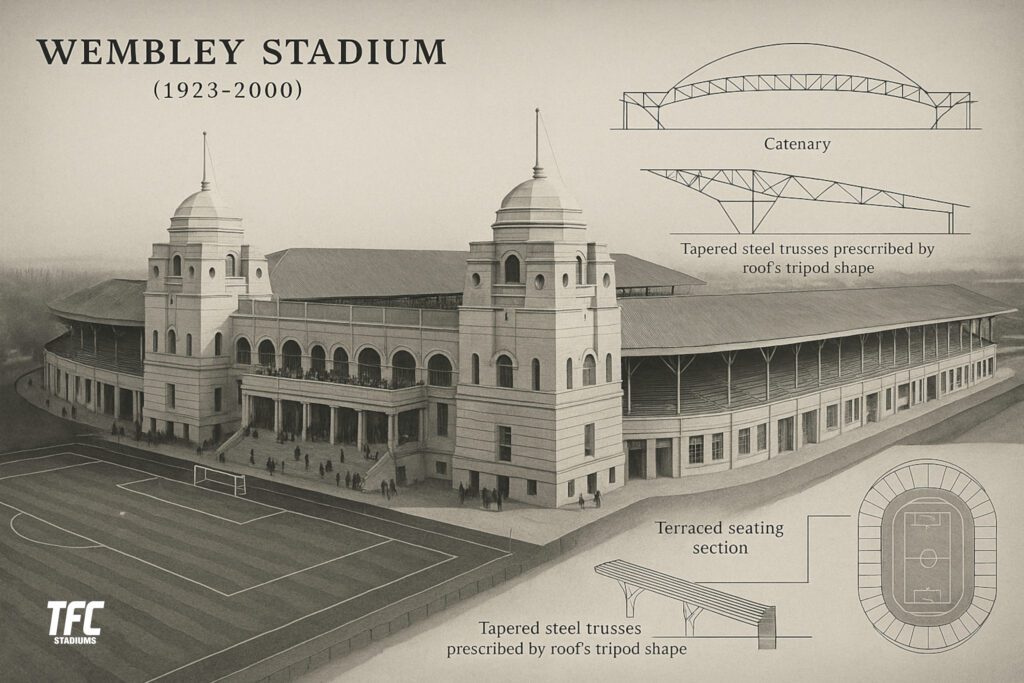
Wembley Stadium opened in 1923 as the Empire Stadium, built for the British Empire Exhibition. Its twin towers were never meant to be iconic, yet they became shorthand for finals day itself. If you reached the towers, you had made it.
Capacity officially hovered around 82,000, though finals regularly pushed beyond that. The 1923 White Horse Final is estimated to have drawn more than 200,000. Safety standards were very different, and comfort barely registered as a concern.
This was a stadium that lived for moments. The 1966 World Cup final. England v Hungary in 1953. League One play off finals played on a pitch that resembled a ploughed field by May. Wembley grass often cut up badly, but players adapted because everyone did.
Acoustically, Old Wembley was unpredictable. At times it felt subdued, then suddenly deafening when a goal went in at the right end. Sightlines were uneven, pillars blocked views, and the upper tiers felt distant. None of that mattered when the towers came into view.
New Wembley Stadium 2007 to Present
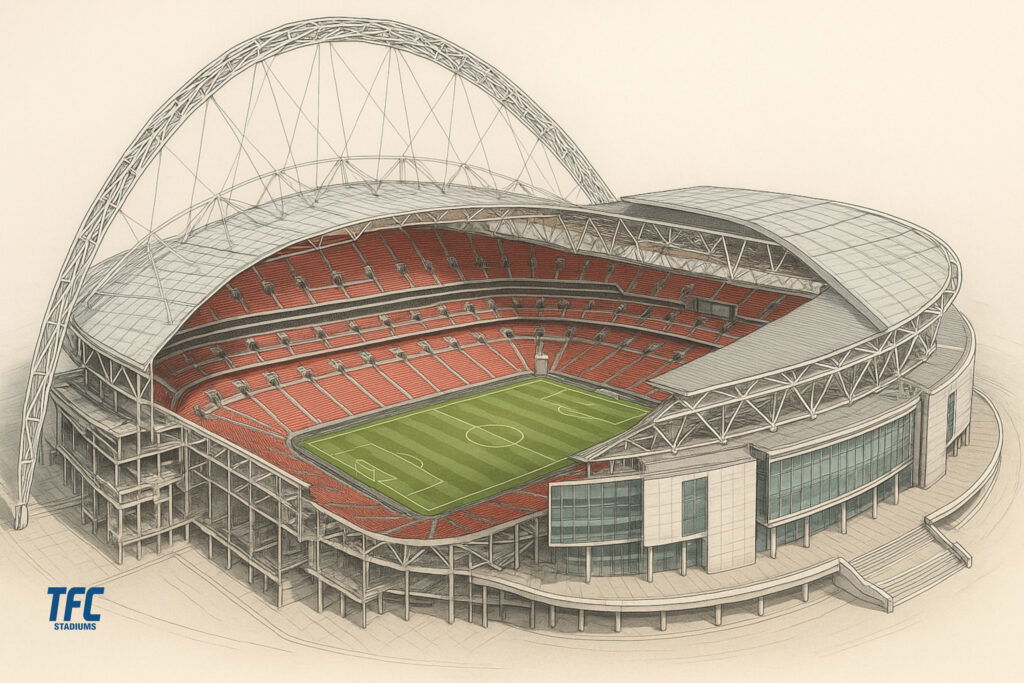
Wembley Stadium reopened in 2007 after one of the most complex rebuilds in British construction history. The arch, standing 133 metres high, replaced the towers as the new symbol, visible across much of London.
With a seated capacity of 90,000, it became the largest stadium in the UK. Every seat has a clear view of the pitch. Accessibility, crowd flow, and safety were designed into the structure rather than added later.
The pitch uses advanced drainage, grow lighting, and hybrid grass technology. It holds up across football, NFL, boxing, and concerts in a way the old surface never could. Hospitality areas, lounges, and premium seating now play a major role in how the stadium operates financially.
Atmosphere is often debated. Big occasions deliver noise and scale, but regular critics argue that sound disperses more than it did in the old bowl. It is a fair point, though it also reflects modern crowd behaviour rather than just architecture.
Head to Head Stadium Comparison
| Category | Old Wembley | New Wembley |
|---|---|---|
| Years active | 1923 to 2000 | 2007 to present |
| Capacity | Approx. 82,000 | 90,000 |
| Seating | Mostly standing | Fully seated |
| Icon | Twin Towers | Steel Arch |
| Pitch quality | Natural grass, poor drainage | Hybrid grass, advanced systems |
| Sightlines | Inconsistent | Clear from all seats |
| Accessibility | Limited | Fully modern compliant |
| Primary use | Football finals, internationals | Football, NFL, boxing, concerts |
Iconic Matches and Moments
Old Wembley hosted events that shaped national identity. The 1966 World Cup final alone would have secured its place in history. Add FA Cup finals decided by last minute goals, Horse of the Year Show pageantry, and England’s greatest wins and defeats.
New Wembley has delivered scale rather than singular myth. Champions League finals, Euro 2020 matches, Anthony Joshua world title fights, and regular NFL games have turned it into a multi sport global venue. Its legacy is still being written.
One hosted memory. The other hosts everything.
Financial and Cultural Impact
The original stadium was publicly owned for much of its life and rarely discussed in financial terms. It simply existed as the place where finals happened.
The rebuild cost roughly £798 million. It must earn its keep. That reality explains the frequency of non football events, sponsorship activations, and premium experiences. Purists sometimes bristle at this, but without it the stadium would struggle to justify its scale.
Culturally, Old Wembley belonged to the domestic game. New Wembley belongs to the global calendar.
Which Wembley Truly Feels Like Wembley?
Old Wembley felt earned. You stood, you waited, you craned your neck, and you accepted the discomfort because it was Wembley. New Wembley feels designed. It works smoothly, looks impressive, and delivers consistency.
Both reflect their eras perfectly. One grew iconic by accident. The other was engineered to be iconic from day one.
Final Verdict
Old Wembley was history soaked into concrete. New Wembley is infrastructure built for a modern sporting economy. Neither replaces the other. Together, they tell the story of how football, crowds, and expectations evolved over a century.
About the Author