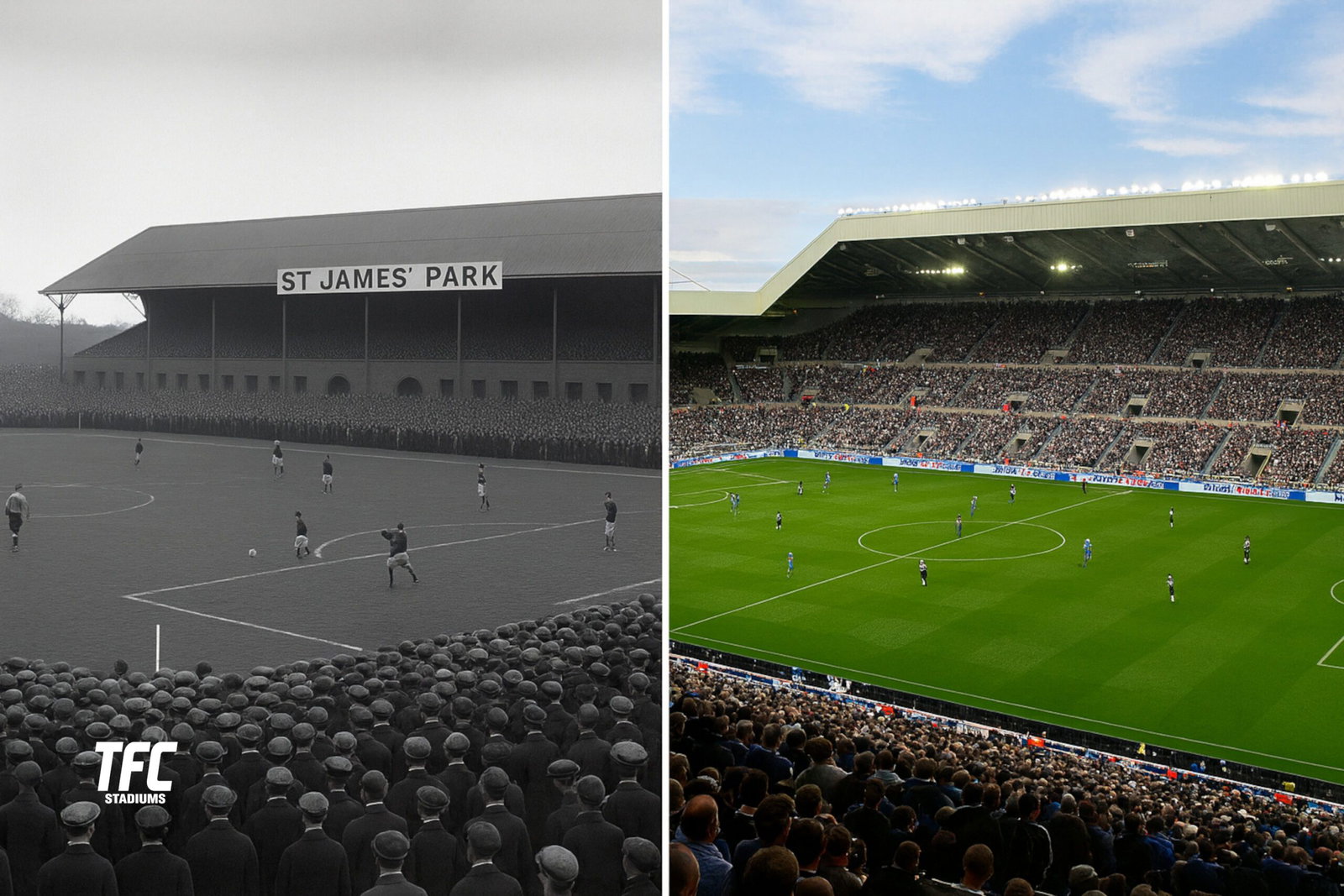
St James’ Park is one of the most iconic stadiums in English football. Situated in the heart of Newcastle upon Tyne, it has been the home of Newcastle United since the club’s formation in 1892. Over more than a century, the ground has undergone dramatic changes while maintaining its central place in the life of the city and the identity of the club.
Origins and Early Years
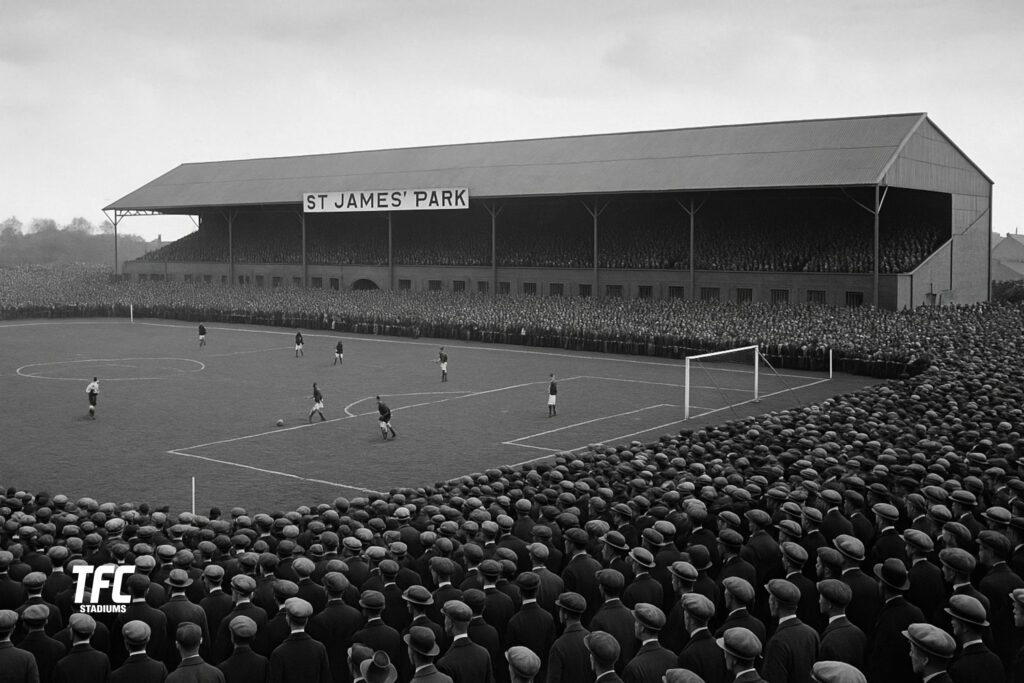
Before Newcastle United existed, football was already being played on the site. The original St James’ Park was used by Newcastle Rangers from 1880. When Newcastle East End moved into the ground in 1892 and subsequently merged with Newcastle West End, the newly formed Newcastle United adopted St James’ Park as their permanent home.
The stadium’s early layout was modest, with a simple wooden stand and earthen banks forming the bulk of spectator areas. By the early 1900s, development picked up, and the club began investing in infrastructure to accommodate a growing fanbase.
Interwar Expansion and Supporter Growth
As Newcastle United rose to prominence in English football, winning league titles and FA Cups in the early 20th century, St James’ Park also expanded. A new West Stand was completed in 1905, and further improvements followed through the 1920s and 1930s. These upgrades mirrored the ambitions of the club, which drew tens of thousands of supporters during this golden period.
In 1930, the club installed covered terraces and increased capacity to around 60,000, though facilities remained basic. The proximity to the city centre made the ground unusually hemmed in, which would cause issues in later years.
Post-War Challenges and Modernisation Attempts
After World War II, the stadium began to show its age. Although Newcastle remained well supported, the facilities at St James’ Park lagged behind. Attempts to modernise the ground were often met with resistance from the local council, particularly over height restrictions due to the ground’s location near Leazes Terrace and the city’s historic skyline.
During the 1960s and 70s, the club undertook piecemeal developments, including new floodlights, limited seating expansions, and the opening of the Leazes End in 1972. However, poor results on the pitch and inconsistent planning left the stadium in a state of limbo by the early 1980s.
The Hall Era and the 1990s Transformation
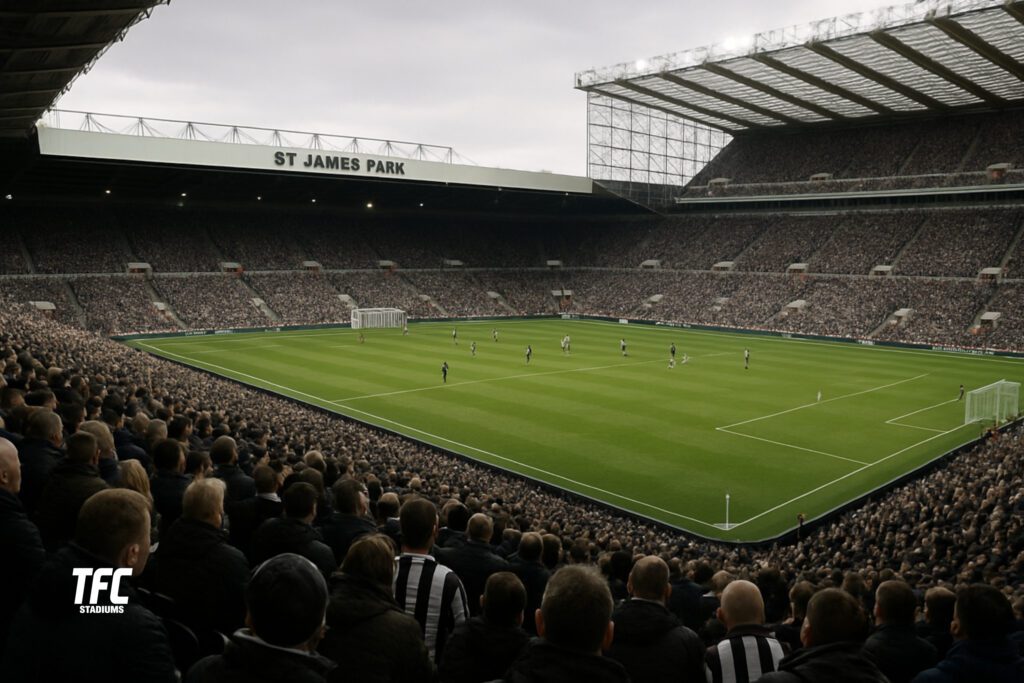
The most radical transformation came under the ownership of Sir John Hall in the early 1990s. With the club’s promotion to the Premier League in 1993 and the arrival of Kevin Keegan as manager, Newcastle entered a new era of ambition. The demand for tickets surged, and the outdated terraces were no longer viable.
Between 1993 and 1998, St James’ Park underwent a complete overhaul. The Gallowgate and Leazes Stands were rebuilt, and the Milburn and East Stands were expanded. By the turn of the millennium, the stadium had become a modern all-seater venue, boasting a capacity of over 52,000.
2000s to Present Day
The early 2000s saw continued success under Sir Bobby Robson, with European football returning to Tyneside. St James’ Park became a regular host for UEFA fixtures and England international matches.
In 2009, controversial owner Mike Ashley briefly renamed the stadium the Sports Direct Arena, sparking fierce backlash from supporters. The St James’ Park name was reinstated in 2012, restoring its historic identity.
In recent years, under the new ownership led by the Public Investment Fund of Saudi Arabia, discussions have reopened about expanding the capacity or redeveloping the site. With the team back in the Champions League and fan interest higher than ever, the stadium is once again at the heart of long-term plans.
Architectural Identity and Urban Significance
What sets St James’ Park apart is its location. Sitting on a hill above the city, the stadium looms over Newcastle’s skyline, visible from miles around. Unlike many modern grounds, it remains tightly bound into the urban fabric, giving it a sense of place that few stadiums can match.
Despite several redevelopments, its asymmetrical stands and visible steelwork retain a sense of raw character, reflecting both the city’s industrial past and the club’s combative identity.
Legacy and Importance
St James’ Park is a landmark, a gathering point, and a symbol of the region’s passion for football. It has seen title wins, European nights, managerial dramas, and unforgettable goals. For Newcastle fans, it represents pride, hope, and history in equal measure.
Whatever changes lie ahead, St James’ Park remains one of English football’s most enduring and culturally significant grounds.
About the Author