A Unique Corner of English Football
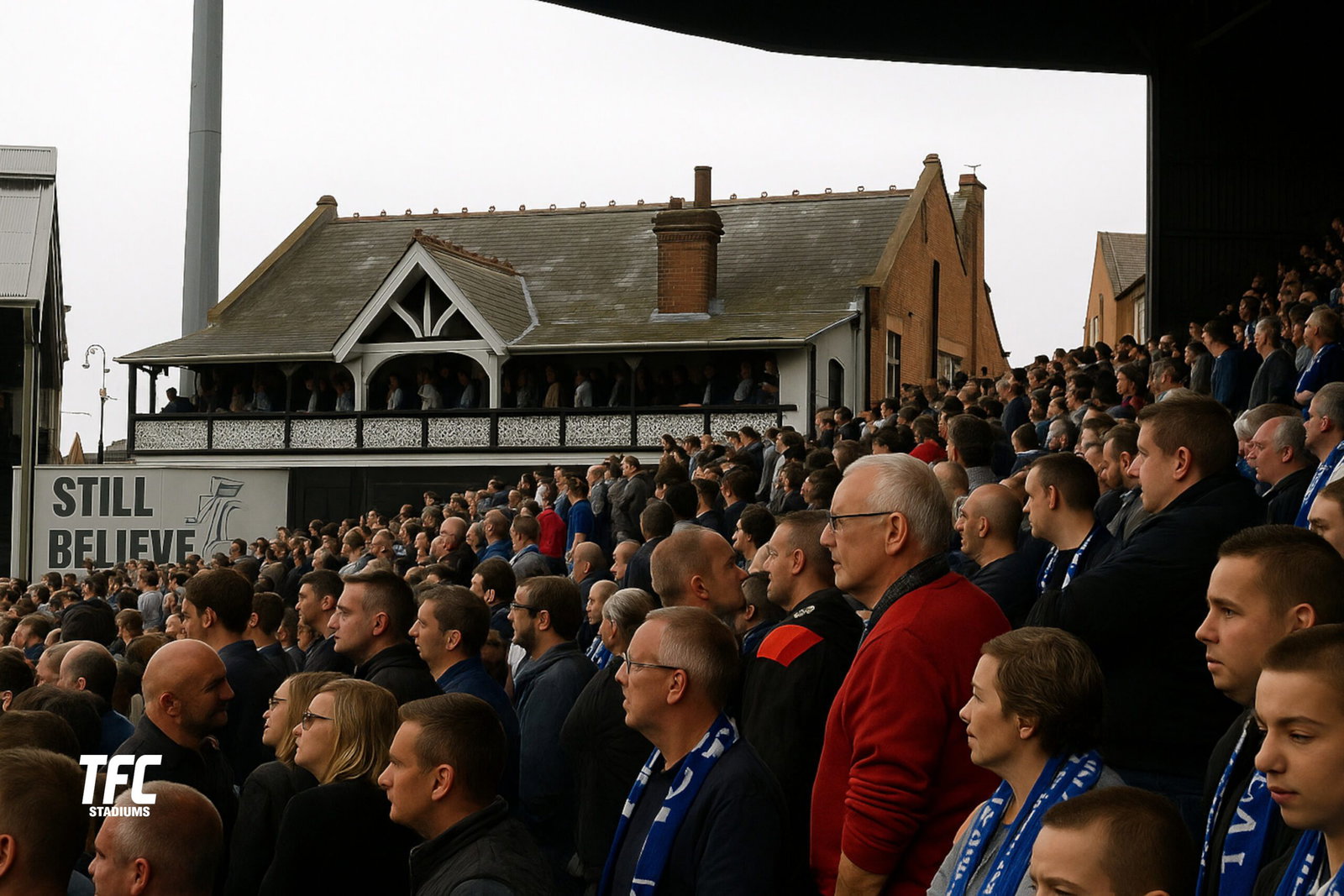
Few grounds in English football can boast a feature as eccentric and beloved as the Cottage Pavilion at Fulham’s Craven Cottage. Tucked neatly into the corner of the stadium between the Johnny Haynes Stand and the Putney End, the Pavilion is both a relic of Edwardian design and a living reminder that football grounds do not need to be uniform bowls of concrete and glass to carry prestige.
Origins and Purpose
The Pavilion was built in 1905, designed by Archibald Leitch, the most famous football architect of his day. While most of his work involved imposing terraces and steel structures, here he turned his hand to something that looked more like a genteel cricket pavilion.
- It was never intended as a player tunnel.
- Instead, it provided changing facilities and a social space for players and officials.
- For many years, players would actually walk across the pitch from the Pavilion to line up for matches.
It was a sight both charming and slightly surreal, with footballers traipsing across the turf in front of supporters before kick-off.
Architecture and Character
The Pavilion’s design is distinctly un-football-like:
- Brickwork and Timber: In contrast to the utilitarian structures elsewhere, its warm brick base and half-timbered upper floor give it the feel of a country house out of place in West London.
- Balconies and Windows: Its charming balcony allowed directors and officials to watch the game in a way that was at once genteel and faintly absurd.
- Size: It is famously small. When Fulham returned to the Premier League in the modern era, rival fans could not quite believe such a building was part of a top-flight stadium.
The Cottage is Grade II listed, which means it has statutory protection and cannot be altered without permission.
The Pavilion in Matchday Life
While it no longer serves as the players’ entrance, the Pavilion still retains a role on matchdays. Directors’ boxes and certain club facilities are housed inside, while its presence provides an unmistakable visual identity to Craven Cottage.
For Fulham fans, it is more than a quirky building. It is a marker of continuity. Grounds around the country have been flattened and rebuilt into corporate stadiums, yet this little Pavilion has endured.
Comparisons with Other Grounds
There is nothing quite like the Cottage Pavilion in modern football, but if one is looking for parallels:
- Kenilworth Road, Luton: Its houses-on-the-turnstile entrances have a similar eccentric charm.
- Bramall Lane, Sheffield: The cricket pavilion roots of that ground carry echoes of Craven Cottage’s hybrid history.
Still, nothing matches the sight of a half-timbered house peeking over the touchline during a Premier League fixture.
Legacy and Symbolism
The Pavilion is not just an architectural oddity. It is a statement about Fulham’s identity: slightly whimsical, resistant to change, proud of tradition. In an era when so many clubs have left their historic homes, Fulham’s choice to maintain Craven Cottage, with its Pavilion intact, feels almost defiant.
It has become part of the ground’s mythos. Visiting fans may smirk at it, but they rarely forget it. For Fulham supporters, it is part of what makes their ground unique.
About the Author