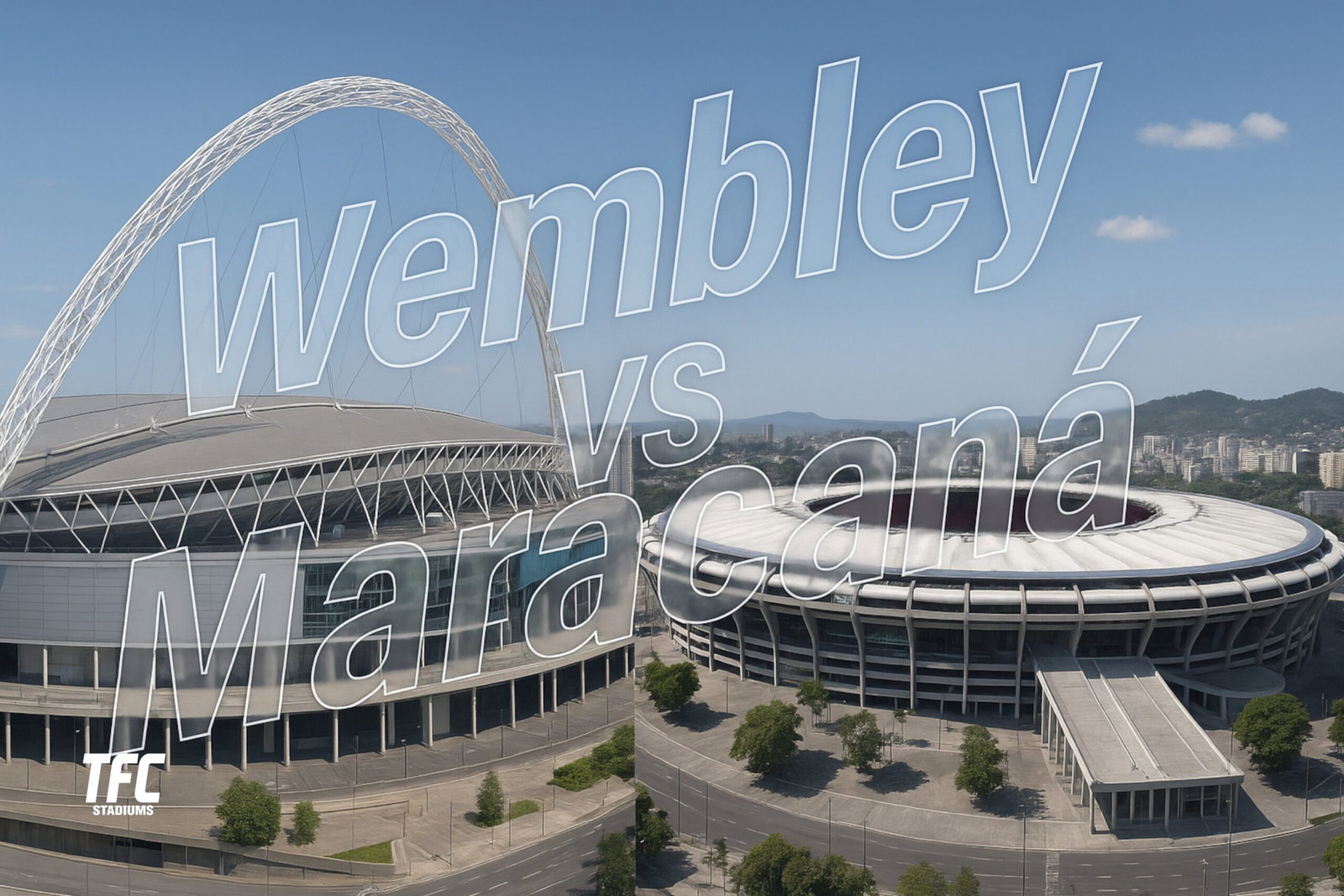
If football has sacred places, then Wembley and the Maracanã are its twin cathedrals. One stands in north-west London, sharp-edged and gleaming like a modern monument. The other rests in Rio de Janeiro, basking in tropical heat and soaked in football myth. Both have hosted legends, heartbreak, and sheer joy. But which stadium truly deserves to be called the home of world football?
History and Heritage
Wembley Stadium first opened in 1923, and even in its original form, it was instantly a national symbol. Known for the “White Horse Final,” it became the heartbeat of English football, hosting FA Cup Finals, England internationals, and of course, that glorious day in 1966 when Bobby Moore lifted the World Cup.
Its 2007 rebuild gave it a futuristic look, with the 133-metre-high arch that dominates the skyline. It’s now a multi-purpose venue for everything from UEFA finals to NFL games and Taylor Swift concerts. The spirit of the old stadium, thankfully, lingers in the grass and the ghost of the Twin Towers.
The Maracanã, officially opened in 1950 for Brazil’s World Cup, was designed as the grandest football theatre the world had ever seen. It famously held around 200,000 people for the World Cup final that year, though Brazil’s shock defeat to Uruguay still echoes through its stands like a national trauma.
Renovations for the 2014 World Cup trimmed its capacity and added modern comforts, but the soul remains. The Maracanã is less a building and more a living, sweating organism of Brazilian football passion.
Architecture and Atmosphere
Wembley’s design is clean and efficient. Its symmetry and that massive arch make it a modern marvel. Inside, it’s immaculate, with perfect sightlines, cushioned seats, and digital perfection. The downside? It can sometimes feel a little sterile, especially during half-hearted friendlies.
The Maracanã, by contrast, feels human. You can smell the humidity, the popcorn, the sweat, and the samba. The sound bounces off the circular bowl like thunder in the rainforest. Even with a smaller crowd, there’s a hum of anticipation that seems eternal.
Iconic Moments
Wembley’s Legends:
- England’s 1966 World Cup win
- EURO 1996’s “Three Lions” summer
- Lionel Messi lifting the Copa América 2021 trophy (technically in Brazil’s own backyard, poetic justice)
- Countless FA Cup Finals, from Wigan’s miracle to Gerrard’s heroics
Maracanã’s Magic:
- Pelé’s 1,000th goal in 1969
- Brazil’s 1950 heartbreak and 2014 semi-final redemption arc
- The 2016 Olympic Final where Neymar’s penalty sealed gold
- World Cup finals in 1950 and 2014, each rewriting football’s emotional script
The Fans and the Feeling
At Wembley, fans bring flags, songs, and a pint or two. It’s organised chaos, very British, very proper. The atmosphere can peak with a roar that shakes the arch, especially on nights like England vs Germany.
At the Maracanã, football isn’t a pastime, it’s a religion. The crowd sings for ninety minutes straight, and when Brazil score, it feels like an earthquake set to rhythm. You don’t watch a match there, you feel it.
Accessibility and Matchday Experience
Wembley has slick transport links, with trains, the Underground, and plenty of pubs within walking distance. It’s an easy, civilised pilgrimage.
The Maracanã can be chaotic, in that beautifully Brazilian way. You’ll find street vendors selling churrasco and cold beer, fans draped in yellow and green, and an infectious party vibe from the moment you approach the gates.
Which Stadium Wins?
It depends on what you value. Wembley is polished, powerful, and precise, like a luxury car built for global finals. The Maracanã is soulful, noisy, and slightly unpredictable, like football’s beating heart.
If Wembley is football’s Parliament, the Maracanã is its cathedral. You visit one for ceremony, the other for devotion.
Verdict
Both are irreplaceable. Wembley represents the English game’s heritage and global influence. The Maracanã captures the joy and pain that make football more than sport.
So which is greater? Let’s call it a draw. Football wins either way.
About the Author