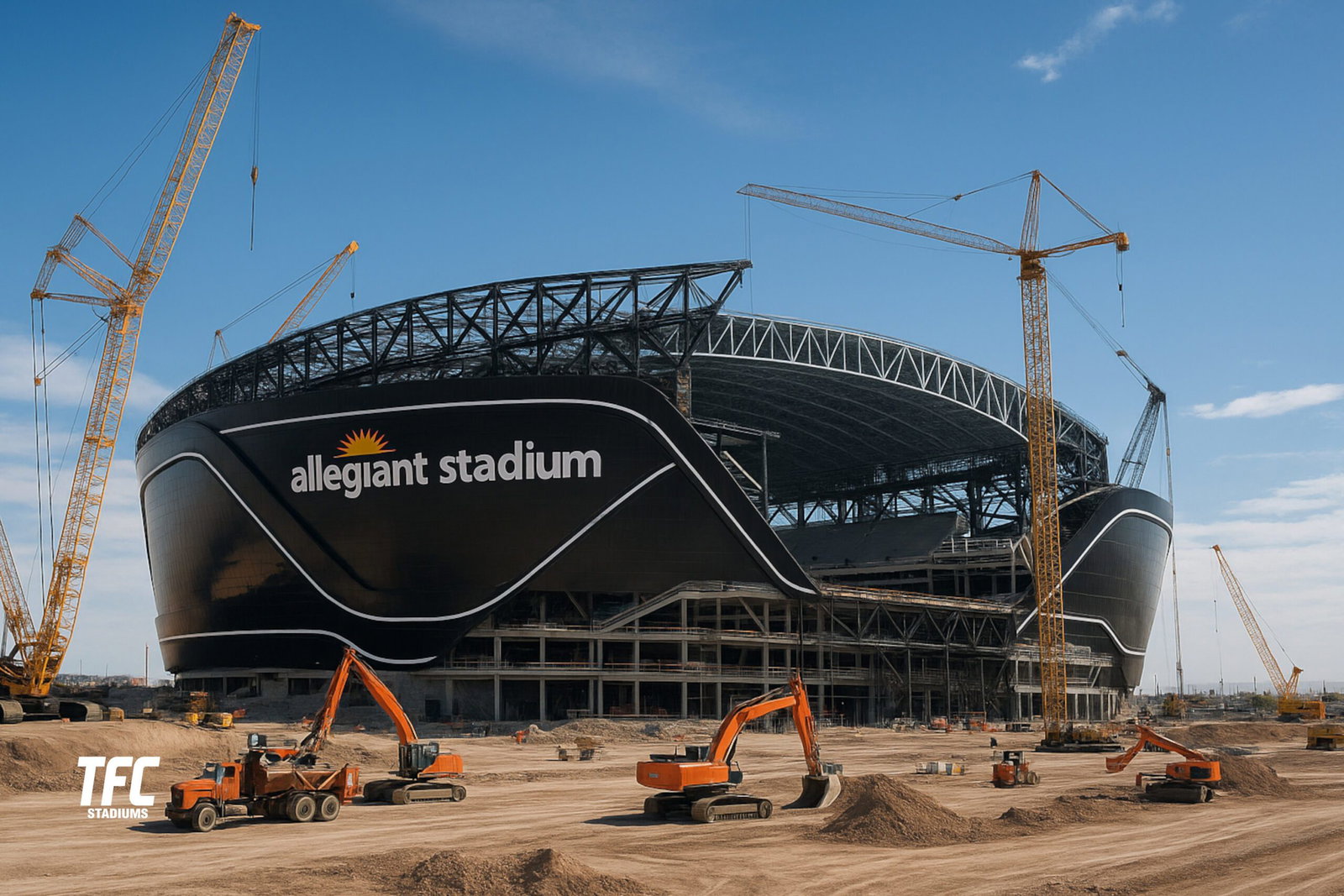
Allegiant Stadium is one of the most striking recent additions to the NFL’s portfolio of venues. Built as the new home for the relocated Las Vegas Raiders, it also serves as the base for UNLV football and a multipurpose venue for concerts, soccer matches, and other events. Its construction marked a significant moment not only for the Raiders franchise but for Las Vegas itself, signalling the city’s serious entry into top-tier American sports infrastructure.
Project Timeline
The construction of Allegiant Stadium moved at a rapid pace, especially for a project of its size and complexity. Below is a breakdown of the major phases from conception to completion.
| Phase | Date | Details |
|---|---|---|
| Planning and Approval | Jan 2016 – Mar 2017 | Raiders’ move approved, stadium proposal finalised |
| Groundbreaking Ceremony | Nov 13, 2017 | Held on the future site in Paradise, Nevada |
| Site Preparation and Excavation | Jan – Aug 2018 | 62-acre site levelled, utilities relocated |
| Structural Steel Erection | Sept 2018 – Aug 2019 | Major steel components and roof trusses installed |
| ETFE Roof Installation | Oct 2019 – May 2020 | Lightweight transparent roof assembled and tensioned |
| Interior Fit-Out | Dec 2019 – July 2020 | Seats, suites, turf trays and technology integrated |
| Substantial Completion | July 31, 2020 | Certificate of occupancy issued, testing phase begins |
| First Scheduled Event | Sept 21, 2020 | Raiders host Saints behind closed doors in Monday Night Football opener |
Construction Costs
Initially estimated at $1.8 billion, the final cost of Allegiant Stadium came to around $1.97 billion, making it one of the most expensive stadiums ever built in the United States at the time.
Cost Breakdown
| Component | Estimated Cost (USD) |
|---|---|
| Structural and Civil Works | $900 million |
| Roofing System and Façade | $275 million |
| Interiors, Suites and Seating | $300 million |
| Retractable Turf and HVAC | $175 million |
| Technology and Broadcast Systems | $120 million |
| Design and Consulting | $100 million |
| Contingency and Overruns | $100 million |
The financing came from a mix of public and private sources:
- $750 million from a hotel room tax approved by the Nevada Legislature
- $200 million loan from the NFL’s G-4 programme
- The remainder funded by the Raiders and their ownership group
Key Milestones
A number of critical moments defined the project’s trajectory and public perception:
- NFL Relocation Approval (March 2017): The league officially granted the Raiders permission to move from Oakland to Las Vegas, clearing the way for the stadium project to proceed.
- Topping Out Ceremony (August 2019): Celebrated the placement of the final steel beam, a traditional milestone in major construction.
- Roof Cable Tensioning (February–May 2020): A tense phase due to COVID-19 delays and the high-risk nature of lifting and tensioning the ETFE roof.
- Completion During Pandemic (July 2020): Despite setbacks and strict health protocols, the project met its final deadline.
- Virtual Grand Opening (2020 season): COVID-19 prevented fan attendance, but the stadium debuted on national television during the Raiders’ first home game.
Architectural and Engineering Highlights
- Architect: MANICA Architecture
- General Contractor: Mortenson Construction and McCarthy Building Companies
- Capacity: 65,000 (expandable to 72,000)
- Roof Type: Fixed dome with translucent ETFE panels
- Playing Surface: Retractable natural turf tray for NFL games; artificial turf for college football and concerts
The stadium’s striking black exterior and curved design reflect the Raiders’ visual identity. Unlike many open-air NFL venues, Allegiant Stadium is fully enclosed and climate-controlled, a practical necessity in the Nevada desert.
Impact on Las Vegas
Allegiant Stadium has had a transformative effect on Las Vegas. Beyond football, it has hosted high-profile concerts, the Pro Bowl, international football friendlies, and WWE SummerSlam. It also played a key role in Las Vegas securing Super Bowl LVIII, held in February 2024.
Its presence near the Strip has redefined the area’s event economy, linking sports tourism directly to the city’s entertainment and hospitality sectors.
The TFC Takeaway
The construction of Allegiant Stadium was a logistical and engineering challenge completed within a tight timeframe and under global disruption. The stadium not only gave the Raiders a new home but also provided Las Vegas with a world-class venue that has quickly become a central pillar of its growing sports identity.
From the initial proposal to final inspection, the project was marked by speed, scale, and ambition, qualities that now define the stadium itself.
About the Author