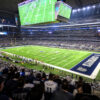
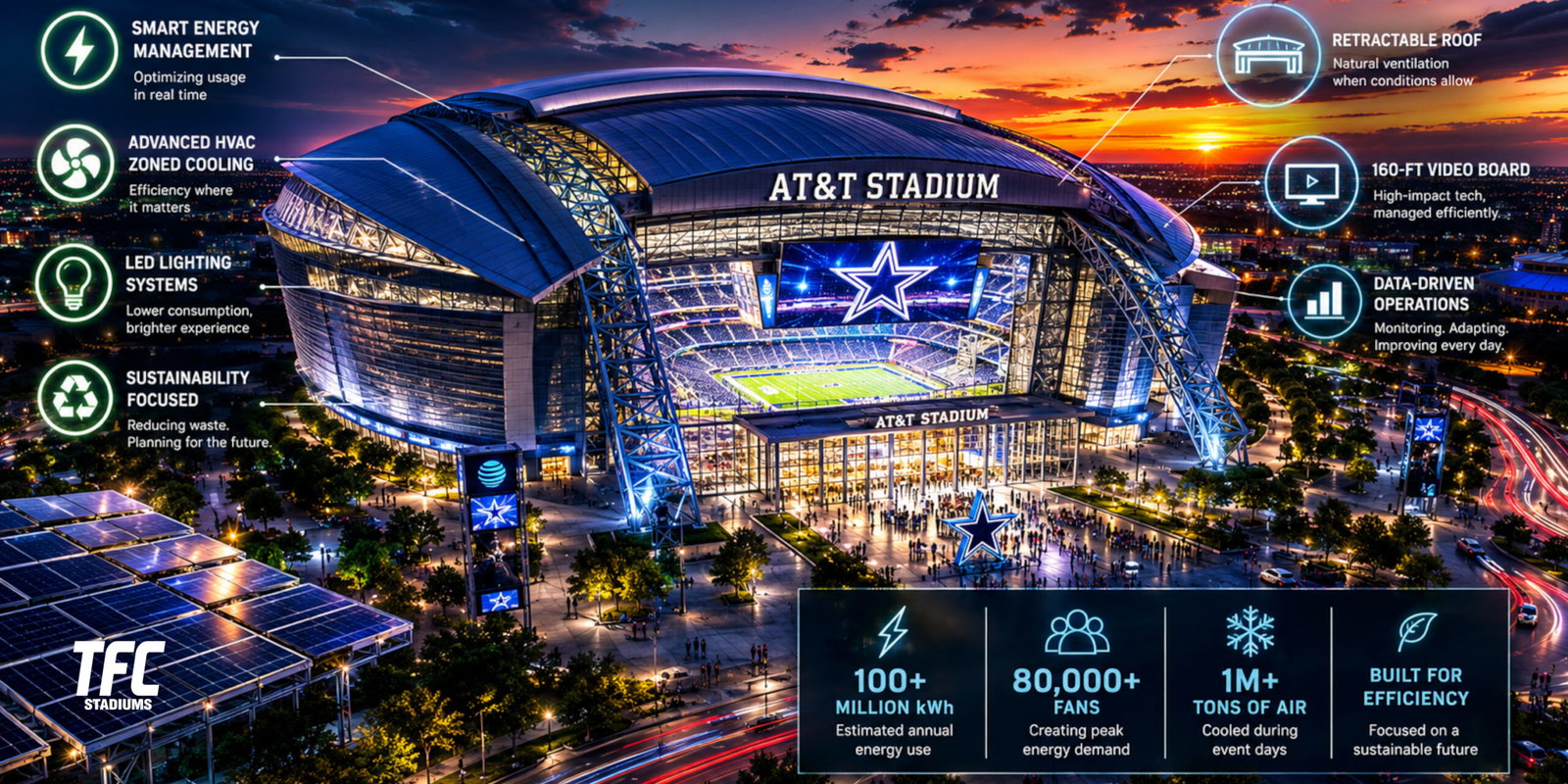
AT&T Stadium is not a normal building. It is a 3 million square foot entertainment machine that can hold more than 80,000 fans for NFL games and expand beyond 100,000 for major events. Keeping a venue of that size running requires an energy operation closer to a small district than a traditional sports arena.
Opened in 2009, the home of the Dallas Cowboys was designed around spectacle. The retractable roof, enormous video board, climate control systems, lighting, broadcast infrastructure and hospitality areas all demand serious power.
Managing that energy load is one of the stadium’s biggest behind-the-scenes challenges. Fans notice the touchdowns and the giant screen. They probably do not think about the engineering team trying to keep tens of thousands of people cool during a Texas summer. They deserve some credit.
The Scale Of Energy Demand At AT&T Stadium
Everything about AT&T Stadium is oversized, including its energy requirements.
Major energy users include:
- Retractable roof operation
- Heating, ventilation and air conditioning systems
- Stadium lighting
- Broadcast technology
- Commercial kitchens
- Digital displays
- Security systems
- Retail areas
- Wi-Fi and communications networks
The centrepiece is the famous high-definition video board. When installed, it was one of the largest displays ever placed inside a stadium, stretching roughly 160 feet wide above the playing surface.
Modern LED technology has helped reduce the impact of large displays compared with older systems, but running a venue designed for global television events still requires significant resources.
Climate Control: The Biggest Energy Battle
The biggest challenge for AT&T Stadium is not the screen or the lights. It is temperature.
Arlington regularly sees summer temperatures above 35°C, while an NFL crowd can add more than 80,000 sources of body heat inside the building.
The stadium uses a large-scale HVAC system designed to:
- Cool seating areas
- Manage humidity
- Maintain comfortable conditions for players
- Protect technology and equipment
- Adapt to different event configurations
Unlike a smaller indoor arena, AT&T Stadium has enormous open volumes of air. Cooling the entire space equally would be inefficient, so modern stadium design focuses on controlling occupied zones rather than treating every cubic metre the same.
The Retractable Roof And Energy Efficiency
One of AT&T Stadium’s signature features is its retractable roof, which covers an opening of approximately 105,000 square feet.
The roof provides several advantages:
- Natural ventilation opportunities
- Reduced cooling demand in suitable weather
- Event flexibility
- Protection from extreme Texas conditions
Opening the roof is not just about creating atmosphere. It can reduce dependence on mechanical cooling when outdoor temperatures allow.
However, Texas weather makes this complicated. Heat, storms and broadcast requirements mean the stadium often operates as a fully controlled indoor environment.
Lighting Systems And Modern Upgrades
Stadium lighting has changed dramatically over the last two decades.
Older sports venues relied heavily on high-intensity discharge lighting systems, which consumed more power and needed longer warm-up periods. Modern LED technology provides:
- Lower energy consumption
- Longer equipment lifespan
- Instant switching
- Better broadcast quality
- Programmable effects
For a venue hosting NFL games, concerts, boxing, college football and international football, lighting flexibility is almost as important as efficiency.
A stadium now has to become part sports venue, part television studio.
Managing Event-Day Energy Peaks
A Dallas Cowboys game creates a huge temporary surge in demand.
A typical event requires additional energy for:
- Television production trucks
- Food preparation
- Digital ticketing systems
- Security screening
- Merchandise sales
- Extra lighting
- Audio equipment
The challenge is not simply total electricity use, but peak demand. Stadium operators have to plan around short periods when every major system is running at once.
This requires detailed scheduling, monitoring and coordination before fans even enter the building.
Water, Waste And Sustainability Measures
Energy use is only one part of stadium sustainability.
Large venues increasingly focus on:
- Efficient plumbing systems
- Waste sorting and recycling
- Smarter building controls
- Reduced unnecessary lighting
- Improved operational scheduling
AT&T Stadium’s biggest sustainability advantage is versatility. Instead of constructing separate venues for major events, one highly adaptable building can host:
- NFL games
- College football
- Concerts
- International football
- Boxing
- Motorsports
- Corporate events
The environmental debate around mega-stadiums is complex, but maximising usage is one way operators can improve efficiency per visitor.
Comparing AT&T Stadium With Newer Stadium Designs
AT&T Stadium was a major step forward when it opened, but newer stadiums have pushed sustainability further.
Modern venues increasingly include:
| Feature | Modern Stadium Trend |
|---|---|
| Solar energy | On-site renewable generation |
| Smart sensors | Automated energy adjustments |
| LED systems | Reduced lighting consumption |
| Water recycling | Lower resource usage |
| Advanced analytics | Real-time efficiency monitoring |
Compared with newer venues, AT&T Stadium was built during a period when fan experience and architectural ambition were often prioritised ahead of sustainability targets.
That does not make it inefficient, but it reflects a different era of stadium design.
The Future Of Energy Management At AT&T Stadium
The next stage for major venues will likely involve more intelligent energy systems rather than dramatic structural changes.
Future improvements could include:
- Expanded renewable energy partnerships
- More advanced AI-driven building management
- Battery storage technology
- Improved cooling efficiency
- Further LED upgrades
For a stadium expected to operate for decades, the ability to adapt matters.
A Stadium Built On Power And Precision
AT&T Stadium has always been about scale. It is huge, ambitious and occasionally excessive, which is also why people travel from around the world to see it.
From an engineering perspective, the interesting story is not just how much energy the building uses. It is how operators control that demand while delivering events watched by millions.
The same features that make AT&T Stadium challenging to power are the ones that make it unforgettable. In true Texas fashion, nobody built it small.
About the Author