Las Vegas has always been brilliant at reinvention.
It started as a railroad town in the desert, became America’s playground, turned itself into the world’s entertainment capital, and now finds itself standing confidently among the biggest sports cities on the planet. That transformation did not happen by accident, and it certainly did not happen overnight.
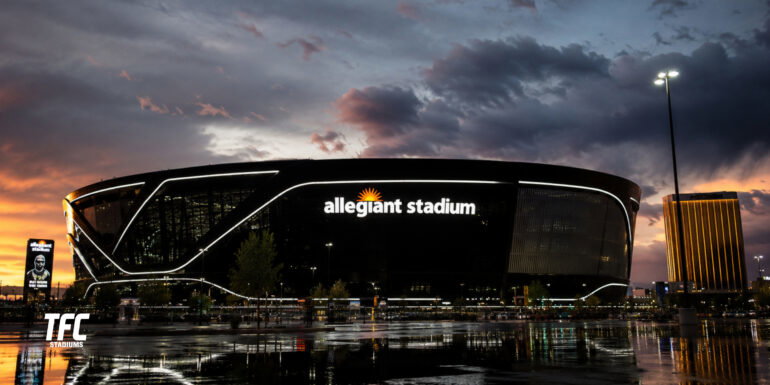
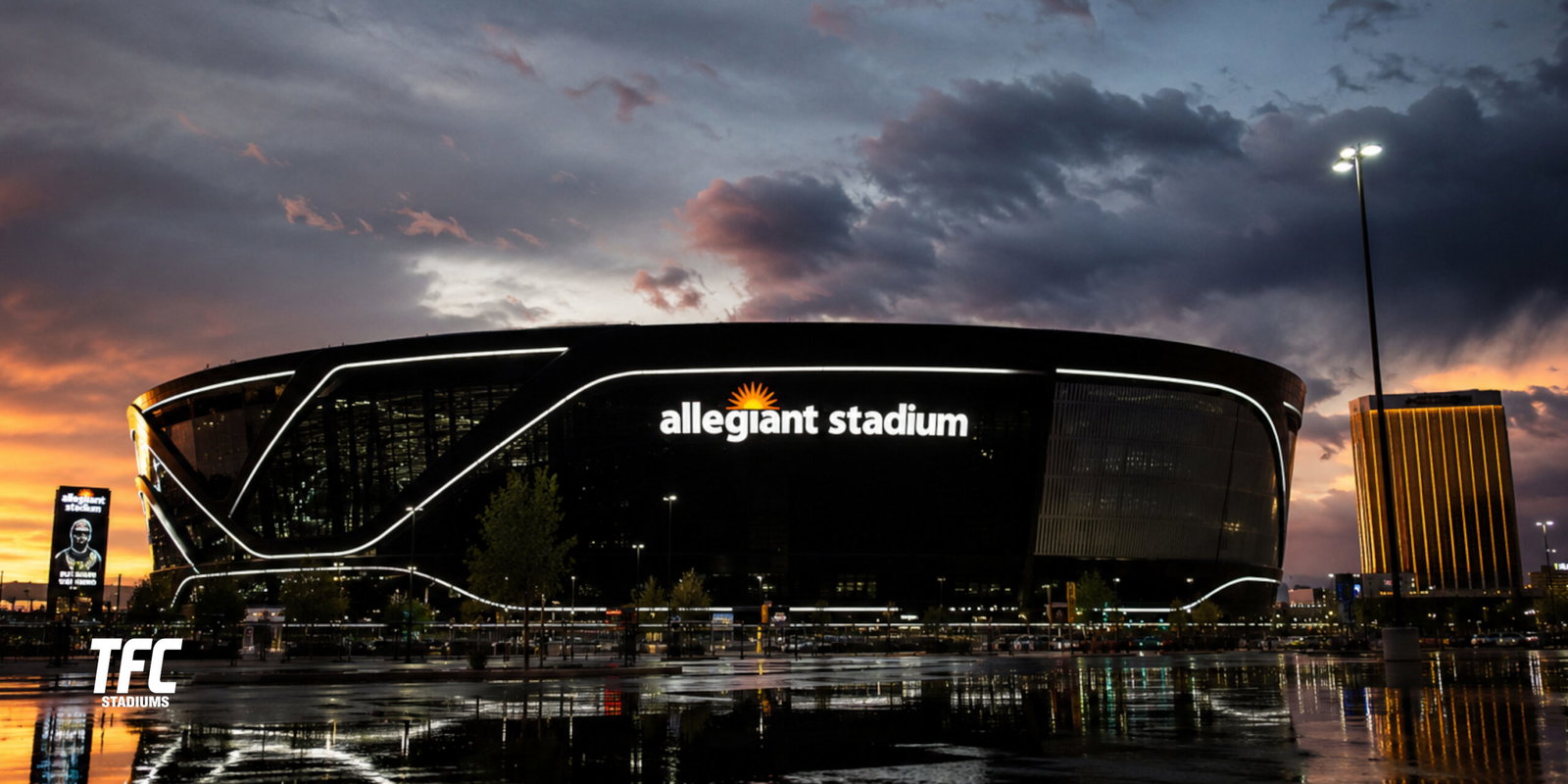
If there is one building that perfectly captures modern Las Vegas, it is Allegiant Stadium.
The sleek black stadium sitting just west of the Strip is far more than the home of the Las Vegas Raiders. It represents the city’s ambition, confidence and willingness to bet on itself. In classic Vegas fashion, it does everything on a grand scale.
As someone who grew up watching the Raiders in Oakland and later Los Angeles, seeing silver and black become part of the Vegas skyline felt strange at first. Today, though, it almost seems inevitable. Few cities embrace spectacle quite like Las Vegas, and few franchises carry as much personality as the Raiders.
A Stadium Designed for a New Era
When Allegiant Stadium opened in 2020, it immediately stood apart from almost every other NFL venue.
Instead of copying traditional American stadium architecture, designers created something that looked futuristic without becoming gimmicky. The glossy black exterior reflects the Raiders’ identity while complementing the luxury resorts surrounding it.
At night, the building almost disappears into the desert skyline before its lighting transforms it into one of the city’s most recognisable landmarks.
Key facts include:
| Feature | Detail |
|---|---|
| Opened | 2020 |
| Capacity | Approximately 65,000, expandable to around 72,000 |
| Cost | Around $1.9 billion |
| Roof | Fixed translucent ETFE roof |
| Surface | Natural grass tray that moves outdoors |
| Architect | MANICA Architecture |
| Primary Tenants | Las Vegas Raiders, UNLV Football |
The stadium combines premium hospitality with cutting-edge engineering. The retractable grass field rolls outside between events, ensuring NFL players compete on natural turf while concerts and other entertainment can continue inside.
That flexibility perfectly matches Las Vegas itself.
Why Las Vegas Needed a Stadium Like This
For decades, Las Vegas carried a reputation that professional sports leagues approached with caution.
Concerns over gambling made major leagues reluctant to establish franchises in the city. Ironically, the rapid legalisation and regulation of sports betting eventually removed much of that resistance.
The arrival of the NHL’s Golden Knights proved Las Vegas could passionately support a professional team.
The Raiders then accelerated everything.
Suddenly, Las Vegas was no longer simply hosting championship boxing or UFC cards. It had become home to one of the NFL’s most recognisable franchises.
Since opening, Allegiant Stadium has hosted:
- NFL games
- College football
- The Pro Bowl
- Super Bowl LVIII
- Copa América matches
- Major concerts
- International football friendlies
- WrestleMania
- Rugby League events
- College championships
Very few stadiums maintain such a varied calendar.
The Perfect Match Between the Raiders and Las Vegas
At first glance, the Raiders and Las Vegas might seem like an unusual partnership.
Then you think about it for about thirty seconds.
The Raiders have always embraced outsiders, rebels and larger-than-life personalities. Las Vegas has built its entire reputation on entertaining visitors while refusing to apologise for being different.
Both thrive on image.
Both understand branding.
Both know that fans are looking for an experience rather than simply a game.
Walking into Allegiant Stadium feels closer to entering a major entertainment venue than a conventional sports ground. Wide concourses, premium clubs and dramatic lighting make every arrival feel like an event.
In Vegas, that matters.
People expect spectacle.
An Economic Engine Beyond Football
The stadium’s influence stretches far beyond Sundays.
Las Vegas welcomes more than 40 million visitors annually, and Allegiant Stadium gives many of those tourists another compelling reason to visit.
Major sporting events generate spending across:
- Hotels
- Casinos
- Restaurants
- Bars
- Retail
- Transportation
- Entertainment venues
Super Bowl LVIII demonstrated the scale of this impact.
Economic analysts estimated the event generated well over a billion dollars in regional economic activity while placing Las Vegas at the centre of global sporting attention for an entire week.
That exposure cannot easily be measured in hotel bookings alone.
Every television broadcast showcases the Strip, nearby resorts and the city’s growing appeal as a destination capable of hosting almost any major event.
Architecture That Reflects the City
Many stadiums try to blend into their surroundings.
Allegiant Stadium does almost the opposite.
Its dark exterior contrasts sharply with the bright Nevada desert, creating one of the most distinctive silhouettes in American sport.
Inside, the enormous glass wall facing the Las Vegas Strip provides spectacular views unlike any other NFL stadium.
Instead of hiding the city outside, the design celebrates it.
Visitors are constantly reminded that they are in Las Vegas.
Even the premium hospitality spaces resemble luxury hotels more than traditional stadium lounges.
That deliberate overlap helps blur the line between sport and entertainment.
A Home for More Than the NFL
One reason Allegiant Stadium has become such a civic landmark is its versatility.
Unlike many NFL venues that sit largely dormant outside football season, Allegiant operates almost continuously.
Concerts have attracted some of the world’s biggest performers.
International football has brought global audiences.
College sports continue expanding.
Corporate events and conventions benefit from another premium venue in a city already famous for hosting business gatherings.
This constant activity strengthens its role as one of Las Vegas’ central gathering places.
Competing With the World’s Best Stadiums
Allegiant Stadium frequently appears alongside venues such as SoFi Stadium, AT&T Stadium and Mercedes-Benz Stadium when discussions turn to America’s premier sporting venues.
Each offers different strengths.
| Stadium | Defining Feature |
|---|---|
| Allegiant Stadium | Entertainment integration and premium visitor experience |
| SoFi Stadium | Technology and scale |
| AT&T Stadium | Monumental architecture |
| Mercedes-Benz Stadium | Fan-friendly innovation |
| U.S. Bank Stadium | Climate-resilient design |
What separates Allegiant is context.
Few stadiums sit within walking distance of one of the world’s most famous entertainment districts.
That location transforms every major event into a city-wide festival.
Changing the Identity of Las Vegas
Twenty years ago, asking whether Las Vegas belonged among America’s great sports cities might have raised a few eyebrows.
Today, the debate has largely disappeared.
The Golden Knights won a Stanley Cup.
The Raiders have established themselves in Southern Nevada.
Formula One races down the Strip.
The city continues attracting international sporting events at an extraordinary pace.
Allegiant Stadium sits at the heart of that transformation.
It has become a visual shorthand for a city that refuses to stand still.
Fans Have Embraced the Experience
One interesting aspect of Allegiant Stadium is the mixture of supporters it attracts.
Raiders fans remain among the NFL’s most loyal travelling supporters, while Las Vegas naturally attracts visiting fans looking to combine football with a weekend away.
That creates an atmosphere unlike almost anywhere else in the league.
Every game feels part sporting contest, part holiday, part convention of NFL obsessives.
Purists sometimes complain that too many opposing fans attend Raiders games.
They have a point.
Then again, Las Vegas has never claimed to be ordinary.
Its entire economy is built around welcoming visitors.
The stadium simply reflects that reality.
Challenges Still Exist
Not everything has been perfect.
Ticket prices remain among the highest in the NFL.
Local supporters sometimes struggle to compete with tourists willing to pay premium prices.
Maintaining a strong home-field advantage remains an ongoing challenge.
The stadium also relies heavily on continuous event bookings to maximise its economic value.
Fortunately for Las Vegas, attracting major events is one thing the city has spent decades mastering.
The Future Looks Bright
The stadium’s importance is likely to grow rather than diminish.
Las Vegas continues expanding as a destination for global sport.
International football tournaments, college championships, concerts and potentially even future Olympic-related events all fit comfortably within the city’s ambitions.
As technology evolves, Allegiant Stadium will almost certainly receive upgrades that keep it among America’s elite venues.
The building was designed with flexibility in mind, giving it room to adapt as fan expectations continue changing.
Takeaway
Allegiant Stadium is more than a football ground.
It represents the confidence of a city that has reinvented itself yet again.
Las Vegas no longer needs to convince anyone that it belongs on the biggest sporting stage. The stadium has become both a landmark and a statement of intent, proving the city can host world-class events while creating an unforgettable experience for fans.
Coming from Los Angeles, I have always admired cities that know exactly what they are. Vegas has never pretended to be understated. It loves bright lights, bold architecture and putting on a show. Allegiant Stadium fits that personality perfectly.
It may wear silver and black, but in many ways it has become the newest icon in a city built on unforgettable first impressions.
About the Author