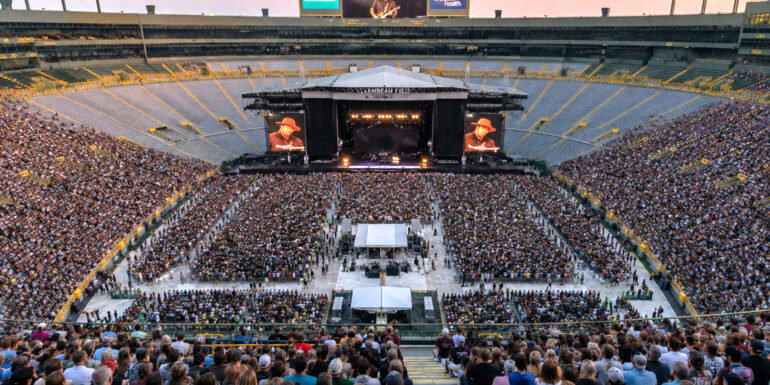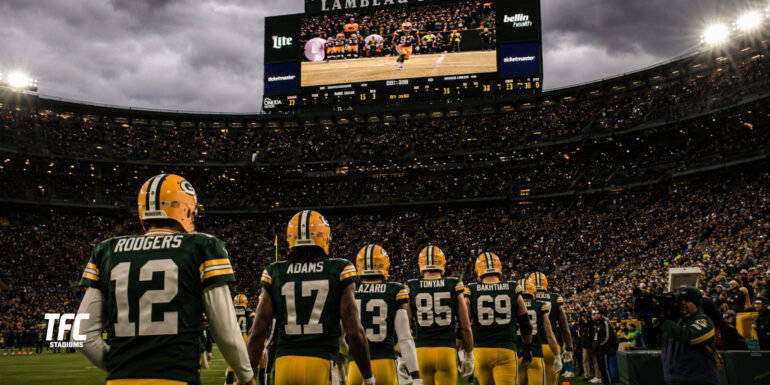
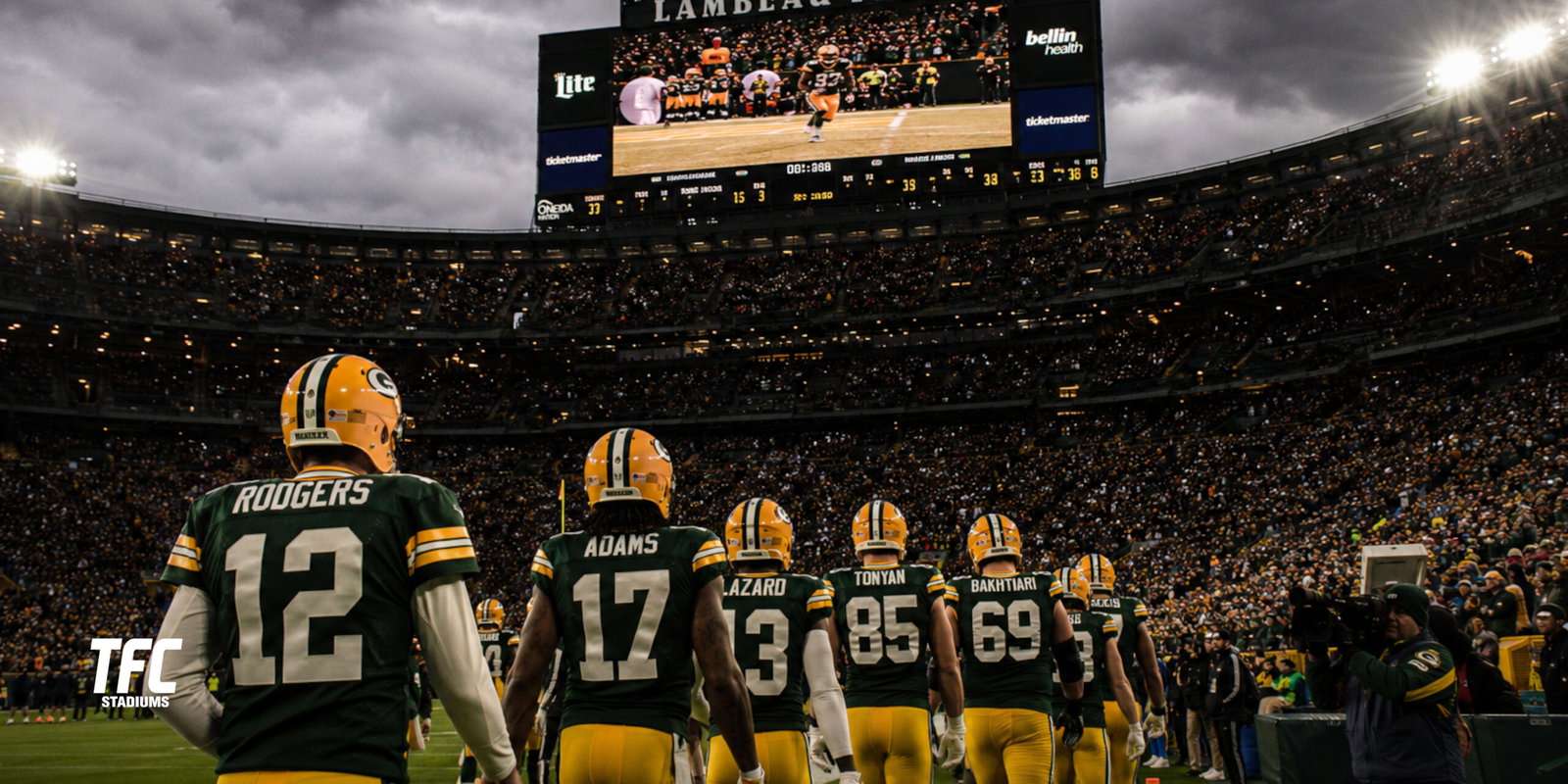
Lambeau Field is one of those rare places where history doesn’t sit quietly in a museum. It shows up every Sunday wearing green and gold.
Every NFL stadium has heroes. Lambeau has generations of them. Quarterbacks, linebackers, pass rushers, receivers and coaches have all left fingerprints on one of the most famous playing surfaces in American sport. Walk through the stadium and you’ll see statues, championship banners and retired numbers, but the real story is how these players shaped an identity that still defines the Green Bay Packers.
For a franchise with more league championships than any other, choosing the greatest legends isn’t easy. Some dominated statistically, others defined winning, and a few somehow managed both.
What Makes a Packers Legend?
For Green Bay, greatness has never been measured by highlight reels alone.
The Packers have always celebrated players who embraced consistency, toughness and team-first football. Individual records matter, but championships matter more.
Several factors separate a very good Packer from a genuine Lambeau legend.
| Quality | Why It Matters |
|---|---|
| Championships | Winning remains the franchise’s defining standard. |
| Longevity | Many Packers greats spent their entire careers in Green Bay. |
| Leadership | Captains who elevated teammates became club icons. |
| Historic Records | Franchise and NFL milestones cement lasting legacies. |
| Lambeau Moments | Signature performances at home become part of Packers folklore. |
Bart Starr: The Quarterback Who Defined Winning
When discussions turn to Packers royalty, Bart Starr is always near the top.
His statistics seem modest compared to modern quarterbacks, but football wasn’t played that way in the 1960s. Starr specialised in efficiency, leadership and making the right decision when everything was on the line.
His résumé remains extraordinary.
- Five NFL Championships
- Victories in Super Bowl I and II
- Super Bowl MVP twice
- Career passer rating of 80.5, outstanding for his era
His most famous moment came during the Ice Bowl in December 1967.
With seconds remaining against Dallas, Starr followed Jerry Kramer through a narrow opening on a quarterback sneak that secured the NFL Championship. It remains one of the defining plays in league history and perfectly captured Green Bay football. No unnecessary drama. Just execute better than the other team.
Vince Lombardi: The Coach Who Became Larger Than Football
Technically not a player, but leaving Vince Lombardi out would be like discussing Hollywood without mentioning movies.
Lombardi transformed the Packers from struggling franchise into football’s greatest dynasty.
Between 1959 and 1967:
- Five NFL Championships
- The first two Super Bowl victories
- A winning percentage above .730
- The creation of football’s most famous power running attack
His famous Power Sweep became one of the sport’s defining plays. Everyone knew it was coming. Very few managed to stop it.
The Super Bowl trophy now bears his name, which tells you everything about his place in football history.
Ray Nitschke: The Face of Packers Defence
Long before linebackers became media stars, Ray Nitschke terrified opposing offences.
He combined intelligence with controlled aggression and became one of the emotional leaders of Lombardi’s championship teams.
His intimidating appearance didn’t hurt either. Missing teeth and a permanently serious expression gave him the look of someone who considered blocking drills a relaxing afternoon activity.
More importantly, he delivered elite football.
Nitschke helped Green Bay win five championships while becoming one of the defining defensive players of his generation.
Brett Favre: The Gunslinger Who Revived Green Bay
By the early 1990s, Green Bay desperately needed hope.
Then Brett Favre arrived.
He brought energy, confidence and an absolute refusal to play cautiously. Coaches probably aged ten years during some of his improvisations, but fans loved every second.
Favre started 297 consecutive games, one of the greatest durability records in professional sports.
His Packers career included:
| Achievement | Total |
|---|---|
| Seasons | 16 |
| MVP Awards | 3 consecutive |
| Super Bowl Titles | 1 |
| Passing Yards | Over 61,000 |
| Touchdown Passes | 442 |
Lambeau became exciting again because every snap carried the possibility of brilliance or complete chaos. Sometimes both happened on the same play.
Reggie White: The Minister of Defence
Green Bay signing Reggie White in 1993 changed NFL free agency forever.
For years, elite veterans rarely chose smaller markets.
White ignored that assumption.
He instantly transformed the Packers defence into one of football’s best units.
His three sacks in Super Bowl XXX remain one of the greatest defensive performances in championship history.
Even today, many fans consider his arrival the turning point that restored Green Bay as a legitimate Super Bowl contender.
Aaron Rodgers: Precision Meets Pure Talent
Aaron Rodgers inherited one of the toughest jobs imaginable.
Replacing Brett Favre felt almost impossible.
Instead, Rodgers built an entirely different legacy.
His numbers rank among the finest in NFL history.
- Four NFL MVP Awards
- Super Bowl XLV champion
- Super Bowl MVP
- One of the highest career passer ratings ever recorded
At Lambeau Field he produced countless moments that seemed impossible.
Perfect sideline throws.
Fourth-quarter comebacks.
Hail Mary passes that somehow looked routine.
Watching Rodgers in full rhythm often felt like seeing a master craftsman who simply refused to waste a football.
Donald Driver: The People’s Champion
Some players become famous because of statistics.
Donald Driver became beloved because of personality.
A seventh-round draft pick, Driver developed into Green Bay’s all-time leading receiver before eventually being surpassed by Davante Adams in career receptions and receiving yards. His journey from overlooked prospect to franchise star made him one of the most relatable figures in Packers history.
Fans appreciated his toughness just as much as his production.
Few players represented Green Bay’s blue-collar identity better.
Charles Woodson: Leadership That Changed a Defence
Charles Woodson arrived in Green Bay with plenty left to prove.
Many believed his best years were behind him.
Instead, he reinvented himself.
His 2009 Defensive Player of the Year season remains among the greatest ever by a defensive back.
Woodson’s intelligence allowed defensive coordinator Dom Capers to build an aggressive, flexible defence that helped deliver victory in Super Bowl XLV.
His leadership proved just as valuable as his interceptions.
Clay Matthews: Bringing the Sack Back
Few defensive players generated excitement quite like Clay Matthews.
The flowing blond hair became iconic, but opposing quarterbacks were far less interested in hairstyles than they were in avoiding him.
Matthews finished with 83.5 sacks for Green Bay and became one of the defining defensive stars of the 2010s.
His forced fumble against Pittsburgh in Super Bowl XLV completely shifted momentum and remains one of the biggest defensive plays in franchise history.
Modern Stars Carrying the Legacy
The Packers continue to produce elite talent.
Players such as Jordan Love, Rashan Gary, Jaire Alexander, Xavier McKinney and Josh Jacobs have helped usher in a new era, although only time will determine where they rank alongside the franchise’s immortals.
That is the challenge of playing at Lambeau.
The standard isn’t merely making the Pro Bowl.
It’s joining a conversation that already includes Lombardi, Starr, Favre and Rodgers.
That is a difficult neighbourhood to move into.
The Numbers Behind Green Bay’s Greatness
| Category | Packers Record |
|---|---|
| NFL Championships | 13 |
| Super Bowl Titles | 4 |
| Hall of Fame Members | More than 30 |
| Retired Numbers | 6 |
| Seasons at Lambeau Field | Since 1957 |
Few organisations in American sport can match that combination of sustained excellence and historical significance.
Why Lambeau Creates Legends
There is something different about succeeding in Green Bay.
Players perform under freezing temperatures, national expectations and a fan base that knows its football history remarkably well. This is a city where generations of families can describe the Ice Bowl, Brett Favre’s Monday night performance after the death of his father, or Aaron Rodgers threading another impossible throw between defenders.
Lambeau Field never lets its history become a burden. Instead, it challenges every new generation to add another chapter.
As a fan, that’s what makes returning so enjoyable. You’re never just watching today’s game. You’re watching decades of football tradition continue in the same stadium where Bart Starr sneaked across the goal line, Reggie White overwhelmed offensive lines, Brett Favre played with reckless joy and Aaron Rodgers made impossible throws seem almost ordinary.
Some stadiums host football games.
Lambeau Field has spent nearly seven decades producing legends.
About the Author