The Allianz Arena is more than a football stadium. Since opening in 2005, it has become one of Munich’s most recognisable landmarks, drawing visitors from around the world. While home to Bayern Munich and occasionally hosting the German national team, the stadium also plays a major role in the city’s tourism industry. Its modern design, accessibility, and year-round attractions make it a consistent driver of visitor numbers.
Architectural Attraction
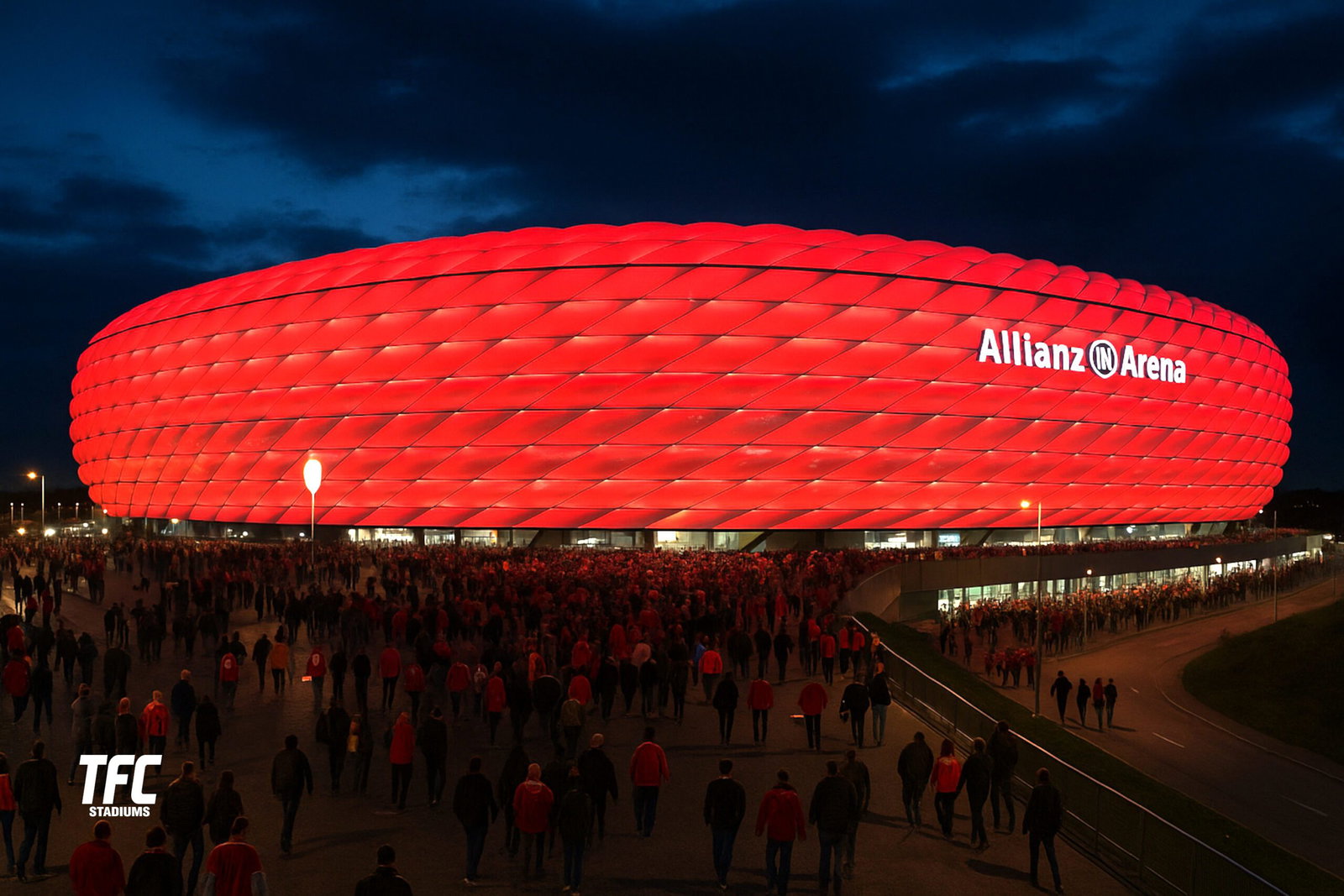
The stadium’s exterior is covered in inflatable ETFE panels that can light up in different colours. This feature has turned the arena into a visual symbol of Munich, particularly on match nights. Visitors often include the stadium on sightseeing tours, even when no game is scheduled. Its futuristic look has helped distinguish Munich from other European football cities.
Matchday Experience
Football tourism is central to the Allianz Arena’s impact. Bayern Munich has one of the largest global fan bases, and international supporters regularly plan trips around home fixtures.
- Hotels and accommodation benefit from higher occupancy rates on matchdays.
- Bars and restaurants see a surge in visitors before and after games.
- Transport links such as the U-Bahn station at Fröttmaning are heavily used by fans.
European competitions and international fixtures amplify this effect, attracting supporters who might not otherwise travel to the city.
Tours and Museum
The Allianz Arena is open year-round, offering guided tours and access to the FC Bayern Museum.
- Stadium tours give access to the dressing rooms, players’ tunnel, and media areas.
- FC Bayern Museum showcases trophies, memorabilia, and interactive exhibits, making it the largest club museum in Germany.
These experiences ensure that the venue contributes to tourism even outside of football season.
Events and Conferences
Beyond football, the arena serves as a venue for corporate events, concerts, and large gatherings.
- Companies use its modern hospitality spaces for conferences and product launches.
- International artists and performers have held concerts at the arena, drawing global audiences.
Its location near major transport connections enhances its appeal to organisers and visitors.
Wider Impact on Munich
The Allianz Arena complements Munich’s other attractions:
- Oktoberfest
- Marienplatz and historic architecture
- Beer gardens and Bavarian cuisine
- Museums such as the Deutsches Museum and Pinakothek collections
By combining world-class sport with cultural tourism, the arena helps position Munich as a city that appeals to both sports fans and general travellers.
Legacy and Future
The Allianz Arena continues to evolve with upgrades in seating, hospitality, and sustainability measures. Looking ahead:
- Renovations and green initiatives are designed to keep it among Europe’s most modern stadiums.
Each major event cements its role as both a sporting hub and a cornerstone of Munich’s tourism economy.
About the Author