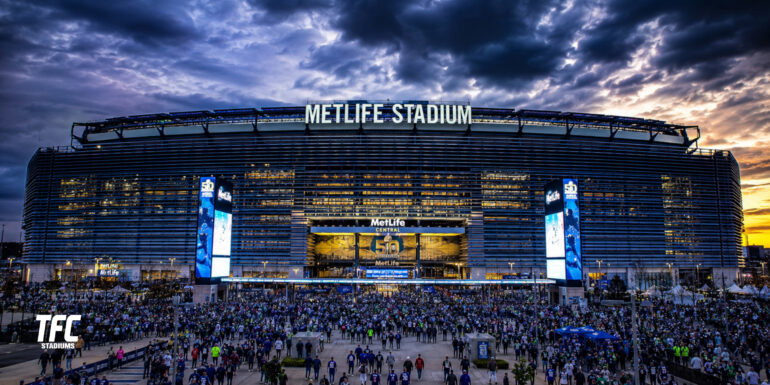
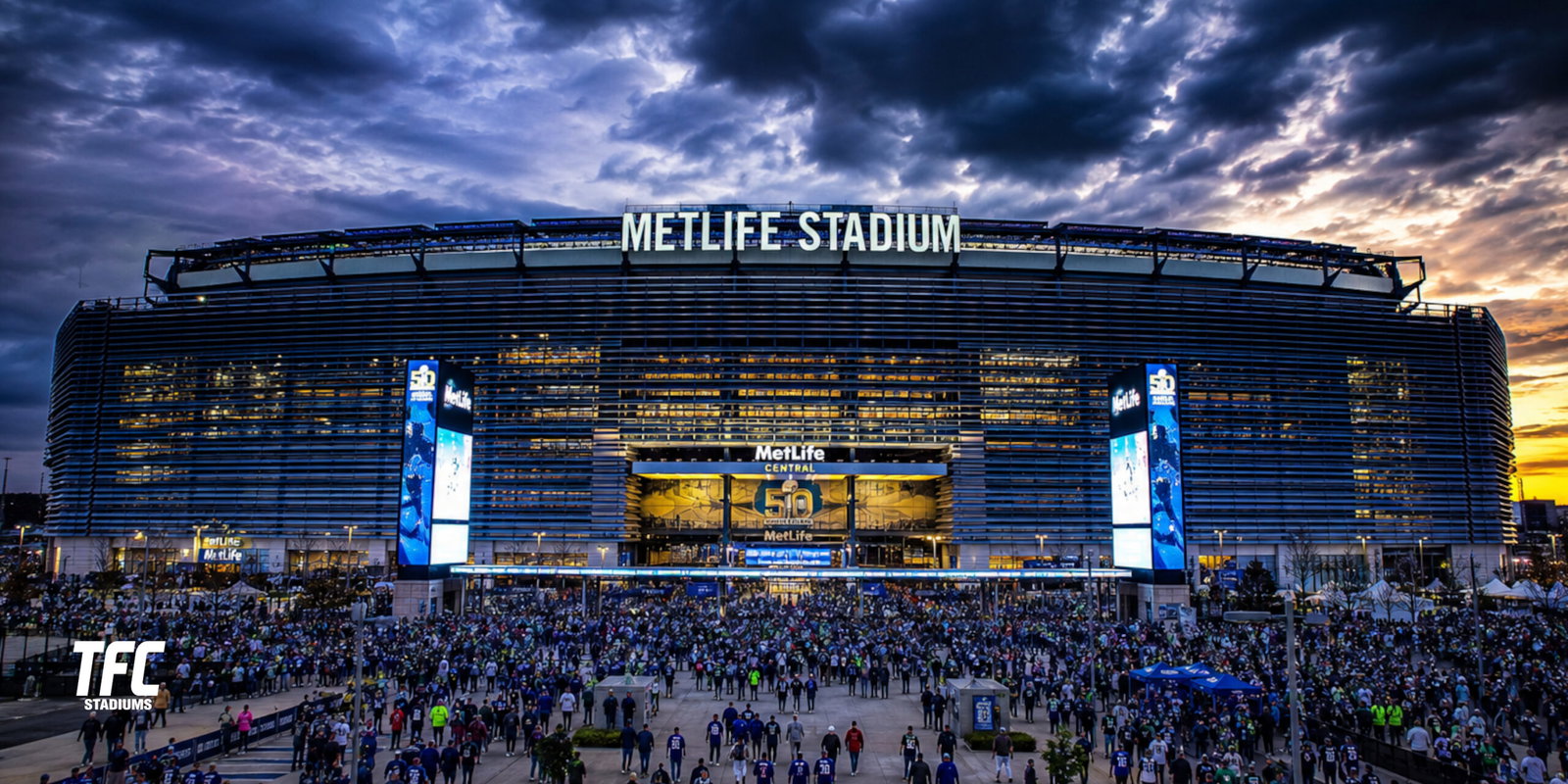
When MetLife Stadium opened in 2010, it faced an unusual challenge. It was not designed around one identity, one fanbase or one weekly routine. It had to serve two NFL franchises, international football matches, concerts, college events and global spectacles.
Home to both the New York Giants and New York Jets, the stadium was built with flexibility at its core. With a capacity of around 82,500, it remains one of the largest venues in the NFL and one of the busiest stadiums in the world.
Some stadiums age because they are locked into the technology and expectations of their opening year. MetLife’s biggest advantage is that it was designed as a platform that could keep changing.
A Digital Identity That Changes Every Week
One of MetLife Stadium’s most distinctive features is its ability to transform.
The neutral exterior design was criticised by some fans when it opened. It does not have the traditional character of older NFL venues, but the idea behind it was practical. The building had to become Giants territory one week and Jets territory the next.
This is achieved through:
- Large-scale LED lighting systems
- Digital branding zones
- Changeable team graphics
- Adaptable concourse displays
- Flexible interior presentation
On a Giants game day, the building feels blue. When the Jets take over, the entire visual package changes.
It is a different philosophy from venues such as Lambeau Field or Arrowhead Stadium. Those buildings celebrate permanence. MetLife celebrates adaptability.
Keeping Up With Modern Fan Expectations
The biggest change in stadium design since 2010 has been the rise of the connected fan.
When MetLife opened, smartphones were becoming essential. Today, fans expect a stadium to operate almost like a giant digital network.
Modern improvements have focused on:
- Stronger Wi-Fi coverage
- Improved mobile connectivity
- Digital ticketing
- Faster security processing
- Mobile food and beverage systems
- Enhanced stadium navigation
A crowd of more than 80,000 people creates a huge technology challenge. Every touchdown, concert moment or major sporting highlight creates thousands of simultaneous uploads and streams.
Modern stadium infrastructure is now judged as much by connection speed as by seat comfort.
Video Boards and Matchday Presentation
The visual experience inside MetLife has continued to evolve.
The stadium features four large video boards positioned in each corner, giving fans clear views of replays, statistics and entertainment content. Combined, these screens create a more complete viewing environment without needing a traditional centre-hung scoreboard.
Modern sports venues compete with high-definition home viewing. The challenge is no longer simply showing the game. Stadiums have to provide something television cannot.
MetLife achieves this through:
- Live crowd interaction
- Real-time statistics
- Player features
- Enhanced replay packages
- Event-specific graphics
The stadium has become more of a live production environment than a traditional arena.
Preparing for the Biggest Events in Sport
One of the clearest signs of MetLife Stadium’s continued relevance is its ability to attract elite events.
Major events include:
| Event | Significance |
|---|---|
| Super Bowl XLVIII | First outdoor cold-weather Super Bowl |
| WrestleMania events | Multiple record-breaking entertainment crowds |
| International football | Major European and international fixtures |
| Major concert tours | Some of the world’s largest artists |
| 2026 FIFA World Cup Final | The biggest football match on the planet |
Hosting the 2026 World Cup Final is particularly important. FIFA requirements have pushed stadiums around the world to modernise facilities, technology and operational standards.
For a venue already more than 15 years old, being selected for the final shows how successfully it has remained competitive.
Sustainability and Operational Improvements
Large stadiums face growing pressure to reduce environmental impact.
MetLife Stadium has worked on improving efficiency through:
- Energy management systems
- Waste reduction programmes
- Recycling initiatives
- Water conservation efforts
- More efficient stadium operations
The challenge is significant. A venue hosting NFL games, concerts and international events consumes enormous resources.
The modern stadium debate is no longer just about bigger screens and luxury suites. Efficiency and sustainability are becoming part of how venues are judged.
Premium Spaces and Hospitality Evolution
Another area where MetLife continues to adapt is premium seating.
Modern fans, particularly corporate customers, expect more than a good view. The demand has shifted towards complete experiences.
This includes:
- Private suites
- Club areas
- Premium lounges
- Improved food options
- More comfortable social spaces
The stadium has had to compete with newer luxury-focused venues such as SoFi Stadium and Allegiant Stadium, where hospitality was a central design priority from day one.
MetLife’s approach has been gradual improvement rather than rebuilding.
The Challenge of Staying Modern Without a Roof
The biggest debate around MetLife Stadium is the lack of a roof.
Several newer NFL stadiums have embraced enclosed or retractable designs, allowing perfect conditions for football, concerts and events.
MetLife follows a different philosophy. It remains an outdoor Northeast football stadium where weather is part of the experience.
Advantages:
- Traditional NFL atmosphere
- Natural weather conditions
- Lower complexity compared with roof systems
- Outdoor identity
Disadvantages:
- Weather risk for events
- Less climate control
- Tougher competition with newer stadium designs
Some fans love that unpredictability. Others look at newer venues and wonder what could have been built.
Both views have a point.
Data Snapshot: MetLife Stadium Today
| Category | Details |
| Opened | 2010 |
| Capacity | Approximately 82,500 |
| Construction cost | Around $1.6 billion |
| Primary teams | New York Giants, New York Jets |
| Surface | Synthetic turf system |
| Major upgrade focus | Technology, fan experience, event flexibility |
| Global event status | 2026 FIFA World Cup Final venue |
The Future of MetLife Stadium
MetLife Stadium’s long-term success will depend on constant upgrades rather than one dramatic transformation.
Future areas likely to evolve include:
- More personalised digital experiences
- Faster entry technology
- Artificial intelligence in venue operations
- Expanded premium areas
- Improved sustainability systems
- More advanced broadcast integration
The stadium industry changes quickly. What felt futuristic in 2010 is now standard.
MetLife’s strength is that it was never designed as a finished product. It was designed as a working machine that could keep adapting.
TFC Takeaway
MetLife Stadium has always divided opinion. It does not have the historic charm of older NFL venues or the architectural drama of some newer arenas.
Yet judging it purely on appearance misses the point.
Its success comes from reliability, scale and flexibility. Few buildings can host two NFL franchises, world tours, international matches and the World Cup Final while constantly changing identity.
Modern stadiums are judged by what they can do, not just how they look. On that measure, MetLife Stadium remains one of the most important venues in American sport.
About the Author