For generations, football food was wonderfully predictable. A hot pie, a cup of tea, maybe some chips if the queue was kind. Nobody expected fine dining while standing in a cold concourse debating a questionable offside decision.
The Etihad Stadium reflects how much football culture has changed. Manchester City’s home is not only designed around the action on the pitch, but also around keeping more than 53,000 supporters fed, served and moving efficiently.
The food offer still respects the basics. There are pies, burgers and traditional stadium staples. The difference is the scale, technology and variety behind the operation. Modern supporters arrive earlier, spend longer around the stadium and expect more choice.
The Etihad Stadium Food Experience
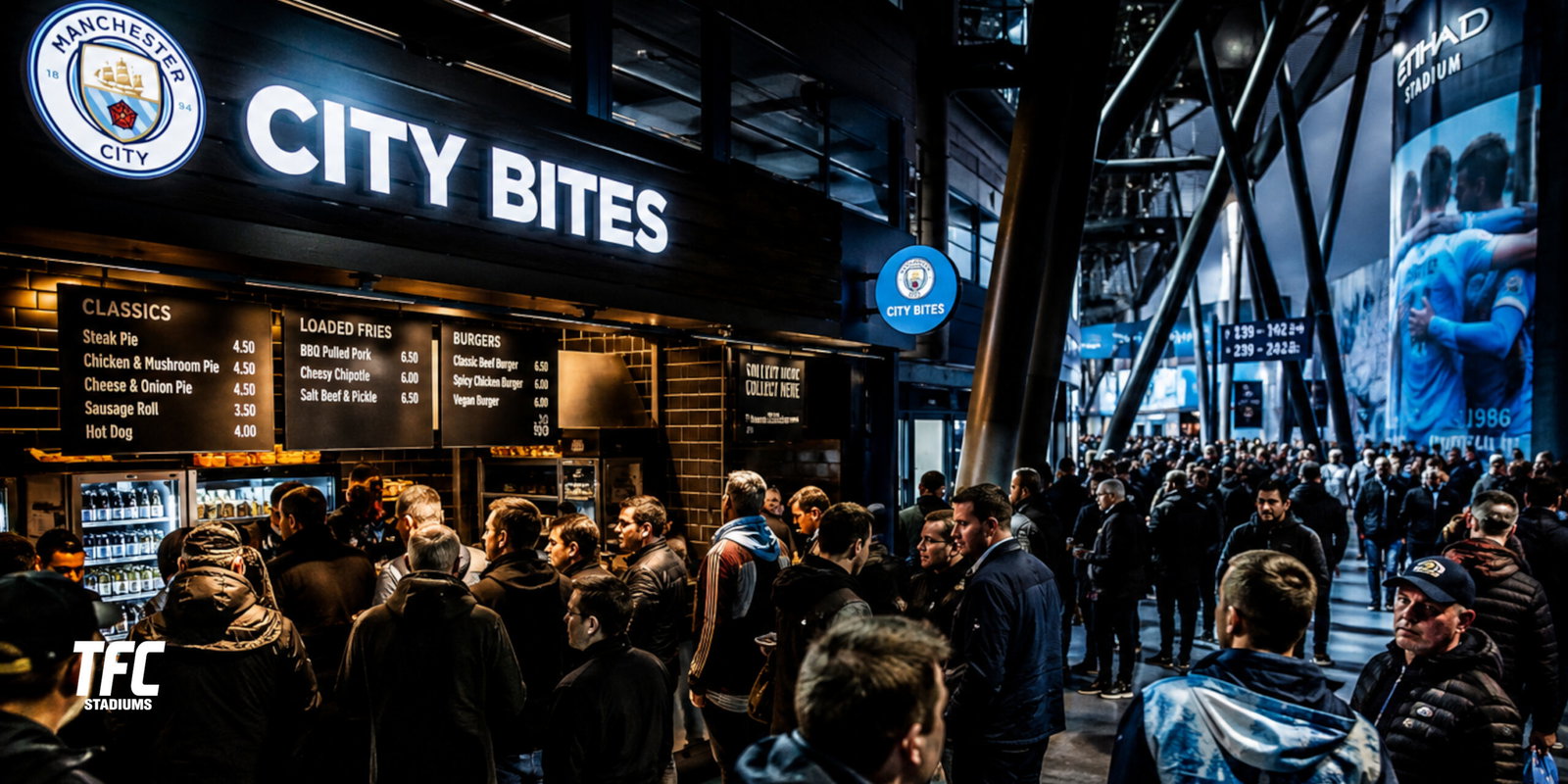
The Etihad’s approach is built around speed and convenience. A Premier League matchday creates a huge logistical challenge, with thousands of fans looking for food and drinks in the same short windows before kick-off and at half-time.
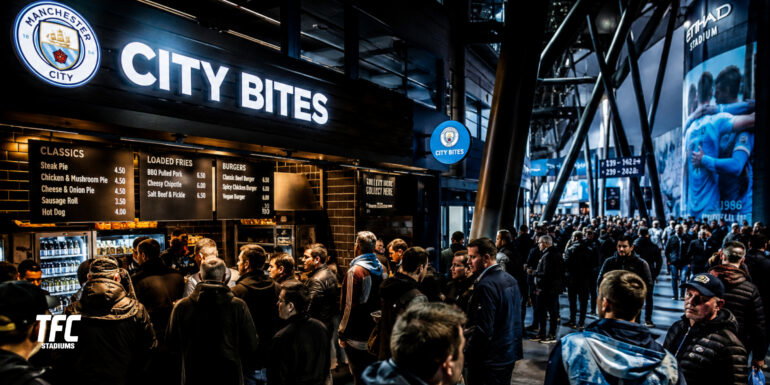
The stadium uses multiple concourse outlets, mobile ordering options in some areas and cashless payments to reduce waiting times. The aim is simple. Nobody wants to miss a goal because they are stuck behind someone ordering food for six people.
Food quality varies depending on where you sit and which outlet you choose, but the overall experience is far removed from the limited menus that defined English football grounds in previous decades.
Classic Football Food: Pies, Burgers and Matchday Favourites
Some traditions survive because football fans simply refuse to let them disappear.
Popular Etihad matchday choices include:
- Steak and meat pies
- Chicken and vegetarian pies
- Burgers
- Hot dogs
- Sausage rolls
- Chips and loaded fries
- Hot drinks
- Soft drinks and beer
The pie remains the unofficial currency of British football grounds. Even as stadiums introduce global menus, many fans still judge the catering by whether they can get a decent pie before kick-off.
Prices generally sit within the expected Premier League stadium range. It is not a budget meal out, but the Etihad is competing with modern entertainment venues rather than old-style football terraces.
Street Food and Modern Options
One noticeable change at the Etihad has been the introduction of more varied food choices inspired by Manchester’s wider food scene.
Depending on the area and fixture, fans may find options influenced by:
- American-style barbecue
- Chicken outlets
- Loaded fries
- Pizza
- International flavours
- Plant-based alternatives
This reflects a wider Premier League trend. Clubs now see food as part of the matchday experience rather than just something supporters buy because they are hungry.
Manchester itself has become one of Britain’s strongest food cities, and expectations from supporters have increased with it.
Food Around the Etihad Campus
One advantage of the Etihad compared with some older city stadiums is space.
The Etihad Campus allows Manchester City to build more of a pre-match environment around the ground. The area outside the stadium often becomes part of the day, with fan zones, temporary food stalls and entertainment.
This matters because modern clubs want supporters arriving earlier rather than rushing through the turnstiles five minutes before kick-off.
Earlier arrivals mean:
- Less pressure on entrances
- More atmosphere before matches
- Increased food and merchandise sales
- A better overall event feel
From a business perspective, food has become a serious part of football economics.
Hospitality Food at the Etihad Stadium
The biggest transformation in stadium dining is seen in hospitality.
Manchester City’s premium areas offer a completely different experience from the standard concourse. Hospitality packages can include:
- Restaurant-style dining
- Chef-prepared menus
- Premium seating access
- Private lounges
- Inclusive drinks packages
This is where the gap between old and new football culture is most obvious. A supporter from the Maine Road era would probably find the idea of a three-course meal before kick-off slightly strange, although they would probably still complain about the defending first.
Premium hospitality is also an important revenue stream. Elite clubs are no longer only competing on ticket numbers, but on how much value they can create from every seat.
How the Etihad Compares With Other Premier League Stadiums
The Etihad sits among the stronger Premier League venues for food infrastructure because it was built as a modern stadium rather than adapted from a historic ground.
Comparison points:
| Stadium | Food Experience |
|---|---|
| Etihad Stadium | Strong variety, modern concourses, improving fan zone culture |
| Tottenham Hotspur Stadium | Often considered the benchmark with its huge food market approach |
| Emirates Stadium | Wide choice but premium London pricing |
| Old Trafford | Traditional football options with ongoing redevelopment discussions |
| Anfield | Strong local identity, especially around food outside the ground |
Tottenham changed expectations when it opened its new stadium, particularly with its large food halls and in-house production. The Etihad’s advantage is its campus model, giving Manchester City room to keep expanding the wider experience.
Drinks and Half-Time Service
Serving thousands of supporters during a 15-minute half-time window is one of the hardest parts of stadium operations.
The Etihad has focused on:
- More efficient service points
- Contactless transactions
- Better queue management
- Pre-match purchasing habits
The reality is that peak periods will always create queues. The smartest move is still the oldest trick in football: buy before everyone else decides they are hungry.
Sustainability and Food Waste
Modern stadium catering increasingly focuses on sustainability. With tens of thousands attending every home match, even small operational changes can have a large effect.
Key areas for improvement across major venues include:
- Reducing single-use packaging
- Managing food waste
- Improving recycling systems
- Offering more sustainable menu options
- Working with local suppliers where possible
Large stadiums are judged differently today. The environmental impact of feeding an entire crowd is now part of the conversation.
Best Food Strategy for a First Visit
For first-time visitors:
- Arrive at least 60 to 90 minutes early
- Explore the area outside the stadium before entering
- Avoid buying food immediately before kick-off
- Check different concourses rather than joining the first queue
- Use contactless payment
The Etihad rewards arriving early. The experience feels more like a full event rather than simply turning up for 90 minutes of football.
Final Thoughts: The Etihad’s Food Evolution
The Etihad Stadium shows how much football has changed. The classic matchday pie has survived, but it now sits alongside street food, hospitality menus and a much bigger entertainment operation.
Some supporters will always prefer the old simplicity of football grounds. There was a charm to it. Yet modern crowds are broader, expectations are higher and stadiums have become places where the whole day matters.
The Etihad’s food experience is not only about feeding fans. It is part of Manchester City’s wider attempt to build a matchday environment that matches the ambitions of the club itself.
About the Author