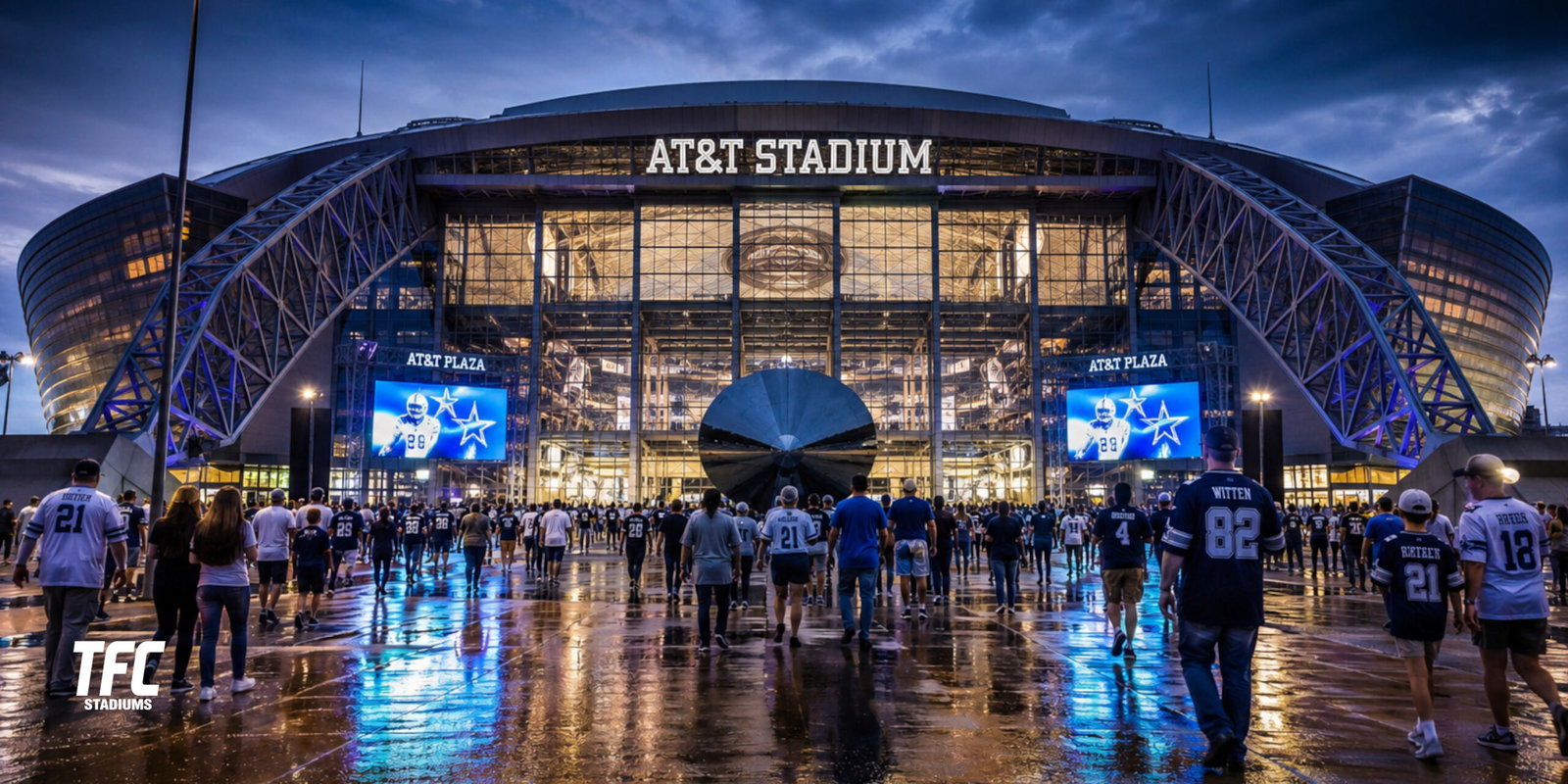
When AT&T Stadium opened in 2009, it was immediately clear that the Dallas Cowboys had built something different. This was not simply a larger NFL venue. It was a statement about what a 21st-century stadium could become.
Before its arrival, most stadium debates focused on capacity, sightlines, concessions and revenue. AT&T Stadium pushed the conversation into architecture, technology, entertainment and brand identity.
Some loved the ambition. Others saw it as the beginning of the era where stadiums became almost too polished. Either way, its influence is impossible to ignore.
The building changed expectations for owners, architects, fans and broadcasters. Modern venues from Las Vegas to Los Angeles carry pieces of its DNA.
The Vision Behind AT&T Stadium
The project was driven by Dallas Cowboys owner Jerry Jones, whose ambition was to create a venue that matched the scale of the franchise’s image.
Designed by HKS Architects, AT&T Stadium combined ideas from traditional football stadiums, luxury resorts, convention centres and entertainment arenas.
Key project details:
| Feature | Detail |
|---|---|
| Opened | 2009 |
| Location | Arlington, Texas |
| Original construction cost | Around $1.15 billion |
| Architect | HKS Architects |
| Seating capacity | Approximately 80,000, expandable beyond 100,000 |
| Roof height | Around 292 feet above playing surface |
| Video board length | Approximately 160 feet wide |
| Retractable roof opening | Around 104,960 square feet |
At the time, many questioned whether any stadium needed that level of investment. Looking back, AT&T Stadium predicted where the industry was heading.
The Rise Of The Stadium As An Entertainment Destination
Before AT&T Stadium, many venues were designed around one main purpose: hosting games.
The Cowboys approached things differently.
AT&T Stadium was created to host:
- NFL games
- College football
- Basketball events
- Boxing
- Concerts
- International football
- Corporate events
- Large-scale entertainment productions
The building helped popularise the idea that a stadium should operate all year rather than sit quiet between fixtures.
The financial logic was simple. A billion-dollar building needed more than eight or nine home games a year.
That thinking is now standard across elite stadium design.
The Video Board That Changed Fan Expectations
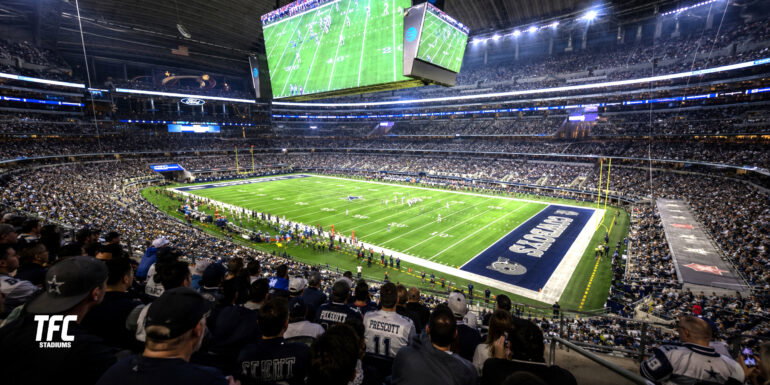
Few features symbolise AT&T Stadium more than its enormous centre-hung video screen.
When installed, it was one of the largest high-definition displays ever placed inside a sports venue. Stretching between the 20-yard lines, it completely changed how spectators watched live sport.
The reaction was fascinating.
Some fans complained they spent too much time looking up instead of watching the field. Others loved having television-quality replays while sitting inside the stadium.
Modern venues followed the same idea:
- Bigger displays
- More statistics
- Enhanced replays
- Integrated digital experiences
The screen turned the stadium into a hybrid between live attendance and broadcast viewing.
Engineering A Stadium Without Traditional Limits
Architecturally, AT&T Stadium’s scale remains impressive.
The building uses two enormous steel arches spanning nearly a quarter of a mile. These arches support the roof structure and help create the vast open interior.
The retractable roof allowed designers to balance indoor comfort with outdoor atmosphere.
Major engineering achievements included:
- One of the longest single-span roof structures in sports
- Huge column-free viewing areas
- Flexible seating arrangements
- A stadium bowl designed around multiple event formats
It created a feeling closer to a futuristic cathedral than a traditional football ground.
Subtle? Absolutely not.
Effective? Very much so.
The Luxury Stadium Revolution
AT&T Stadium accelerated the shift towards premium experiences becoming central to stadium economics.
Older venues relied heavily on ticket volume. Newer stadiums increasingly focused on:
- Luxury suites
- Premium clubs
- Corporate hospitality
- Exclusive lounges
- High-end food and drink areas
AT&T Stadium includes hundreds of suites and thousands of premium seats, helping generate revenue far beyond standard admission.
This model influenced later projects including SoFi Stadium and Allegiant Stadium.
The biggest architectural change was philosophical: the best seats were no longer just about the best view. They became complete experiences.
Bringing Art Into Sports Architecture
One of AT&T Stadium’s more unusual decisions was the inclusion of a major contemporary art collection.
The stadium features large-scale works displayed throughout public spaces, turning concourses into something closer to a gallery environment.
It was a bold idea.
Some fans come for touchdowns, not abstract art. Fair enough.
But architecturally, it showed that stadium interiors could be treated as cultural spaces rather than concrete corridors people rush through before kickoff.
How AT&T Stadium Influenced Future Stadiums
The impact of AT&T Stadium can be seen across newer developments.
SoFi Stadium
The Los Angeles venue expanded many concepts introduced in Arlington:
- Massive digital displays
- Entertainment-first planning
- Premium experiences
- Architectural spectacle
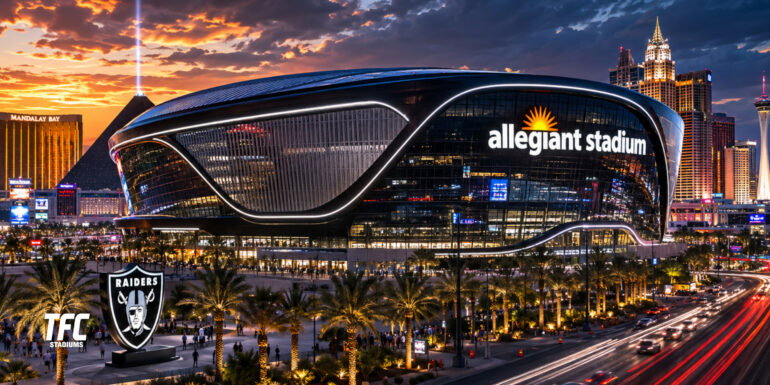
Allegiant Stadium
Las Vegas followed a similar philosophy:
- Strong visual identity
- Indoor comfort
- Multi-event scheduling
- Tourism-focused design
Mercedes-Benz Stadium
Atlanta pushed innovation further with:
- Advanced roof engineering
- Huge digital presentation
- Flexible event layouts
AT&T Stadium proved that a venue itself could become part of the attraction.
Criticism: Did AT&T Stadium Make Stadiums Too Big?
Not every influence has been universally praised.
Critics argue that the modern mega-stadium era has created problems:
- Higher ticket prices
- More focus on corporate visitors
- Less traditional atmosphere
- Bigger distance between some fans and the action
There is some truth there.
Older stadiums often had imperfections that created personality. AT&T Stadium belongs to a different school of design: controlled, polished and enormous.
The challenge for future architects is blending modern comfort with the raw energy that made historic venues special.
Data And Legacy Analysis
AT&T Stadium’s influence can be measured through several trends.
| Area | Before AT&T Stadium | Modern Direction |
| Screens | Support feature | Central experience |
| Revenue | Ticket-focused | Hospitality and events |
| Design goal | Sports venue | Entertainment complex |
| Technology | Secondary feature | Built into architecture |
| Event usage | Team focused | Year-round programming |
The biggest achievement was not one individual feature. It changed the business model behind stadium construction.
A Stadium That Divided Opinion And Defined An Era
AT&T Stadium is not a quiet building. It was never supposed to be.
It represents Dallas perfectly: ambitious, oversized, confident and occasionally ridiculous in the most entertaining way possible.
Some fans will always prefer older stadiums with tighter stands and decades of history built into the concrete. That argument deserves respect.
But from an architectural perspective, AT&T Stadium marked a turning point. After 2009, owners stopped asking how to build better sports venues and started asking how to create destinations.
Love it or dislike it, almost every major stadium built since has been responding to what happened in Arlington.
About the Author