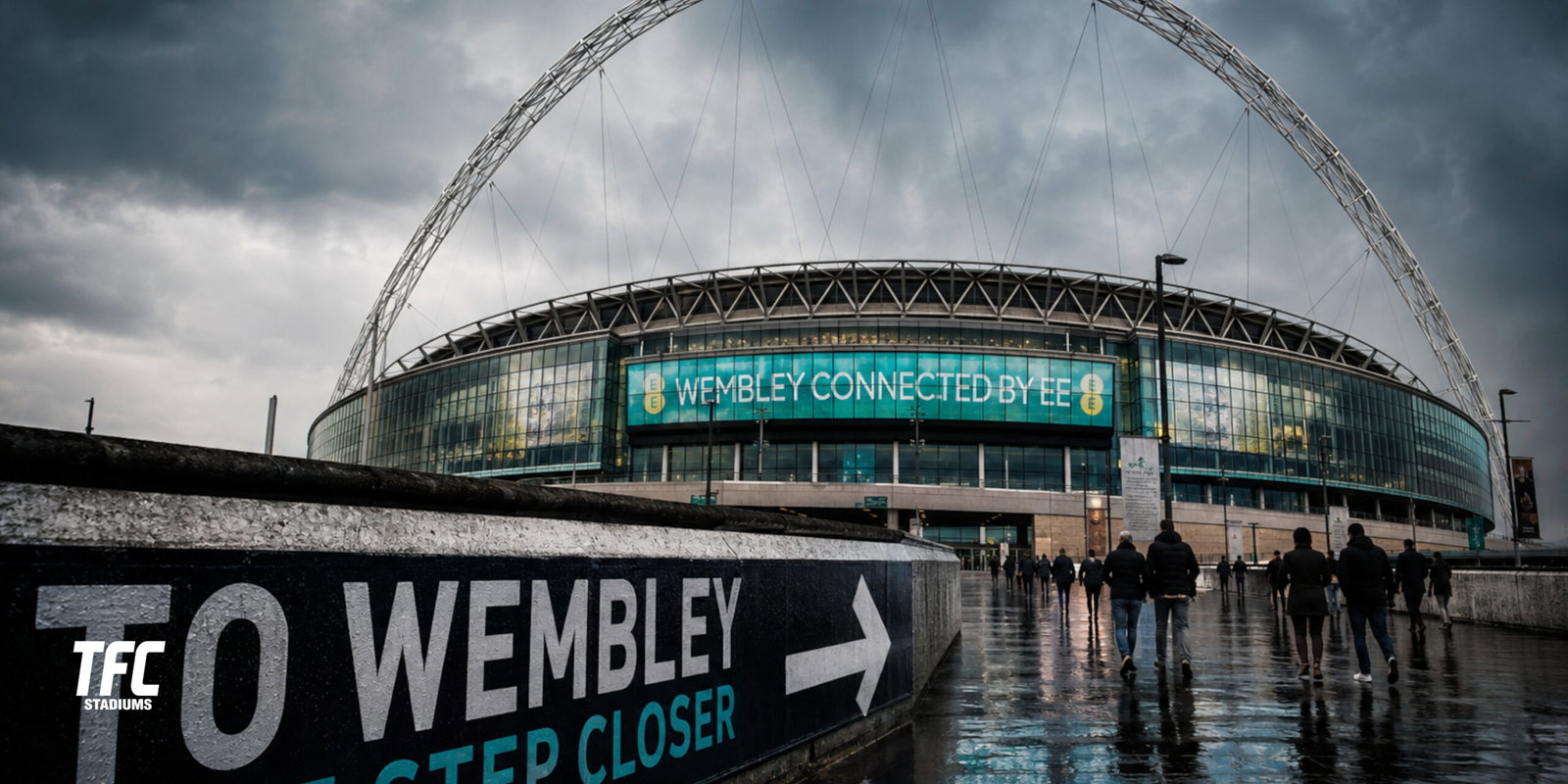
Wembley Stadium is often described as the home of English football, but few sporting landmarks have generated as much debate. It has hosted World Cup glory, Champions League finals, Olympic events and unforgettable concerts, yet its history is also filled with arguments about money, identity, access and how a national stadium should be run.
Part of Wembley’s fascination is that almost everyone feels some ownership over it. Fans see it as sacred football ground, politicians view it as national infrastructure, and businesses see one of the world’s most valuable sports venues. When those interests collide, controversy is never far away.
The Demolition Of The Original Wembley Stadium
For many supporters, the most emotional controversy was losing the original Wembley.
Opened in 1923 as the Empire Stadium, the old Wembley became part of British sporting culture. Its Twin Towers were instantly recognisable and linked to moments such as:
- The 1923 White Horse Final
- England winning the 1966 FIFA World Cup
- Legendary FA Cup finals
- Historic rugby league finals
- Major concerts including Live Aid in 1985
When plans emerged to demolish the stadium and replace it with a modern arena, many argued that a piece of sporting history was being erased.
The biggest argument centred on the Twin Towers. Campaigners wanted them preserved, either incorporated into the new design or moved elsewhere. Ultimately they were demolished in 2003.
The new Wembley Arch became the replacement landmark, but for many older fans the towers represented something that could not simply be recreated with modern engineering.
The Cost Of The Wembley Rebuild
Perhaps the most famous Wembley controversy was the price.
Early expectations suggested a major but manageable national stadium project. By completion in 2007, the final cost had risen to around £798 million, making Wembley one of the most expensive stadiums ever built at the time.
The financial debate focused on:
- Rising construction costs
- Project management issues
- Legal disputes
- Public funding involvement
- Whether England needed a single national stadium at all
Critics argued the money could have supported grassroots football facilities across the country. Supporters countered that England needed a world-class venue capable of competing with the biggest arenas in Europe and America.
The awkward truth sits somewhere between the two. The finished stadium is spectacular, but the journey to build it was painfully expensive.
Construction Delays And The 2006 FA Cup Final Problem
The new Wembley was originally expected to open before the 2006 FA Cup Final.
That did not happen.
Construction problems delayed completion, forcing the final between Liverpool and West Ham United to remain at the Millennium Stadium in Cardiff.
The delay became a national embarrassment because Wembley was not just another building project. It was marketed as the future home of English football, and missing such a symbolic deadline damaged confidence.
The stadium eventually opened in 2007, but the troubled construction period remains one of the biggest lessons in managing large sporting projects.
The Question Of Whether Wembley Lost Its Atmosphere
When the new stadium opened, some fans immediately questioned whether modern Wembley had the same magic.
The debate focused on several issues:
- Corporate seating changing the crowd dynamic
- Higher ticket prices
- More commercial areas
- The removal of old architectural features
With around 90,000 seats, Wembley is the largest stadium in the UK and one of the biggest in Europe. The scale is impressive, but some supporters argue that size and luxury came at the expense of intimacy.
However, major nights have challenged that criticism. England tournament matches, Champions League finals and dramatic play-off finals have shown that Wembley can still produce a powerful atmosphere when the occasion is right.
Club Wembley And The Corporate Seat Debate
One of the biggest changes in the rebuilt stadium was the introduction of premium seating through Club Wembley.
The idea was simple, generate long-term income from hospitality packages to help fund and operate the venue.
The criticism was equally simple. Football supporters worried that too many prime seats were being moved away from ordinary fans.
The famous sight of empty middle-tier seats after half-time during some matches has become a regular complaint. Often those seats belong to hospitality areas where spectators return later from lounges.
For television viewers, it can create a strange image: a sold-out national final appearing to have gaps in some of its best viewing areas.
Ticket Prices And Accessibility
Wembley has repeatedly faced criticism over affordability.
Major finals can involve:
- Expensive match tickets
- High travel costs
- Accommodation increases around London
- Food and drink prices inside the stadium
The argument is especially strong around domestic finals. Supporters who follow their clubs all season sometimes feel priced out of the biggest day.
Football has always balanced tradition and business, but Wembley often becomes the place where that tension is most visible.
The 2021 Euro Final Security Failure
One of the darkest moments in modern Wembley history came during the Euro 2020 final between England and Italy, held in 2021.
Thousands of ticketless individuals gathered around the stadium before kick-off. Security barriers were breached, with some people forcing their way inside.
An independent review later found serious failures in planning and crowd control.
The incident damaged Wembley’s reputation internationally and raised uncomfortable questions about:
- Stadium security preparation
- Policing strategy
- Fan behaviour
- Tournament organisation
It was especially damaging because the match itself was one of the biggest events hosted in England since the 1966 World Cup final.
The Attempted Sale Of Wembley Stadium
In 2018, another major controversy emerged when businessman Shahid Khan proposed buying Wembley Stadium.
The suggested deal was worth around £600 million and sparked a fierce debate.
Supporters of the sale argued:
- Money could transform grassroots football facilities
- The stadium would still host England matches
- Private investment could improve operations
Opponents argued:
- A national stadium should remain under football ownership
- Future priorities could change
- Selling Wembley ignored its cultural importance
The proposal was eventually withdrawn.
The debate revealed something important: Wembley is viewed as more than a building. Many fans consider it part of English football’s identity.
NFL Matches And The American Football Debate
Wembley’s regular hosting of NFL games has divided opinion.
Supporters see these events as smart business. They bring international attention, generate revenue and maximise use of an expensive stadium.
Critics question whether England’s football home should regularly host another sport, especially when pitch quality concerns appear.
Modern stadium economics favour multi-use venues, but Wembley’s symbolic status means every change receives extra scrutiny.
Semi-Finals At Wembley
Another long-running argument surrounds FA Cup semi-finals.
Traditionally, semi-finals were played at neutral club grounds, making reaching Wembley itself part of the reward.
After the rebuild, semi-finals moved permanently to Wembley.
The reasons were largely financial and practical. More events helped pay for the stadium, and Wembley provided huge capacity.
Many fans still dislike the change, arguing it reduced the uniqueness of reaching the final.
There is something special about the old idea: win your semi-final and earn Wembley. Modern football economics had other plans.
Has Wembley Been Worth The Controversy?
The debate around Wembley depends on what people expect from a national stadium.
From a sporting and commercial perspective, it has delivered:
- 90,000 capacity
- Elite UEFA stadium status
- Champions League finals
- Major international tournaments
- Global concerts and events
- Huge matchday revenue potential
From an emotional perspective, some supporters still miss the old Wembley and feel football has become more corporate.
Both views have merit.
Wembley represents modern football perfectly: bigger, richer and more advanced, but always wrestling with nostalgia for what came before.
The controversies are part of its story. A stadium nobody cared about would never create this many arguments.
About the Author