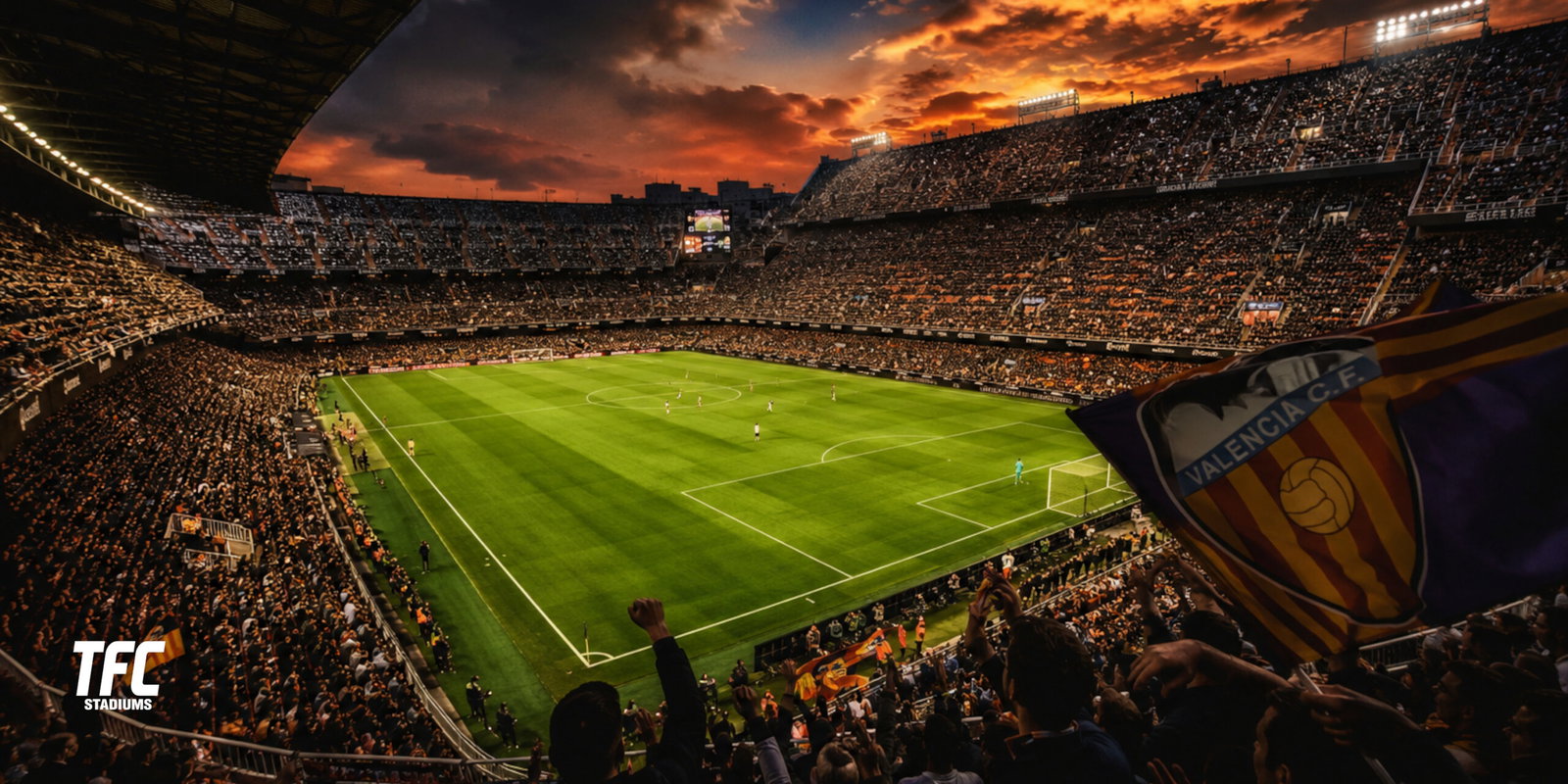
Few football grounds carry the personality of Mestalla. Opened in 1923, Valencia CF’s home is famous for its steep stands, intense atmosphere and the feeling that supporters are almost leaning over the pitch. It is one of European football’s great old arenas, the type of stadium where history seems built into the concrete.
That creates an interesting challenge. Modern stadium technology is often associated with brand new venues built around fibre networks, giant screens and digital infrastructure from day one. Mestalla was designed in an era when the biggest innovation was giving more people a better view of the match.
Yet over the last decade, Valencia have worked to bring digital improvements into a century-old venue without stripping away the character that makes Mestalla special. The balance between heritage and technology is where the project becomes genuinely fascinating.
Connectivity: The Foundation of a Modern Matchday
The biggest change for modern supporters is invisible. Connectivity has become one of the most important parts of stadium design.
With crowds of nearly 50,000 people on matchdays, mobile networks face enormous demand. Fans are no longer just watching football, they are:
- Accessing mobile tickets
- Sharing video and images
- Checking statistics
- Following other matches
- Using club apps and digital services
Mestalla’s improvements in digital infrastructure have focused on allowing supporters to stay connected while preserving the traditional matchday experience.
There is always a slight irony in watching thousands of people record an atmosphere they are supposed to be experiencing, but modern football has changed. The phone is now part ticket, part camera, part programme and occasionally a tool for complaining about the referee within seconds.
Digital Ticketing and Stadium Access
One of the clearest upgrades has been the movement towards digital ticketing.
Modern access systems allow Valencia CF to:
- Reduce physical ticket dependency
- Improve entrance speed
- Track attendance patterns
- Strengthen security controls
- Offer easier ticket management
For supporters, the biggest advantage is convenience. Losing a paper ticket outside the stadium is slowly becoming a problem from another era.
Digital access also gives clubs better operational data. Understanding when supporters arrive, which entrances become congested and how people move around the stadium helps improve planning.
Data Analytics Behind the Scenes
Many of the most important digital innovations are not visible from the stands.
Modern football venues increasingly rely on data analysis for:
- Crowd movement
- Security planning
- Maintenance schedules
- Commercial performance
- Fan behaviour
A stadium like Mestalla presents a unique challenge because it was not originally built with modern circulation patterns in mind. Its famous steep design creates an incredible atmosphere but requires careful management.
Data allows operators to understand pressure points and make better decisions without needing to completely rebuild the fan experience.
The Valencia CF Digital Fan Experience
Football clubs now interact with supporters every day, not just during 90 minutes.
Valencia’s digital ecosystem has grown through:
- Club media platforms
- Video content
- Social channels
- Online membership services
- Digital retail
- Mobile communication
The modern supporter journey often starts hours before kick-off and continues long after leaving the stadium.
A fan might watch training content online, buy merchandise digitally, enter with a mobile ticket, post from their seat, check post-match analysis and watch interviews afterwards. The stadium has become one part of a much larger digital relationship.
Screens, Content and In-Stadium Media
Visual technology has become another major area of development.
Modern stadium screens are no longer simple scoreboards. They support:
- Team announcements
- Match statistics
- Advertising
- Safety information
- Fan interaction
- Replay content where regulations allow
At a traditional venue like Mestalla, the challenge is placement. Large digital displays need to improve the experience without overwhelming the architecture.
The best technology in an old stadium usually feels like it belongs there. The worst feels like someone attached a shopping centre to a football ground.
Commercial Technology and Smart Partnerships
Digital innovation is also changing how clubs generate revenue.
Technology supports:
- Targeted advertising
- Improved sponsorship packages
- Digital campaigns
- Online retail growth
- International fan engagement
For a club like Valencia CF, this is especially important. La Liga clubs compete in a global entertainment market, where digital reach matters almost as much as local attendance.
Mestalla may physically hold around 50,000 supporters, but Valencia’s digital audience stretches far beyond Spain.
Security and Operations Technology
Modern stadium safety has been transformed by technology.
Digital systems can assist with:
- CCTV monitoring
- Entry management
- Emergency communication
- Crowd analysis
- Staff coordination
The aim is not to remove the human side of stadium management but to give staff better information.
Large football crowds naturally create unpredictable situations. Technology helps identify problems earlier and respond faster.
The New Mestalla Question
Any discussion about innovation inevitably leads to the long-running New Mestalla project.
A future stadium offers Valencia the chance to build digital systems directly into the structure, including:
- High-capacity connectivity
- More advanced hospitality technology
- Modern media facilities
- Improved accessibility systems
- Smart energy monitoring
The challenge will be carrying across what makes the current Mestalla special.
Many clubs have built technically impressive stadiums that somehow feel quieter than the buildings they replaced. Valencia’s greatest asset has always been emotion. Any future technology has to serve that rather than replace it.
How Mestalla Compares With Modern Smart Stadiums
Compared with newer venues such as Tottenham Hotspur Stadium or SoFi Stadium, Mestalla faces obvious limitations.
Purpose-built smart venues have advantages:
| Feature | New Smart Stadiums | Mestalla Challenge |
|---|---|---|
| Connectivity | Designed from construction | Retrofitted into old structure |
| Digital screens | Integrated architecture | Limited placement options |
| Crowd flow | Planned with analytics | Historic layout restrictions |
| Hospitality tech | Built around premium areas | Traditional seating model |
| Atmosphere | Must be created | Already naturally strong |
The interesting point is that technology alone does not create a great stadium. Many modern venues would love to recreate the pressure and noise Mestalla generates naturally.
Innovation Without Losing Identity
Mestalla’s digital transformation is not about turning a historic football ground into a futuristic entertainment complex. That would miss the point.
The real success comes from using technology quietly. Faster access, better connectivity, smarter operations and stronger digital engagement improve the experience while allowing the stadium’s personality to remain.
After a century of football, Mestalla’s greatest feature is still the same one it always had, thousands of Valencia supporters packed close to the pitch creating one of Spain’s most intimidating atmospheres.
The clever technology is the kind you barely notice.
About the Author