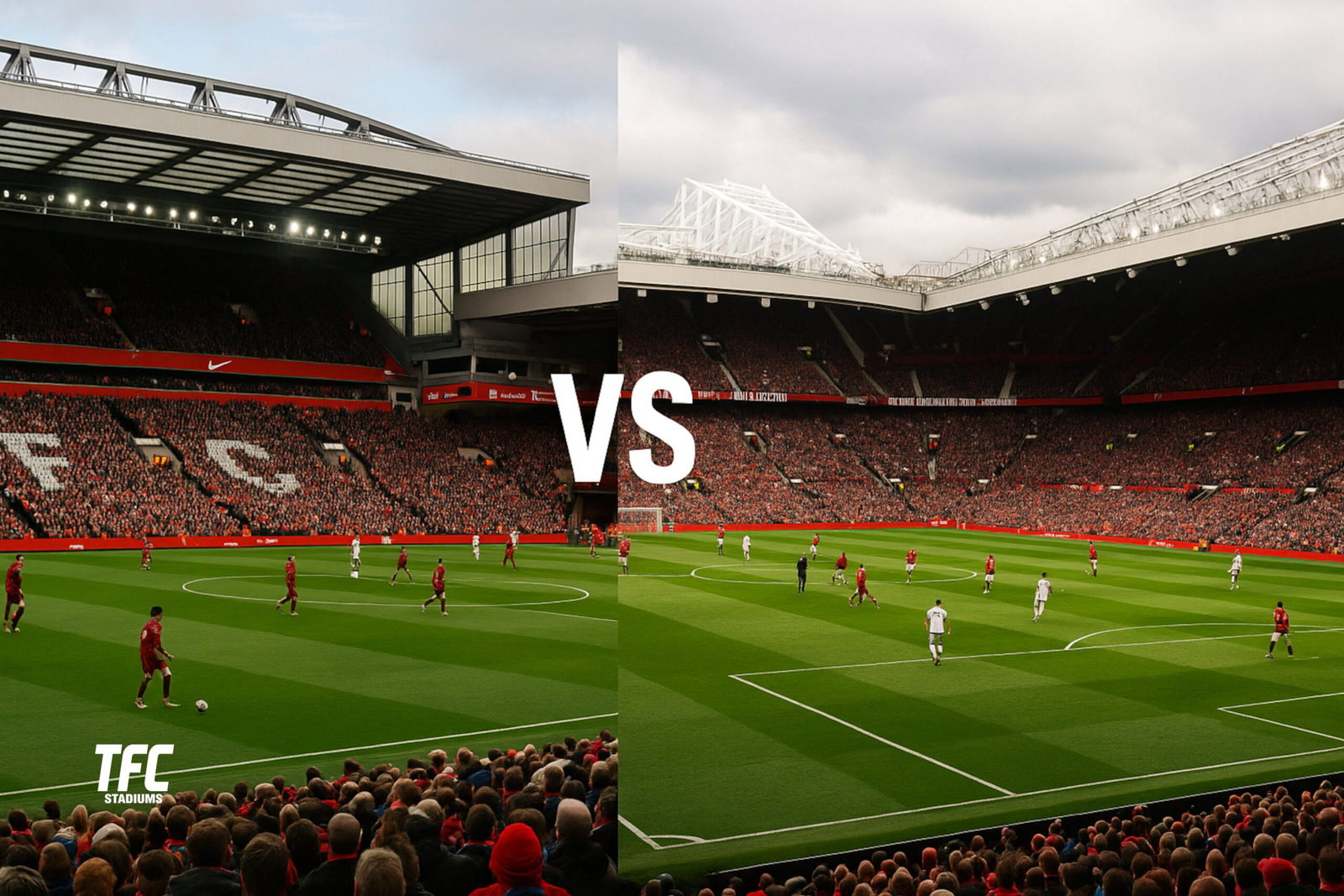
Few stadiums in world football carry the same weight as Anfield and Old Trafford. Both stand as pillars of English football history, drenched in tradition, legendary moments, and fierce loyalty. Yet their stories, structures, and cultural significance differ in meaningful ways. This comparison examines their origins, architecture, atmosphere, historical milestones, and role in modern football.
Origins and Legacy
Anfield
- Opened: 1884
- Home to Liverpool FC since 1892
- Originally the home of Everton before the club relocated to Goodison Park
- Witness to Liverpool’s rise from local contender to European powerhouse
Old Trafford
- Opened: 1910
- Home to Manchester United from the beginning
- Nicknamed the “Theatre of Dreams” by Bobby Charlton
- Rebuilt after World War II bomb damage and significantly expanded over time
Both stadiums have endured transformation and upheaval but maintained their essence as bastions of football identity in the North West.
Capacity and Architecture
Anfield
- Current capacity: around 61,000 (after Anfield Road Stand expansion)
- Known for its steep Main Stand and proximity of fans to the pitch
- Famous for the atmospheric intensity of The Kop, particularly on European nights
- Located within a tight urban footprint, limiting some expansion options
Old Trafford
- Current capacity: around 74,000
- England’s largest club stadium
- Broad, four-tiered design allows for large crowds and sweeping views
- Criticised in recent years for lack of modernisation in certain areas
While Old Trafford holds more fans, Anfield’s close-quarters design often creates a more intimate, high-pressure feel for visiting sides.
Atmosphere and Matchday Experience
Anfield
- ‘You’ll Never Walk Alone’ as a pre-match anthem is iconic
- Night matches, especially in Europe, are renowned for intensity
- Supporters known for coordinated displays and vocal backing
Old Trafford
- The Stretford End holds the most passionate home fans
- Atmosphere varies depending on opposition and competition
- Historically louder during domestic clashes than European fixtures
Anfield is often cited for emotional weight and raw energy. Old Trafford, while more imposing in scale, has at times suffered from quieter patches outside major fixtures.
Club Success and Historical Moments
Anfield
- Home to 6 European Cups, 19 league titles, and countless domestic honours
- Hosted unforgettable moments such as the comeback vs Barcelona in 2019
- Managed by greats including Bill Shankly, Bob Paisley, and Jürgen Klopp
Old Trafford
- Ground of 3 European Cups, 20 league titles, and numerous domestic trophies
- Site of the 1999 treble parade and countless Alex Ferguson triumphs
- Rebuilt symbolically after the Munich Air Disaster of 1958
Each stadium reflects its club’s triumphs and tragedies, serving as more than just a venue but as a living monument to legacy.
Modern Redevelopment and Future Plans
Anfield
- Ongoing phased redevelopment while maintaining matchday continuity
- Expanded Main Stand and Anfield Road end have modernised the stadium without compromising identity
- Club has focused on sustainable upgrades rather than relocation
Old Trafford
- Plans for renovation under discussion by new ownership structure
- Options include refurbishment, partial rebuild, or entirely new stadium
- Concerns raised over falling behind rivals in stadium modernity
Anfield’s modernisation has been gradual but effective. Old Trafford faces a more complex path forward due to its scale and historic weight.
Cultural Impact
Both grounds are deeply woven into their cities. Anfield stands as a symbol of working-class resilience and European ambition. Old Trafford embodies grandeur and the global reach of Manchester United. Their cultural influence extends beyond football into music, politics, and identity.
TFC Stadiums takeaway
Anfield and Old Trafford are cultural landmarks, steeped in the stories of triumph, loss, and undying support. Anfield captivates with its emotion and ferocity. Old Trafford impresses with its scale and theatre. One does not replace the other. They reflect two distinct paths to football greatness in England’s North West, and each continues to shape the future of the game.
About the Author