There was a time when Birmingham City fans would have settled for a new roof that did not leak and a concourse that did not feel like it had survived three separate industrial revolutions.
Now the club are talking about a 62,000-seat stadium with a retractable roof, a movable pitch, a sky bar, and enough chimneys to make it look as though Birmingham has decided to build its own football-powered cathedral.
After years of rumours, land purchases and increasingly ambitious soundbites from Tom Wagner and Knighthead, Birmingham City’s new stadium plans have finally taken shape. The proposed ground at Bordesley Green would become the largest football stadium in the Midlands and the centrepiece of a huge new Sports Quarter in east Birmingham.
Where Will Birmingham City’s New Stadium Be Built?
The proposed site sits in Bordesley Green, on the former Birmingham Wheels complex, around a mile east of the current home at St Andrew’s.
Knighthead purchased the 48-acre site in 2024, seeing it as the foundation for a much larger redevelopment project. Rather than simply building a bigger ground, Birmingham City want an entire district around it, with shops, leisure facilities, housing, training grounds and entertainment venues all tied into the club.
The idea has often been compared to the Etihad Campus in Manchester, although Birmingham’s version looks set to lean more heavily into mixed-use development and city regeneration.
How Big Will the New Stadium Be?
Current plans point to a capacity of 62,000.
That would make it:
- The biggest stadium in the Midlands
- More than double the size of the current St Andrew’s
- One of the ten largest football stadiums in England
For comparison:
| Stadium | Capacity |
|---|---|
| Current St Andrew’s | 29,409 |
| Proposed Birmingham City Stadium | 62,000 |
| Villa Park | 42,000+ |
| Old Trafford | 74,000 |
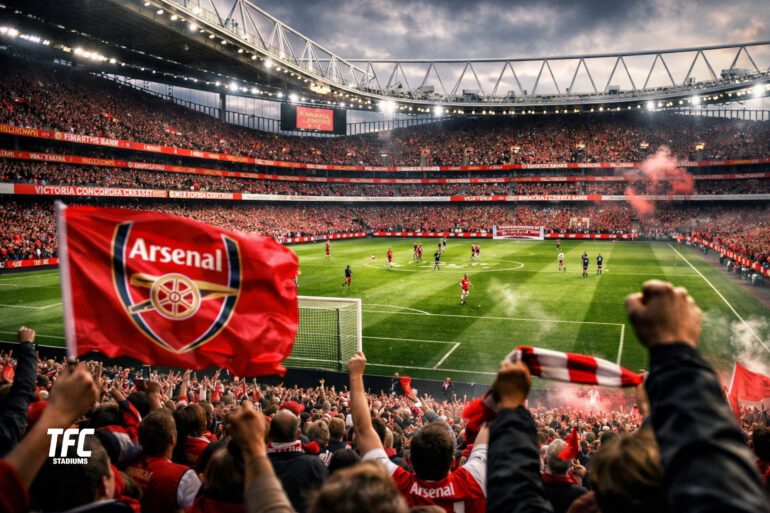
| Emirates Stadium | 60,704 |
The leap is extraordinary. Birmingham are not planning for where the club is now. They are planning for where they believe the club can be in ten years.
That is either visionary or wildly optimistic, depending on whether you support Birmingham City or enjoy reminding Birmingham City fans about the league table.
What Will the Stadium Look Like?
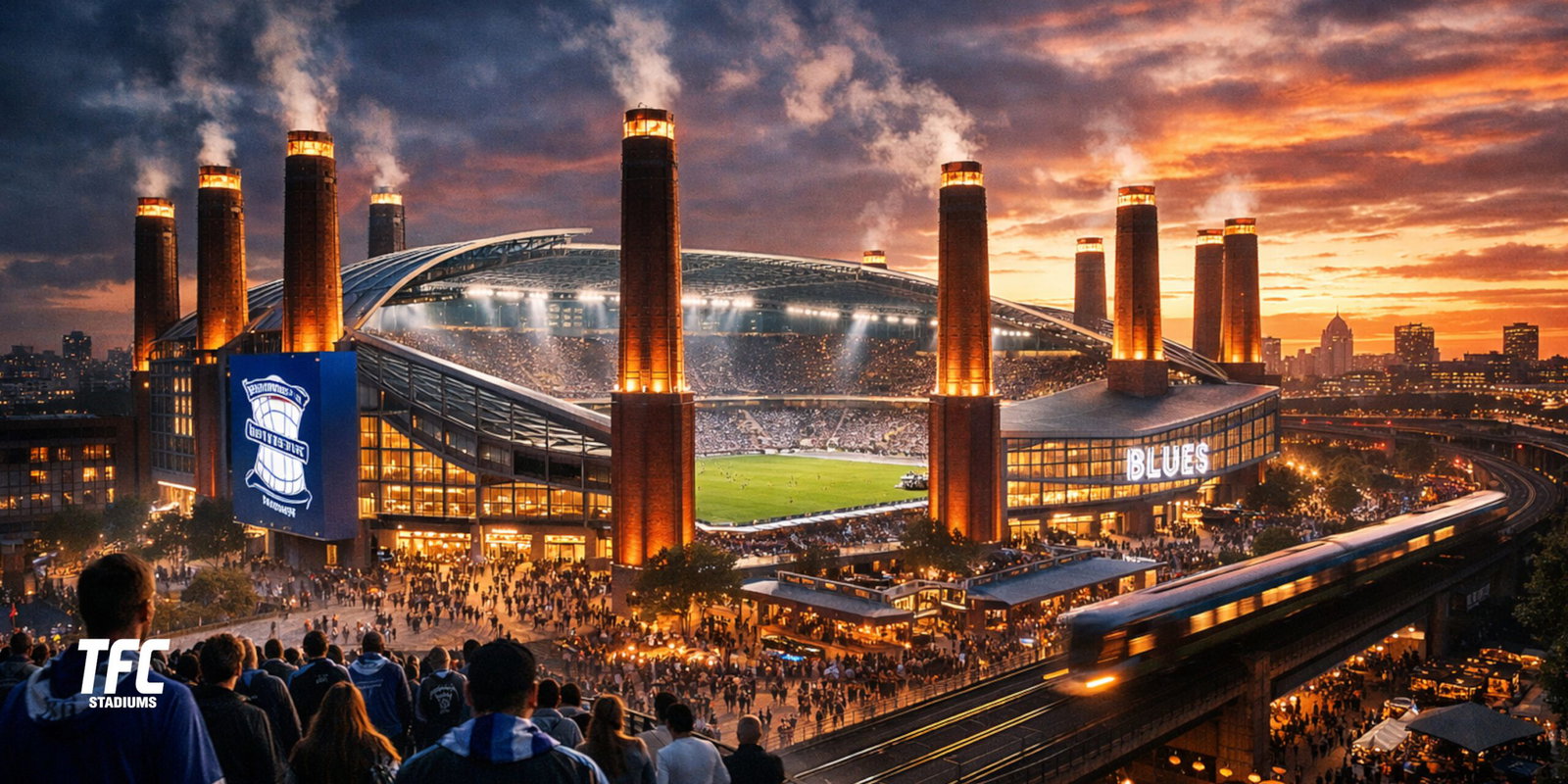
This is where the plans stop looking like a normal football ground and start looking like somebody asked an architect to design a stadium after watching too much Peaky Blinders and standing next to a Victorian factory.
The design comes from Heatherwick Studio and MANICA Architecture. The stadium features twelve giant chimney-style towers around the exterior, inspired by the brickworks that once stood on the site.
Those towers are not simply decorative. They will:
- Support the retractable roof
- House lifts and staircases
- Help with ventilation
- Direct noise upwards and away from nearby homes
One of the chimneys is even planned to contain a lift up to what the club claims will be Birmingham’s highest bar. Because apparently watching football while suspended above Small Heath is the next frontier in hospitality.
The stadium bowl itself is designed to be steep and tight, bringing supporters as close to the pitch as possible. The club wants a “360-degree wall of fans” effect, similar to some of the more intimidating modern grounds in Europe. High-performance acoustics are also being built into the structure to amplify crowd noise.
Key Features Planned
The proposed stadium includes several features rarely seen in English football:
- Retractable roof
- Movable pitch
- Flexible layout for concerts and non-football events
- Large public square and food market area
- Restaurants, cafés and social spaces
- Dedicated facilities for Birmingham City Women and academy teams
- New training facilities within the wider Sports Quarter
The retractable roof and movable pitch are especially significant. They would allow the venue to host concerts, boxing, rugby, NFL exhibitions and major events throughout the year without damaging the playing surface.
In other words, Birmingham are not trying to build just a football stadium. They are trying to build a year-round money-printing machine.
When Will It Open?
The club’s current target is to have the stadium ready for the 2030-31 season. Planning consultation is expected to continue through 2026, with a formal planning application due later this year. Construction is currently expected to begin in 2028.
That timeline still depends on planning approval, infrastructure work and the wider Sports Quarter development moving smoothly.
If you have ever followed a major British infrastructure project before, you may already be quietly laughing into your tea.
Still, Birmingham City’s owners appear determined to move quickly. They have already secured land, attracted government support and unveiled full concept designs rather than vague promises scribbled on the back of a napkin.
How Much Will It Cost?
The overall Sports Quarter project is expected to cost somewhere between £1.2 billion and £3 billion, depending on which elements are included and how much surrounding infrastructure is built.
The club has already secured an additional £100 million investment and has received support from government ministers, who see the development as a major regeneration project for east Birmingham.
Knighthead believe the wider development could add hundreds of millions of pounds per year to the Birmingham economy and create more than 8,000 jobs by the mid-2030s. Estimates vary between £450 million and £760 million annually.
What Happens to St Andrew’s?
No final decision has been announced on the long-term future of St Andrew’s.
The current stadium has been Birmingham City’s home since 1906 and remains one of the most recognisable grounds in English football, even if parts of it have occasionally looked as though they were being held together by hope, scaffolding and nostalgia.
Possible options include:
- Retaining it for academy or women’s matches
- Redeveloping the site
- Selling the land
- Keeping part of the stadium as a heritage venue
Given the emotional connection many supporters have to St Andrew’s, this is likely to become one of the most sensitive parts of the whole project.
Transport and Access Plans
Transport is perhaps the biggest practical challenge.
The club and local authorities are discussing major upgrades to tram services and public transport in east Birmingham. There is also a proposal for a £20 million tunnel carrying electric shuttle buses from Birmingham New Street directly to the Sports Quarter.
The longer-term aim is for the stadium to benefit from links to HS2 and the wider Midlands transport network.
If it works, getting to the ground could become much easier than the often-chaotic experience around St Andrew’s on a busy matchday. If it does not, 62,000 people trying to leave Bordesley Green at once may become a new branch of applied physics.
Head-to-Head: New Birmingham City Stadium vs Villa Park
For Birmingham fans, there is one comparison that matters more than any other.
| Feature | Proposed Birmingham City Stadium | Villa Park |
|---|---|---|
| Capacity | 62,000 | Around 42,000 |
| Roof | Retractable | No |
| Pitch | Movable | No |
| Opening | Planned 2030-31 | Opened 1897 |
| Mixed-use district | Yes | Limited |
| Biggest in Midlands? | Yes, if built | Currently yes |
If completed as planned, Birmingham City’s new ground would comfortably overtake Villa Park in size, scale and modern facilities.
Of course, Aston Villa supporters will quite reasonably point out that they already have Premier League football, European nights and a functioning stadium today.
Birmingham’s response is likely to be that they are building for the future. Preferably a future where they are back in the Premier League and no longer explaining to their children what the Championship play-offs do to a person psychologically.
Will The Plans Actually Happen?
Right now, these plans are far more advanced than previous Birmingham City stadium proposals.
The land has been bought. The architects have been appointed. Designs have been unveiled. Government support is in place. The club has spent the past two years talking less like a club patching up St Andrew’s and more like one trying to transform itself completely.
There are still risks. Costs could rise. Planning delays could appear. The wider economy may not help. But for the first time in decades, Birmingham City have a stadium plan that feels real.
Whether it becomes one of the great football grounds in Britain or simply the most expensive way ever devised to order a pint from a sky bar remains to be seen.
About the Author