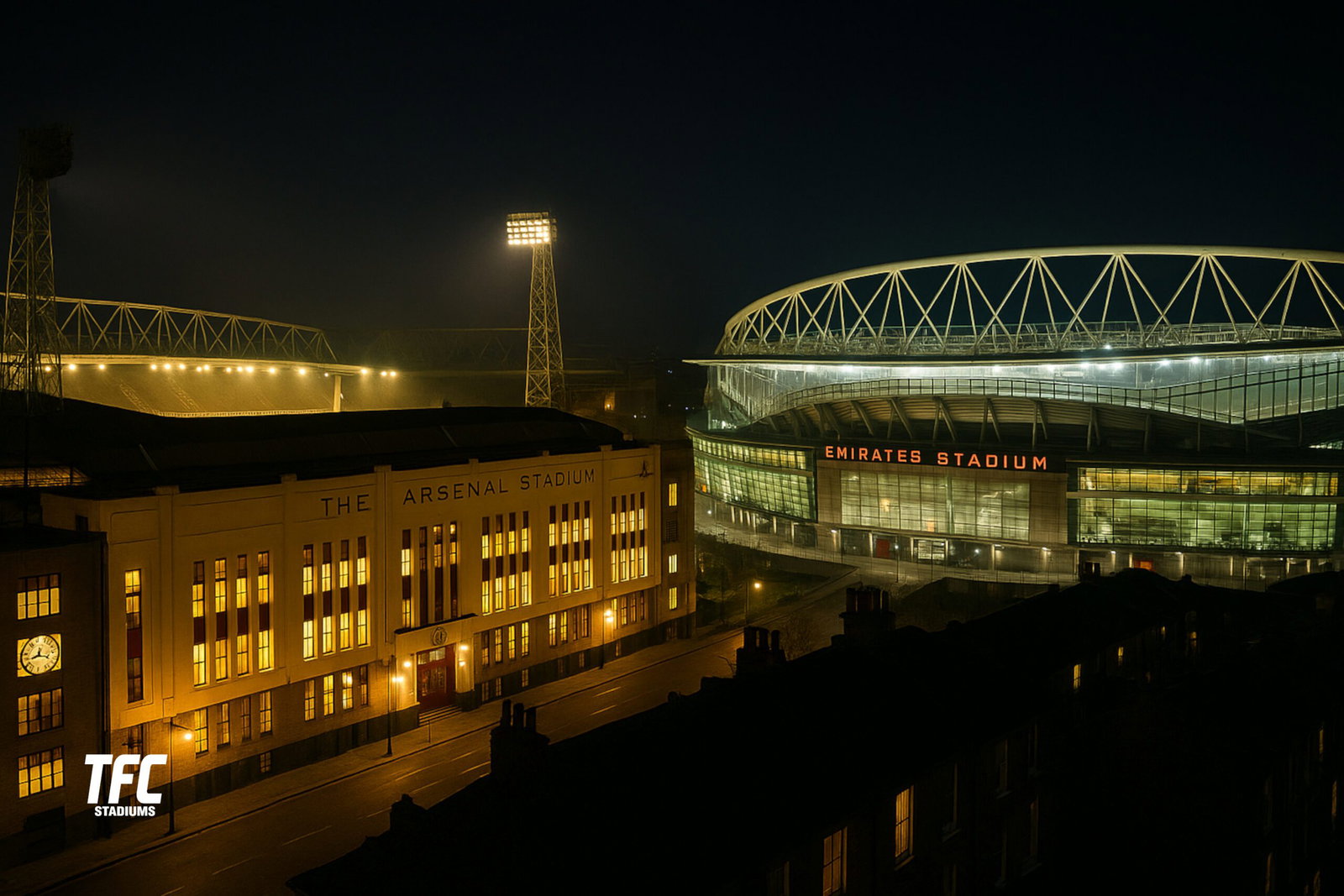
When Arsenal left Highbury in 2006 for the Emirates Stadium, fans gained more comfort, better facilities, and a modern home fit for a global brand. But something intangible seemed to be left behind. The debate over atmosphere still lingers today: has the Emirates ever truly captured the soul and intensity that made Highbury legendary?
Highbury: The Art Deco Cauldron
Highbury was small, intimate, and steeped in history. The North Bank and Clock End stood close to the pitch, and every chant reverberated through its tight corridors and concrete terraces.
- Capacity: Around 38,000 in its final years
- Design: Art Deco style, two-tier stands, steep sightlines
- Sound: Trapped and amplified by compact architecture
- Vibe: Personal, familiar, and often ferociously partisan
Highbury was more than a stadium; it was a theatre where proximity bred emotion. You could hear players shouting instructions, feel the thud of a tackle, and sense the shared tension among fans. Its imperfections made it human.
The Emirates: A Cathedral of Modern Football
By contrast, the Emirates Stadium is a sleek, world-class venue that reflects Arsenal’s ambition in the 21st century. The bowl design, plush seating, and corporate tiers brought luxury and financial muscle. What it arguably sacrificed was that raw, communal energy.
- Capacity: Over 60,000
- Design: Continuous bowl, improved acoustics but greater distance between stands and pitch
- Sound: Louder in peaks, quieter in lulls
- Vibe: Impressive, but often described as detached or subdued
For years, critics labelled the Emirates as sterile, a place where atmosphere came second to aesthetics. Some of that has changed, with initiatives like the Ashburton Army injecting noise and colour into the North Bank lower tier, but it remains a different experience from Highbury’s tightly packed fervour.
Key Differences in Atmosphere
| Feature | Highbury | Emirates Stadium |
|---|---|---|
| Noise Retention | Excellent due to close stands | Moderate, disperses upward |
| Fan Proximity | Intimate and immediate | Wider gaps from pitch |
| Architectural Style | Steep, boxed-in | Open, sweeping bowl |
| Emotional Tone | Raw and nostalgic | Polished and professional |
| Crowd Identity | Local and familiar | Global and diverse |
Modern Shifts in Fan Culture
It’s not just the building that changed. The nature of fandom itself evolved. Ticket prices rose, demographics shifted, and global audiences became as important as local regulars. Highbury was a north London stronghold; Emirates is an international stage.
The club’s on-pitch performances have also shaped perception. Highbury’s final years saw historic triumphs like the Invincibles season. Emirates’ early years were marked by transition and near-misses. Only recently, under Mikel Arteta, has the ground begun to rediscover consistent passion.
The Emotional Divide
Ask any long-time Arsenal fan, and you’ll likely hear that Highbury had “soul” in a way Emirates still struggles to match. But nostalgia plays a part. Highbury’s intimacy was born from smaller crowds and lower expectations. Emirates, with its grandeur, mirrors a different kind of ambition, one rooted in global stature and financial strength.
Atmosphere, after all, is as much about memory as noise. For younger supporters, the Emirates is home, and its big-match nights, like the recent European fixtures or wins over Spurs, now carry their own mythology.
A Stadium Still Growing Into Its Voice
In recent years, something has shifted. The fan-led initiatives, choreographed displays, and youth-driven energy are bringing back that sense of belonging. The Emirates is no longer just a shell of luxury; it’s slowly learning to roar.
Highbury was emotion carved into brick. Emirates is emotion still taking shape in steel and glass.
TFC Takeaway
Comparing Highbury and Emirates is like comparing two eras of Arsenal itself. One was a family home, the other a futuristic landmark. Highbury’s charm was its intimacy; Emirates’ promise is its scale. Atmosphere isn’t just built into concrete, it’s built over time through shared moments. And as Arsenal’s new generation fills those seats, the echo of Highbury might yet find a permanent voice in its modern home.
About the Author