The Emirates Stadium, home to Arsenal Football Club, is not just a sporting venue but a modern architectural statement that marked a turning point for the club. Its construction, completed in 2006, was a major project rooted in both ambition and necessity. Highbury had reached its limit in terms of expansion, so Arsenal took the decision to construct an entirely new stadium that could meet modern commercial demands while preserving the club’s identity.
Planning and Vision
Arsenal began seriously exploring relocation options in the late 1990s. Highbury, iconic but constrained by residential surroundings, could not accommodate the kind of development needed for the Premier League’s financial and infrastructural future. After rejecting several sites, the club settled on Ashburton Grove, a former industrial area just a stone’s throw from Highbury.
From the outset, the project was framed around two key goals: significantly increasing capacity (from around 38,000 to over 60,000) and creating a contemporary, comfortable match-day experience. The club worked with Populous (then HOK Sport), an architecture firm known for designing major sporting venues worldwide, to deliver a modern, football-first stadium that could also act as a year-round commercial hub.
Design Features and Philosophy
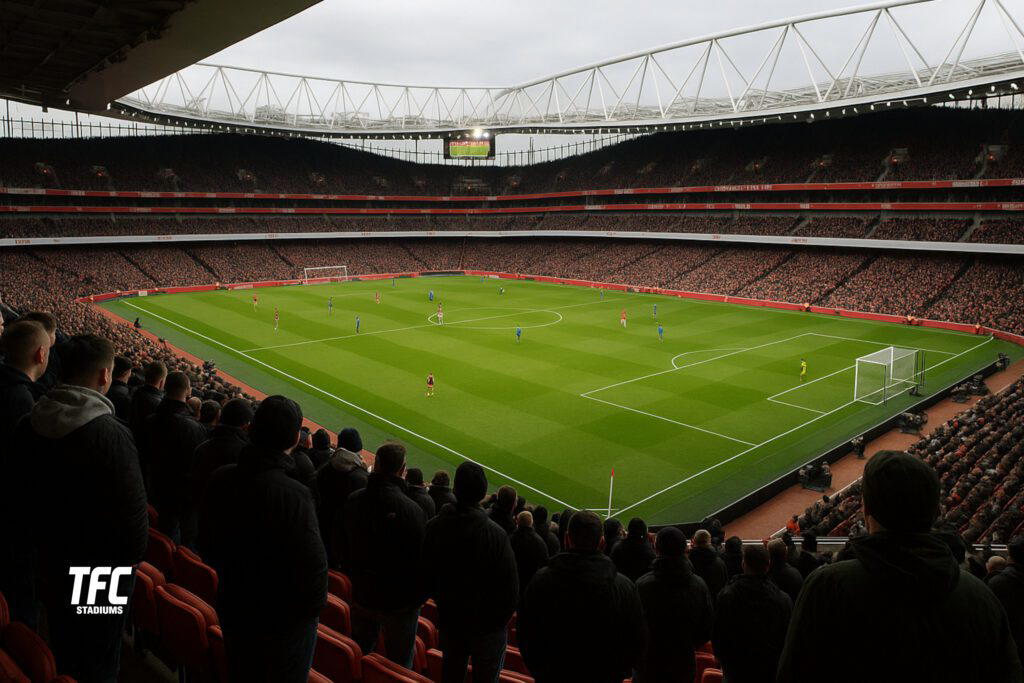
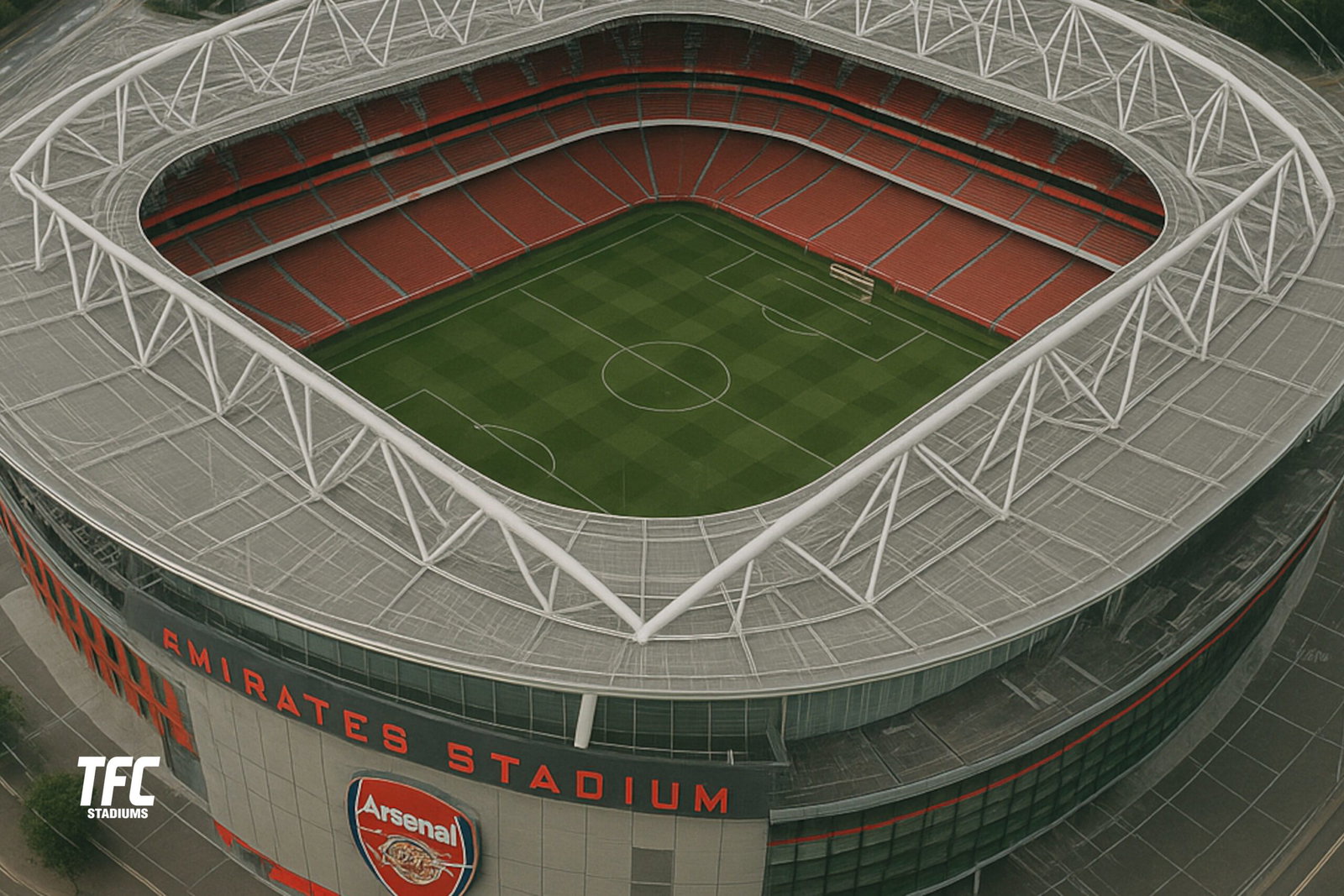
Unlike some multi-purpose venues of the era, the Emirates was designed as a pure football stadium. The architects used a bowl design to maximise sightlines, ensuring that every seat in the house offered an unobstructed view of the pitch. The rake and proximity of the lower tier were inspired by Highbury, to retain the feel of Arsenal’s traditional home while scaling up to meet modern demands.
The stadium’s exterior draws on clean lines and smooth curves. Its most iconic feature is the use of translucent cladding panels that wrap around the façade, allowing light into the internal concourses and giving the structure a sleek, glassy appearance by day and a glowing presence by night.
The colour palette is largely steel, silver, and grey, but the club’s red heritage was woven into the detailing, most clearly in the branding, internal features, and the wraparound murals that celebrate club legends and fan culture.
Structural Engineering and Build
The construction involved a number of civil engineering challenges. The site required extensive remediation as it had previously housed waste-transfer facilities and railway sidings. The groundwork took a year alone, with work beginning in early 2004.
The main structural components included:
- A bowl of reinforced concrete tiers
- A cantilevered roof that allows uninterrupted views, suspended by a distinctive ring beam and external support masts
- Large internal concourses designed for efficient fan movement
The cantilevered roof structure in particular stands out. Suspended by four massive steel masts, it floats above the stands without obstructing sightlines. The roof also incorporates integrated lighting and acoustic treatment to enhance both the look and sound of match days.
Sustainability and Access
Though built before sustainability became a league-wide standard, the stadium incorporated early measures for environmental performance. These included:
- A rainwater harvesting system
- Integrated recycling and waste management during construction
- High-efficiency lighting and ventilation systems
Transport links were also key. The site is well connected by rail and underground, and the club worked with local authorities to upgrade surrounding infrastructure, including pedestrian bridges, public spaces, and signage. Despite its larger footprint, the Emirates was carefully integrated into its urban surroundings.
Cost and Financing
The total cost of the project came to around £390 million. Arsenal funded this through a combination of loans, property developments at the old Highbury site (converted into flats), and a long-term naming rights deal with Emirates Airline, worth around £100 million at the time, a pioneering move in UK football.
This approach allowed the club to retain full ownership of the stadium and avoid the public-private entanglements that complicated other projects.
Legacy and Evolution
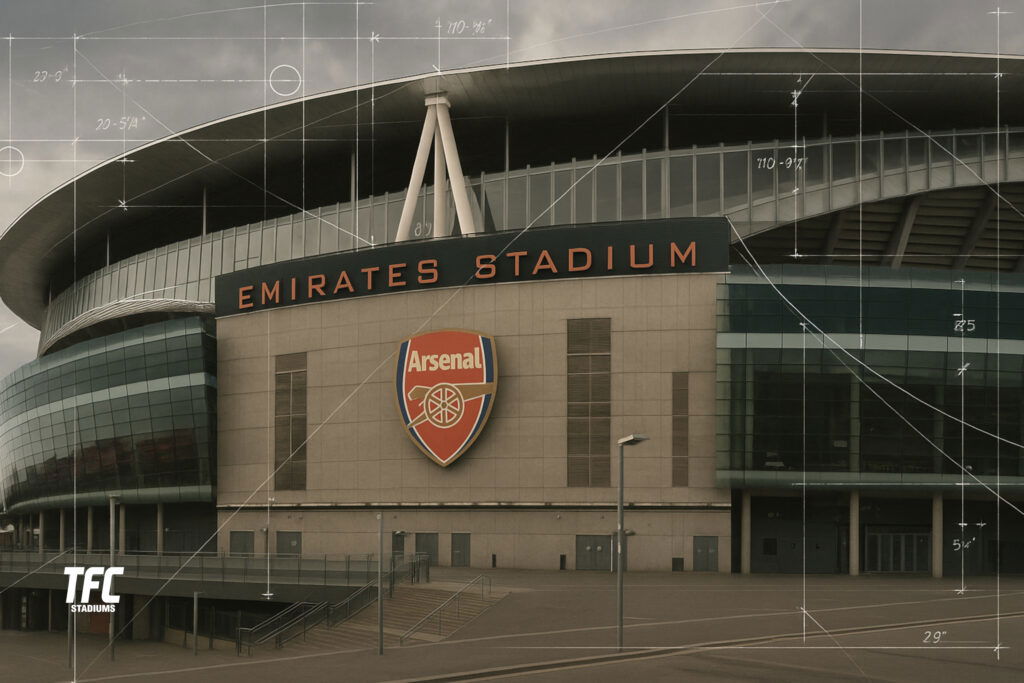
Since opening in July 2006, the Emirates Stadium has remained one of the most recognisable modern venues in European football. It has hosted not just Premier League and Champions League fixtures, but also concerts, international friendlies, and Olympic events in 2012.
Over time, the club has enhanced the fan experience through LED lighting, refurbished executive areas, upgraded video screens, and a visual identity project which added external wraps honouring Arsenal’s history.
Although some fans initially missed Highbury’s intimacy, the Emirates has grown into its own identity, functionally superior, visually striking, and capable of sustaining Arsenal’s ambitions in a globalised football era.
About the Author