The Bernabéu After Dark
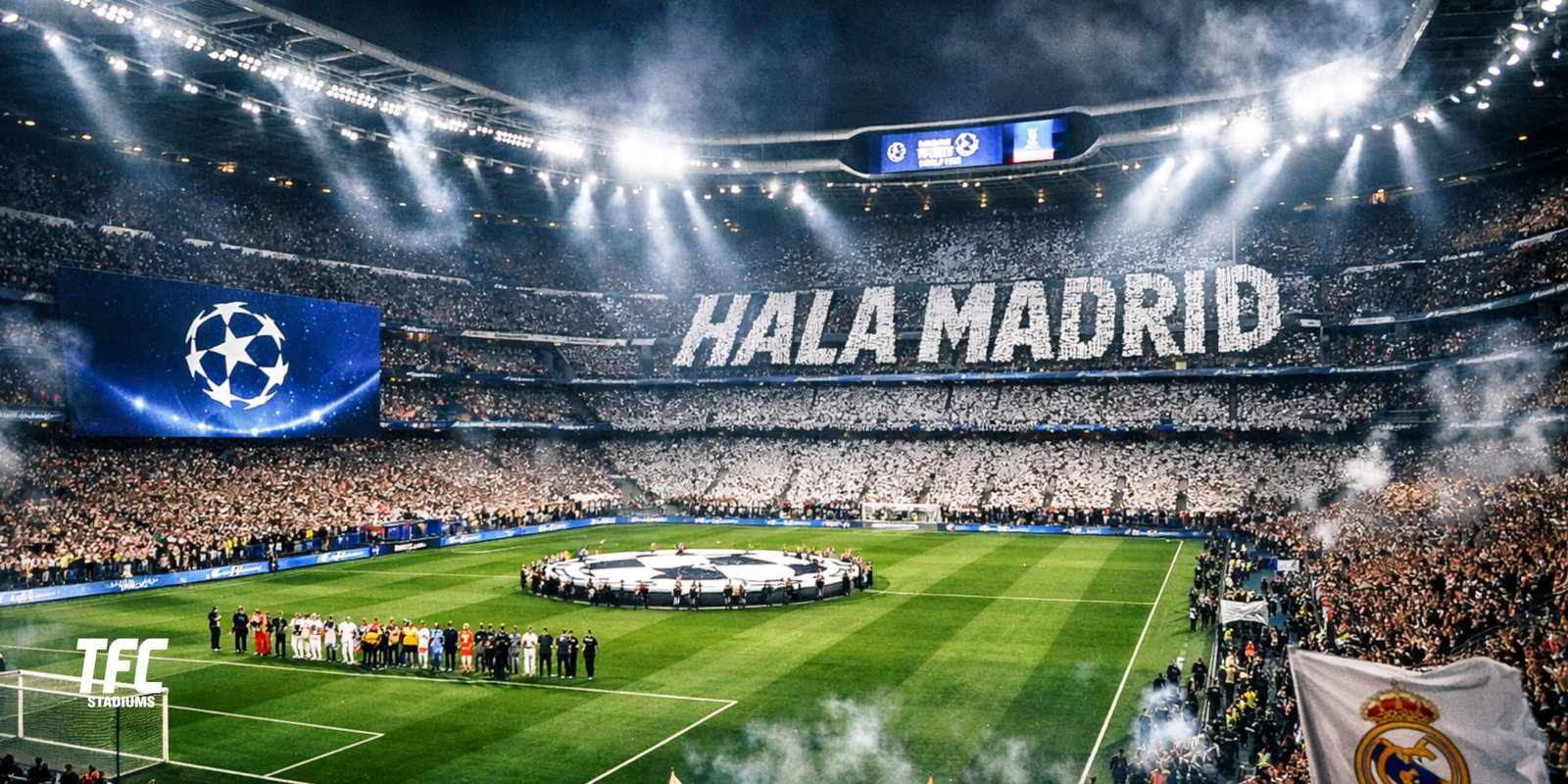
There is something slightly uncomfortable about playing at the Santiago Bernabéu when the lights come on. Comfortable if you are in white, less so if you are trying to protect a lead.
European nights here carry a reputation that borders on myth, but it is built on repeat evidence rather than nostalgia. Real Madrid do not just win at home in Europe, they tend to win when it feels least likely. Late goals, sudden swings in momentum, and an odd sense that the game is not finished until the crowd decides it is.
You can analyse tactics and expected goals all you like, but the Bernabéu introduces a different variable. Pressure is not abstract here, it feels organised.
Why It Feels Different
The stadium itself is steep, tight, and loud in a very focused way. Noise does not drift, it drops straight onto the pitch. Visiting teams often talk about the same thing after the match, the moment when control slips without an obvious tactical reason.
Real Madrid lean into this. They rarely panic at home in Europe, even when trailing. Instead, they slow the game down, wait for a moment, and trust that one goal changes everything. At the Bernabéu, one goal rarely stays alone.
There is also the weight of expectation. The crowd is not passive. It demands action, and the team responds. It creates a feedback loop that is difficult for opponents to manage, especially late on.
Famous Comebacks That Built the Aura
The reputation is not based on one or two nights. It is a pattern.
Against Paris Saint-Germain in 2022, the tie looked settled until it suddenly was not. A single mistake, then another, and Karim Benzema turned the game inside twenty minutes. It felt less like a comeback and more like a trap closing.
Manchester City suffered something similar weeks later. Two goals down on aggregate with seconds left, then two goals arrived almost on top of each other. The stadium did not erupt in surprise, it reacted like it had seen this before.
Even earlier examples follow the same script. Wolfsburg in 2016, Bayern Munich across multiple campaigns, and countless knockout ties where Madrid appeared on the brink before pulling the match back into their orbit.
The pattern matters. Opponents know it, and that knowledge creeps into decision making.
Head-to-Head at the Bernabéu
Real Madrid’s European home record is not just strong, it is tilted heavily in their favour against elite opposition.
Recent high-profile head-to-head trends at the Bernabéu:
| Opponent | Matches | Wins (RM) | Draws | Losses | Goals For | Goals Against |
|---|---|---|---|---|---|---|
| Manchester City | 6 | 3 | 2 | 1 | 12 | 9 |
| Bayern Munich | 13 | 9 | 1 | 3 | 32 | 19 |
| Paris Saint-Germain | 4 | 3 | 0 | 1 | 9 | 6 |
| Chelsea | 3 | 2 | 1 | 0 | 6 | 3 |
| Juventus | 10 | 6 | 2 | 2 | 18 | 11 |
These numbers tell a consistent story. Even when ties are close overall, Madrid tend to control the home leg. Goals come in bursts, often late, which skews the perception of how dominant the performance actually was.
The Tactical Pattern
European nights at the Bernabéu are not chaotic, even if they feel that way.
Madrid often approach these matches with patience rather than intensity from the first minute. Midfield control is key, especially through players who can dictate tempo and absorb pressure. The aim is not to overwhelm early, but to stay within reach of the tie.
Once the match enters the final third, the tempo changes. Full-backs push higher, wide players attack the box, and crosses arrive with more frequency. It becomes harder for opponents to clear their lines cleanly.
The final phase is where the Bernabéu effect peaks. The game compresses, and Madrid take more risks, but they are calculated risks. It is not reckless, it is rehearsed.
Psychological Edge
Opposition teams often start well here. That is not the problem. The problem is sustaining it.
Conceding once can feel like conceding twice. Players rush passes, drop deeper than planned, or try to run down the clock too early. Madrid rarely need long spells of dominance, just a window.
There is also the history factor. When a team has seen others collapse here, it becomes harder to believe that this time will be different. Confidence drains in small increments, and Madrid are very good at spotting that moment.
Modern Bernabéu, Same Story
The renovated stadium has changed the visuals but not the feeling. If anything, the enclosed roof and updated acoustics concentrate the noise even more.
Modern European football is often framed around systems and data, but the Bernabéu remains stubbornly human. It is about moments, pressure, and belief. Madrid have built a culture that expects these nights to bend in their favour.
That expectation alone is a competitive advantage.
TFC Takeaway
European nights at the Bernabéu are not just about history. They are about repetition.
The same patterns appear again and again. A team leads, the crowd senses weakness, Madrid push, and suddenly the tie flips. It is not magic, but it can feel like it if you are on the wrong side of it.
Plenty of great teams have walked into this stadium with control and left without it. That is the real story. Not that comebacks happen here, but that they keep happening.
About the Author