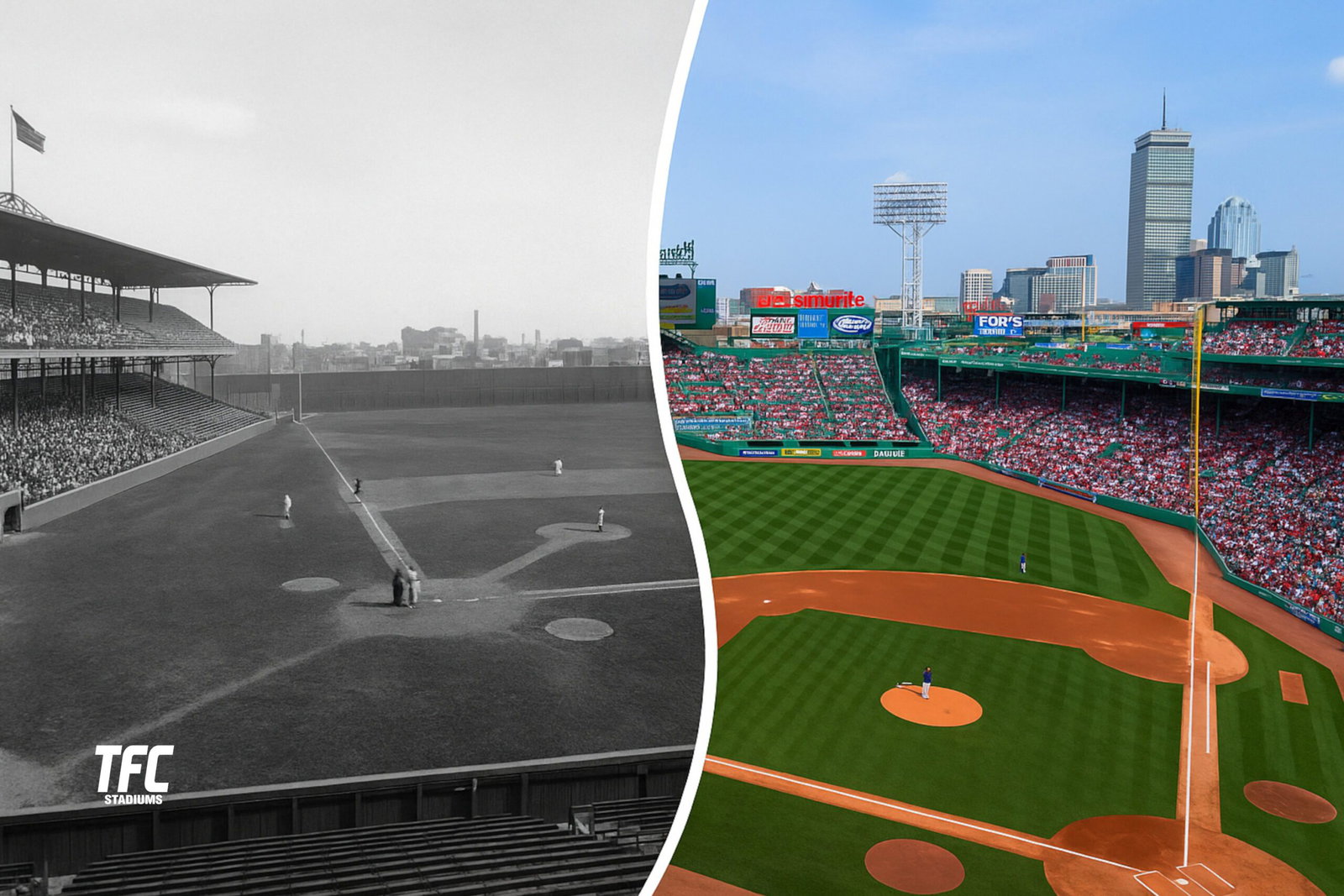
Fenway Park opened its gates in 1912 and has remained the home of the Boston Red Sox ever since. It is the oldest stadium in Major League Baseball, yet its continued use has not meant stagnation. Over the years, Fenway has undergone a series of transformations to address safety, capacity, fan experience, and modern commercial demands, all while preserving its iconic character.
The Original 1912 Design
When Fenway first opened, it seated just over 27,000 spectators. The ballpark featured a single-deck grandstand wrapping from left field to right, wooden bleachers, and a then-unremarkable left field wall that would later become world famous as the Green Monster.
It was built primarily from steel and concrete, which was standard for the era. Fenway’s irregular dimensions were shaped by the surrounding streets rather than design ambition. This quirk would eventually become one of the park’s defining features.
Early Modifications (1920s–1940s)
Several structural changes occurred between the wars. The biggest came in 1934 when a major fire destroyed much of the park. The rebuild introduced the manually operated scoreboard and the now-iconic 37-foot-high Green Monster in left field. Concrete bleachers were added, and the wooden grandstands were upgraded.
Lights were finally added in 1947, allowing for night games. Before then, all games were played during the day, limiting scheduling and attendances.
Mid-Century Decline and Maintenance (1950s–1980s)
Unlike newer stadiums that began appearing across the country, Fenway aged without significant expansion. By the 1960s and 70s, it was viewed by some as outdated. There were proposals to demolish it entirely and build a modern replacement, but none of them gained real momentum.
Still, incremental updates continued. The seating was gradually modernised, and facilities like bathrooms and concessions saw some improvements. However, Fenway remained largely the same structurally, retaining its classic look but also its limitations.
Revitalisation and Expansion (1990s–2000s)
Public sentiment shifted in the 1990s. Instead of replacing Fenway, the Red Sox ownership committed to preserving it. Renovation became the focus.
Key upgrades during this period included:
- The addition of rooftop seats above the Green Monster in 2003, changing the dynamics of the left field experience.
- Expanded and modernised concourses.
- The creation of the Right Field Roof Deck, adding premium seating and new fan areas.
- Installation of video boards and a modern public address system.
- Renovated player facilities and clubhouse upgrades.
- Structural reinforcement to extend the life of the stadium well into the 21st century.
These changes improved capacity to over 37,000 and brought modern convenience to a historic ballpark without compromising its character.
Recent Developments and Preservation
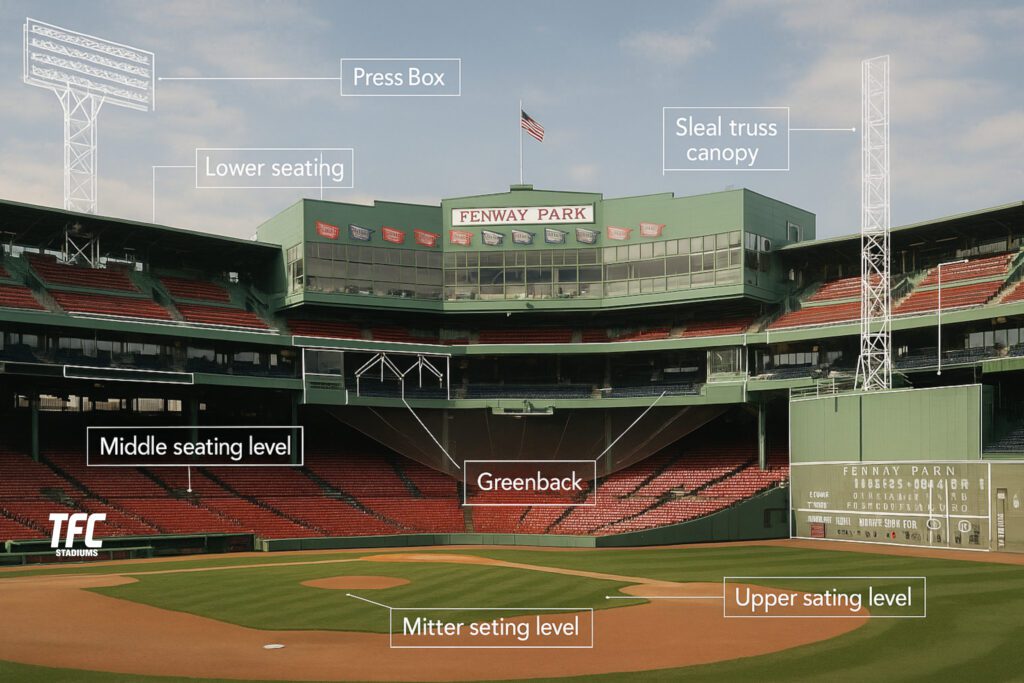
In the 2010s and 2020s, Fenway has balanced heritage with innovation. Additions have included:
- Upgraded Wi-Fi and in-seat technology.
- Expanded food and beverage options reflecting local cuisine.
- Enhanced accessibility for disabled fans.
- Improved sustainability measures such as energy-efficient lighting and waste reduction programs.
The Red Sox have also embraced the stadium’s versatility. Fenway now hosts hockey, concerts, football, and even soccer matches, turning it into a multi-use venue while still prioritising baseball.
A Living Monument
Fenway Park has changed significantly since 1912, but always with care. Unlike modern stadiums that chase capacity and sleek uniformity, Fenway wears its age with pride. Its evolution has been more about adaptation than reinvention, keeping it relevant in a sport that’s seen massive commercial and cultural shifts.
Rather than a relic, it stands as a living monument, rooted in tradition, yet open to change.
About the Author