Few clubs carry the weight of European expectation quite like Juventus. The black and white stripes have graced European Cup finals across six different decades, produced some of football’s greatest players and built a reputation that commands respect in every corner of the continent.
Yet there is an interesting twist. Juventus’ modern home, known today as Allianz Stadium, has witnessed far fewer truly iconic European nights than many older grounds. That is not because the stadium lacks atmosphere. Quite the opposite. Rather, it reflects an awkward chapter in Juventus history where domestic dominance rarely translated into continental glory.
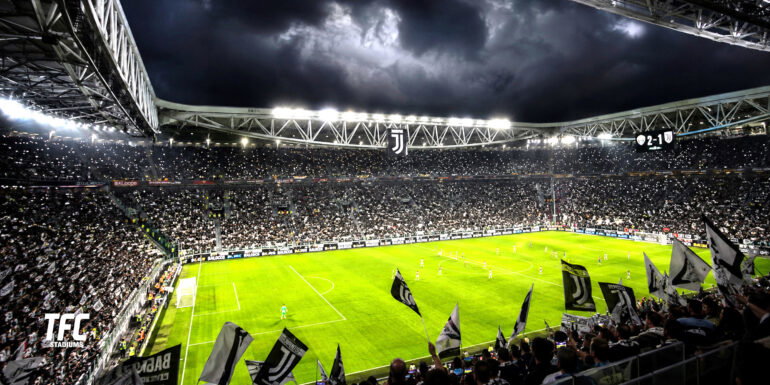
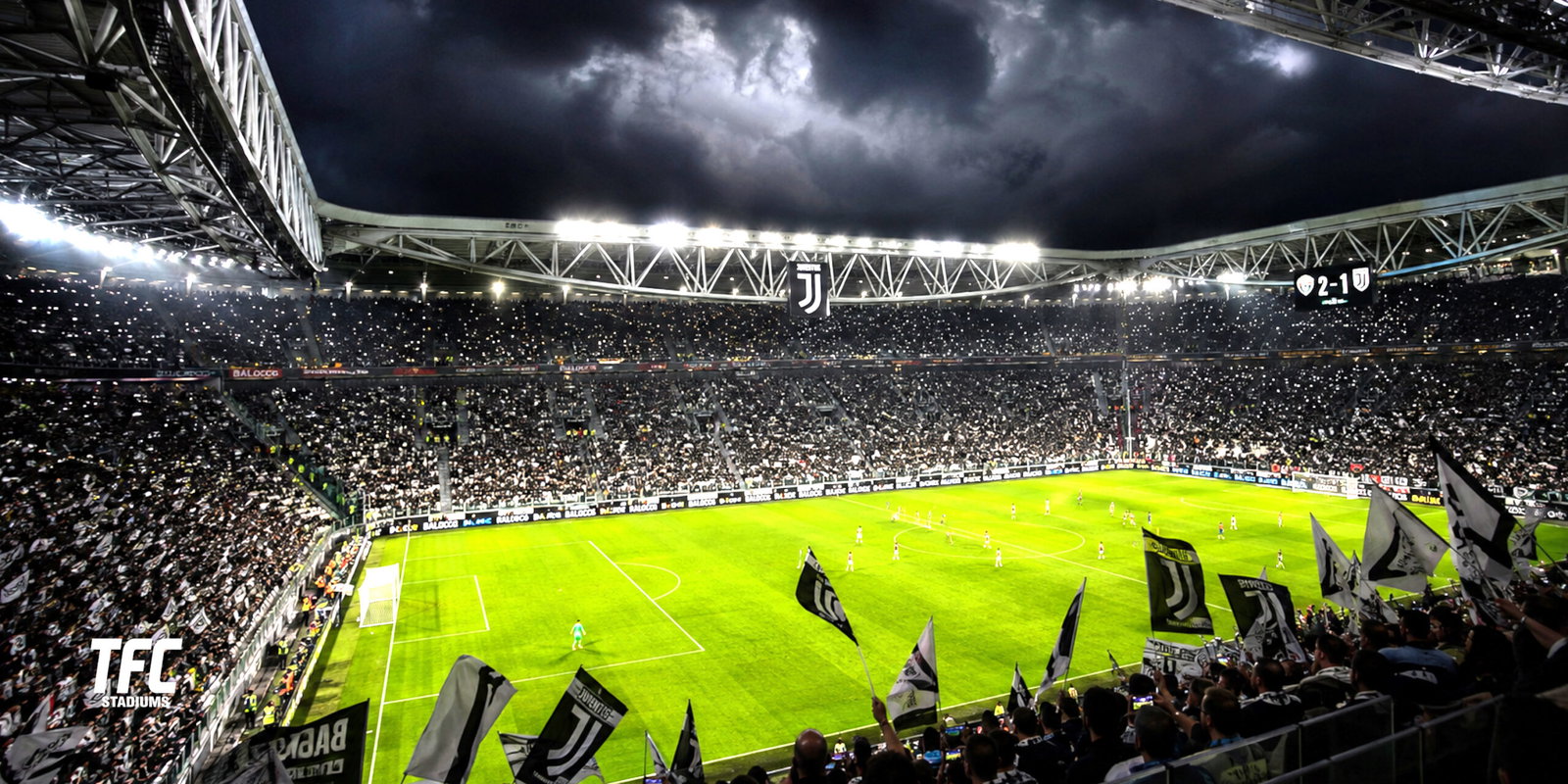
As a fan, I have always found Juventus Stadium fascinating. It feels modern without becoming soulless. Unlike some oversized arenas built during football’s construction boom, this stadium keeps supporters close enough to remind visiting teams that Turin is never an easy place to visit.
It may not have the mythology of the Stadio delle Alpi or the legendary European evenings of San Siro, but Juventus Stadium has quietly become one of Europe’s toughest away grounds.
A New Beginning for Juventus
When Juventus left the Stadio delle Alpi in 2011, they were making more than a change of address.
They were rebuilding the club.
The old stadium had become symbolic of several problems.
- Poor sightlines
- Running track separating fans from the pitch
- Weak atmosphere
- Low attendance despite Juventus’ popularity
The replacement changed everything.
Juventus Stadium became Italy’s first major club-owned stadium in the modern era.
That decision transformed the club financially.
Instead of relying heavily on television income, Juventus suddenly controlled:
- Matchday revenue
- Hospitality
- Sponsorship opportunities
- Naming rights
- Stadium events
- Museum and tours
The extra income helped fund one of the most dominant domestic periods European football has seen.
Between 2012 and 2020 Juventus won nine consecutive Serie A titles.
Ironically, the biggest prize continued to prove elusive.
European Record at Juventus Stadium
Since opening in 2011, Juventus Stadium has hosted dozens of Champions League matches.
Its record has generally been excellent.
Across European competitions Juventus have won the overwhelming majority of home fixtures while suffering relatively few defeats.
That consistency reflects how difficult the stadium has become for visiting clubs.
Some notable home victories include:
| Opponent | Competition | Result |
|---|---|---|
| Chelsea | Champions League | 3-0 |
| Real Madrid | Champions League Semi Final | 2-1 |
| Barcelona | Champions League Quarter Final | 3-0 |
| Manchester City | Champions League | 2-0 |
| Atlético Madrid | Champions League | 3-0 |
| Borussia Dortmund | Champions League | 2-1 |
Several of those performances rank among the finest European displays Juventus have produced this century.
The Famous Comeback Against Atlético Madrid
If one night defines Juventus Stadium in Europe, this is probably it.
March 2019.
Atlético Madrid arrived with a 2-0 advantage from the first leg.
Diego Simeone’s side specialised in killing ties through defensive organisation.
Cristiano Ronaldo had other ideas.
His hat trick turned the stadium into absolute chaos.
Every tackle was celebrated.
Every clearance was greeted like a goal.
By the final whistle Juventus had overturned one of the toughest deficits in European football.
It remains arguably the stadium’s greatest European evening.
The Barcelona Masterclass
Long before Ronaldo’s heroics, Juventus produced another unforgettable display.
Barcelona arrived in Turin during the 2017 Champions League quarter finals carrying Lionel Messi, Luis Suárez and Neymar.
Many expected Barcelona to dominate possession.
Instead Juventus overwhelmed them.
Paulo Dybala scored twice before Giorgio Chiellini added a third.
Perhaps most impressive was Juventus’ defensive discipline.
Barcelona failed to score across both legs.
Keeping MSN quiet over 180 minutes remains one of the finest tactical achievements of Massimiliano Allegri’s first spell as manager.
The Real Madrid Semi Final
One of Juventus Stadium’s proudest nights came in 2015.
Real Madrid arrived as reigning European champions.
The atmosphere was electric from kick off.
Álvaro Morata scored against his former club before Carlos Tévez converted from the penalty spot.
Juventus won 2-1 before completing the job in Madrid to reach the Champions League Final.
For supporters, this felt like confirmation that Juventus belonged back among Europe’s elite.
Why the Stadium Makes a Difference
Modern stadiums often receive criticism for sacrificing atmosphere in favour of corporate hospitality.
Juventus largely avoided that trap.
Several design decisions make the venue intimidating.
Fans Close to the Pitch
Supporters sit just a few metres from the touchline.
Without an athletics track, noise stays inside the bowl instead of disappearing into open space.
Players regularly comment on how much louder the stadium feels than its capacity suggests.
Steep Stands
The steep angles keep every spectator close to the action.
Even supporters in higher rows maintain excellent sightlines.
The result is constant visual pressure on visiting players.
Curva Energy
The Curva Sud remains the emotional heart of the stadium.
Large choreographies, coordinated chants and relentless singing create an atmosphere that often grows stronger on European nights.
Unlike some grounds where noise comes in bursts, Juventus Stadium tends to build pressure throughout the match.
Tactical Home Advantage
Statistics only tell part of the story.
Juventus traditionally approach European home matches differently.
Managers from Antonio Conte to Massimiliano Allegri have often encouraged aggressive pressing during opening phases.
The objective is simple.
Use crowd momentum.
Force mistakes.
Score first.
Many visiting teams have struggled during those opening twenty minutes.
That intensity has helped Juventus establish early control in numerous Champions League ties.
Why European Success Has Been So Difficult
Despite their outstanding home record, Juventus have lifted only two European Cups.
That surprises many younger supporters.
Several factors explain why.
Fierce Competition
Juventus have competed during eras dominated by clubs such as:
- Real Madrid
- Barcelona
- Bayern Munich
- AC Milan
- Liverpool
- Manchester United
Winning Europe’s biggest competition often requires overcoming multiple giants in succession.
Fine Margins
Juventus have lost several European Cup and Champions League finals by the narrowest of margins.
One missed chance.
One defensive error.
One controversial decision.
Elite football is rarely separated by much.
Away Performances
Home form has usually been strong.
Away matches have often decided Juventus’ fate.
Even during excellent Champions League campaigns, difficult first legs or disappointing away defeats have created unnecessary pressure before returning to Turin.
The Ronaldo Years
Cristiano Ronaldo arrived with one clear objective.
Win the Champions League.
Domestically, Juventus continued collecting trophies.
Europe proved less forgiving.
The dramatic victory over Atlético Madrid suggested the club might finally end its long wait.
Instead they exited to Ajax in the following round.
It perfectly summed up the modern Juventus experience.
Brilliant enough to beat almost anyone.
Not quite consistent enough across an entire knockout tournament.
Hosting Major European Events
Although primarily Juventus’ home ground, the stadium has also staged major UEFA events.
The most significant was the 2014 UEFA Europa League Final between Sevilla and Benfica.
The match demonstrated that Turin could successfully host Europe’s biggest occasions outside the Champions League Final.
Its modern facilities, accessibility and supporter experience continue to make it an attractive venue for future UEFA competitions.
Financial Impact on European Competitiveness
Owning the stadium fundamentally changed Juventus’ business model.
Compared with many Italian rivals, Juventus generated significantly higher matchday revenue during the 2010s.
Benefits included:
- Increased commercial partnerships
- Premium hospitality income
- Higher average attendance
- Improved fan engagement
- Greater financial stability
Although Financial Fair Play and growing Premier League revenues have narrowed that advantage, the stadium remains one of Juventus’ most valuable long term assets.
How Juventus Stadium Compares with Europe’s Elite
| Stadium | Capacity | Atmosphere | European Reputation |
|---|---|---|---|
| Allianz Stadium (Turin) | 41,500 | Excellent | Very strong |
| Anfield | 61,000+ | Exceptional | Legendary |
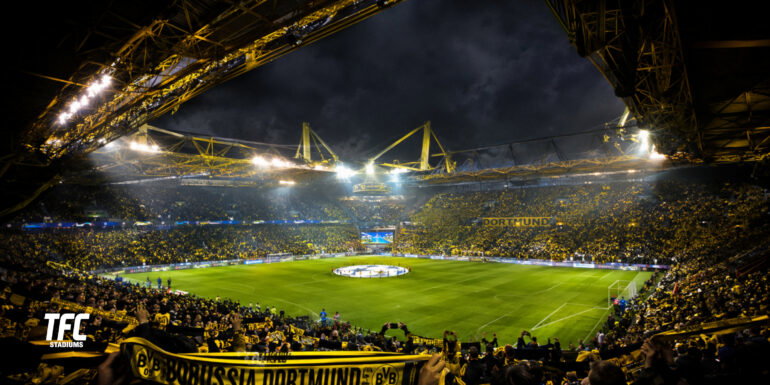
| Signal Iduna Park | 81,000+ | Outstanding | Legendary |
| Santiago Bernabéu | 78,000+ | Elite | Historic |
| San Siro | 75,000+ | Iconic | Historic |
Juventus Stadium may be smaller than many famous European venues, yet size does not dictate atmosphere.
In many ways, its compact design creates a more intense environment than grounds holding almost twice as many spectators.
Memorable European Players at the Stadium
Some of football’s biggest names have illuminated Juventus Stadium on Champions League nights.
- Gianluigi Buffon
- Andrea Pirlo
- Paul Pogba
- Arturo Vidal
- Carlos Tévez
- Giorgio Chiellini
- Leonardo Bonucci
- Paulo Dybala
- Cristiano Ronaldo
- Lionel Messi
- Luka Modrić
- Karim Benzema
Watching these players under the floodlights has helped establish the stadium’s growing European identity.
Legacy
Juventus Stadium arrived at exactly the right moment in the club’s history.
It modernised Juventus financially, reignited domestic dominance and restored genuine European credibility after difficult years.
Yet football has a cruel habit of judging great stadiums by trophies rather than memories.
The venue has hosted brilliant victories over Barcelona, Real Madrid and Atlético Madrid. It has witnessed Cristiano Ronaldo dragging Juventus through impossible situations and seen generations of supporters create an atmosphere worthy of Europe’s elite.
What it still lacks is the one image every Juventus supporter wants.
A Champions League trophy being lifted on home soil.
Perhaps that is fitting. Every great stadium deserves an unfinished chapter. For Juventus Stadium, Europe remains that story, always promising that the next unforgettable night might be just one knockout tie away.
About the Author