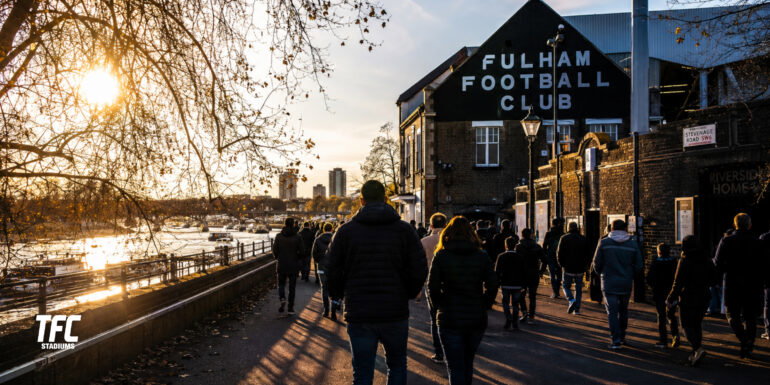
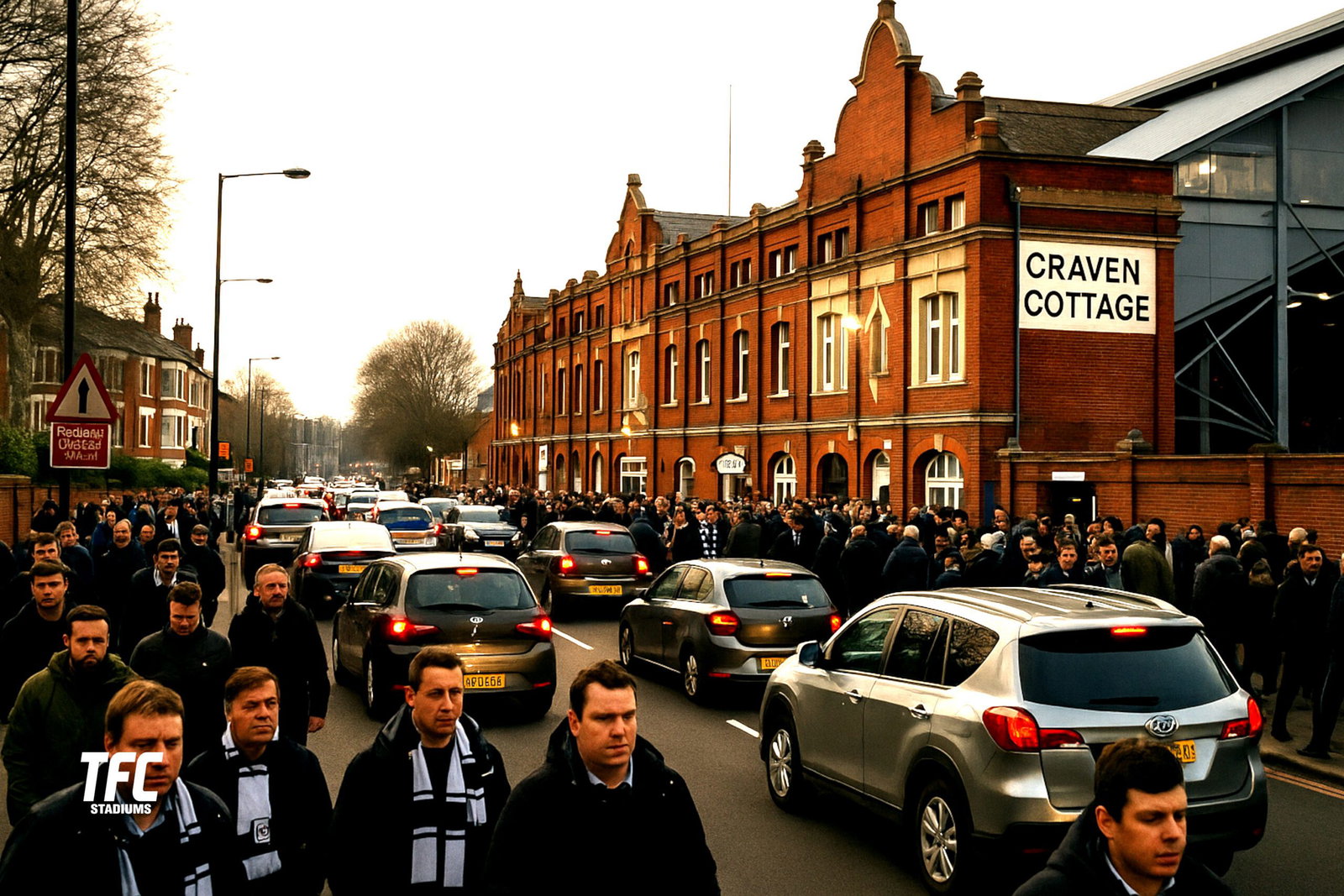
Craven Cottage has always been a charming oddity in English football. A riverside ground tucked into residential streets, framed by Victorian terraces and tree-lined paths, never had the breathing room enjoyed by the big modern arenas. Matchday traffic reflects this heritage. You feel the past as much as the present when the roads begin to thicken.
Supporters in the 1920s and 30s spoke of long queues on the Fulham Palace Road as crowds streamed toward Putney Bridge. Cars were far fewer, yet the area struggled even then because the old network of side streets was not built for sudden surges. Those same narrow corridors still shape movement today. You only need to stand at Bishops Park on a Saturday to see how the neighbourhood tightens around the stadium.
Roads Under Strain
Fulham Palace Road becomes a slow crawl two or three hours before kick-off. Traffic filters past small shops and café fronts that sit close to the pavement, which creates natural choke points. Add in deliveries, matchday stewards, residents heading home and away fans looking for somewhere to grab food, and you get a predictable squeeze.
Putney Bridge is another pressure point. The flow from the District line station meets pedestrians coming from the riverside paths. Cars inch forward while fans sweep across the junction. It feels like a ritual at this point, familiar to anyone who has watched Fulham for long enough.
Historic Shifts and Modern Adjustments
The Riverside Stand redevelopment brought renewed attention not only to the stadium’s silhouette but to the surrounding transport demands. Historically, Fulham relied heavily on foot traffic and river access. By the 1960s more supporters arrived by car and the problem of pre-match queues became regular enough to feature in club programmes.
Recent years have seen extended stewarding, temporary road restrictions and clearer pedestrian routes. These adjustments help, but the basic layout has never changed. Craven Cottage grew up in a tight residential pocket and the roads reflect the era in which the ground was born.
How Matchdays Feel on the Ground
Arrive within ninety minutes of kick-off and the atmosphere around Stevenage Road becomes lively but slow. Cars try to edge through clusters of fans while local residents navigate their driveways with the patience of saints. The riverside paths offer relief for those on foot, although even these can clog after full time when thousands drift toward Putney Bridge in the same fifteen minute window.
The best comparisons are with other historic London grounds. Highbury had similar issues in its final decades. Stamford Bridge still experiences snarl-ups on Fulham Road even with bigger surrounding arteries. Craven Cottage is perhaps the most extreme case because the river blocks any alternative routes on one side.
Practical Notes for Visiting Supporters
If you plan to drive, expect long waits near the ground and consider parking further out, then walking the final stretch. Public transport is usually simpler, with Putney Bridge the most reliable entry point. Some seasoned fans walk from Hammersmith, a peaceful route until the last half mile where the crowd thickens.
TFC Takeaway
Craven Cottage’s matchday traffic has always been part of its identity. The neighbourhood pulses with a kind of organised congestion, shaped by more than a century of supporters threading their way to the same old stands. It is a place where history pushes against modern expectations, sometimes inconvenient, often charming, and always unmistakably Fulham.
About the Author