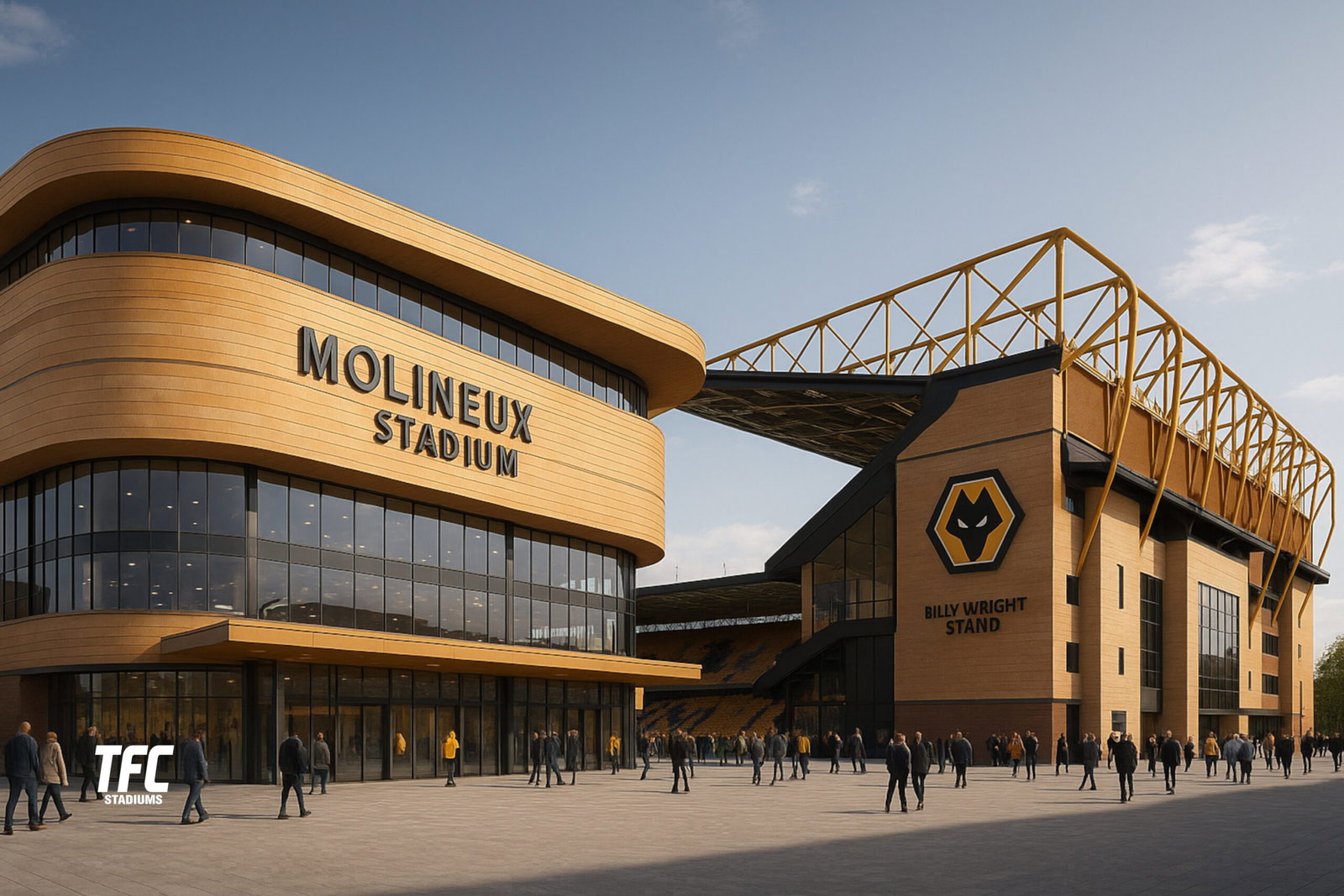
Molineux Stadium has long been a fixture of English football. Home to Wolverhampton Wanderers since 1889, the ground has seen multiple upgrades and structural overhauls across its lifespan. Yet as Premier League standards evolve and commercial ambitions grow, questions around Molineux’s future have re-emerged. What is planned, what is speculation, and what is actually feasible?
The Club’s Long-Term Vision
Wolves’ hierarchy, particularly under former executive chairman Jeff Shi, expressed a desire to turn Molineux into a modern, high-capacity stadium that reflects the club’s Premier League status. The ultimate vision has been to redevelop the existing site rather than relocate. This approach maintains the ground’s historic roots while attempting to future-proof its structure and facilities.
Plans outlined in 2019 proposed a phased redevelopment, starting with an expanded Steve Bull Stand. The long-term target was a stadium capacity of around 50,000. However, the club has been cautious, stating that growth must be sustainable and dependent on long-term top-flight stability and demand.
Latest Updates and Feasibility
Despite the ambitions, there has been little physical progress since those proposals. COVID-19 put the plans on hold, and since then, leadership changes and financial considerations have shifted priorities. In 2023, Wolves acknowledged that while they remain committed to stadium development, no immediate construction timeline has been set.
This reflects a wider reality in English football: large-scale stadium upgrades are expensive and rarely risk-free. Revenue growth from hospitality, sponsorship, and broadcast rights can justify development, but only when balanced against on-pitch investment and financial fair play constraints.
Persistent Rumours and Alternative Ideas
A few speculative stories have suggested Wolves could consider moving away from Molineux altogether to a new-build site on the outskirts of Wolverhampton. While these rumours stir fan debate, they remain unconfirmed by the club. The logistics and community backlash such a move might trigger would make this a controversial and politically fraught decision.
Other rumours include plans for improved transport links and a multi-purpose complex that integrates retail or residential elements. These ideas echo broader trends seen at Tottenham Hotspur Stadium and other redeveloped grounds, but again, there’s little concrete detail from official channels.
Fan Sentiment and Historical Importance
One of Molineux’s strongest assets is its connection to the club’s identity and history. For many supporters, leaving the stadium would be a betrayal of what makes Wolves unique. Unlike many clubs that moved to new locations in the 1990s and 2000s, Wolves have retained their traditional home while modernising key areas such as the Stan Cullis Stand.
Supporter groups have also voiced concerns that rapid expansion could erode the matchday atmosphere or push loyal fans out through increased ticket pricing.
A Realistic Path Forward
Given current conditions, the most plausible future for Molineux lies in incremental redevelopment. A phased stand-by-stand approach, beginning with the Steve Bull Stand, remains the most likely model. Upgrades to concourses, hospitality suites, and facilities could improve revenue without immediate expansion in capacity.
There may also be opportunities to align stadium upgrades with broader regeneration projects in Wolverhampton, unlocking funding and long-term civic benefits.
TFC Takeaway
The future of Molineux is shaped as much by financial realism as it is by vision. While grand redevelopment plans capture headlines, the pace of progress will remain tied to Wolves’ performance, ownership priorities, and the evolving economics of the Premier League. For now, the club appears to be treading carefully, balancing ambition with caution. Whether a new-look Molineux emerges in the coming decade will depend on more than just architectural blueprints. It will rest on whether the club continues to grow on and off the pitch.
About the Author