The Most Watched Grass in English Football
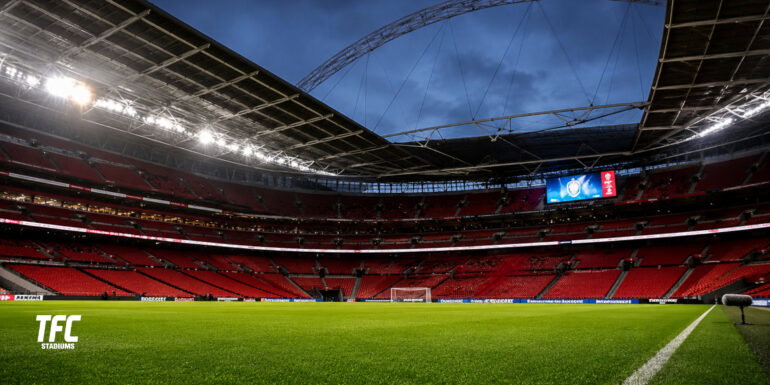
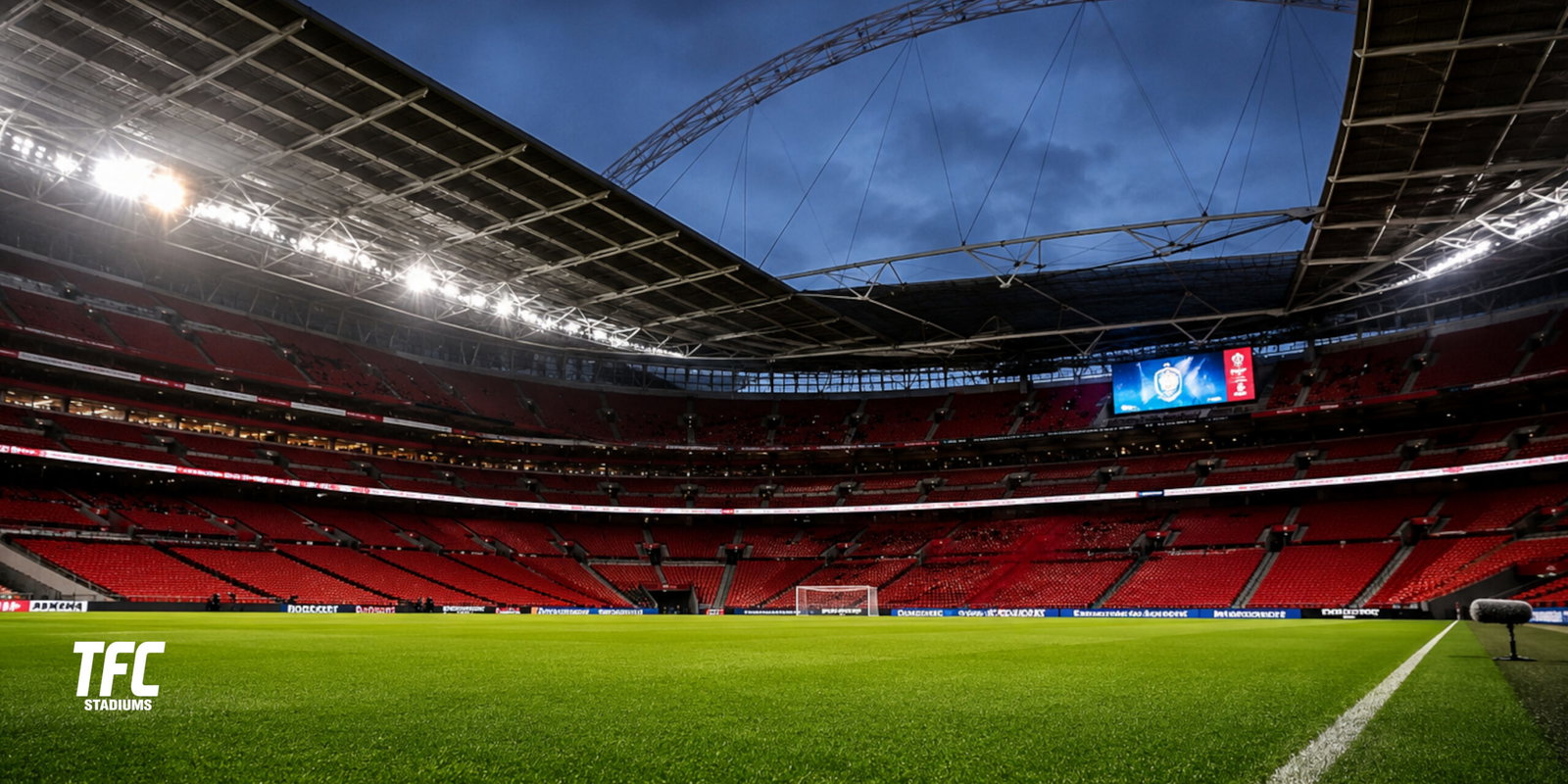
The pitch at Wembley Stadium might be the most analysed patch of grass in Britain. Every bounce, slip, divot and pass is judged because the surface sits at the centre of football’s biggest occasions.
Cup finals, international matches, NFL games, concerts and major events all take place inside the same arena. Maintaining a world-class football pitch under that level of pressure is a major engineering challenge.
Modern Wembley opened in 2007 with a spectacular arch, a 90,000-seat capacity and ambitions of creating the ultimate national stadium. Yet surprisingly, one of its biggest talking points during its early years was not the architecture. It was the grass.
Wembley Stadium Pitch Facts
| Feature | Details |
| | |
| Surface type | Hybrid natural grass system |
| Pitch size | Approximately 105m x 68m |
| Stadium capacity | 90,000 |
| Opened | 2007 |
| Main sports | Football, NFL, rugby league, rugby union |
| Roof design | Partially retractable sections |
| Usage | Major finals, internationals, concerts and events |
The pitch follows standard elite football dimensions used by many major European stadiums, providing consistency for international and club competitions.
How the Wembley Pitch Is Made
The modern Wembley surface uses a hybrid system, combining natural grass with artificial fibres. This approach is common in elite stadiums because traditional grass alone struggles with the demands of modern venues.
The system is designed to provide:
- Greater stability under players’ boots
- Better resistance to wear
- Improved drainage
- Faster recovery after events
- A more consistent playing surface
Artificial fibres reinforce the root structure while the natural grass provides the feel and playing qualities expected at the highest level.
For footballers, the ideal pitch is almost invisible. Nobody praises a perfect bounce, but everyone notices when the ball bobbles in the 89th minute of a cup final.
Why Wembley’s Original Pitch Had Problems
When the rebuilt Wembley first opened, the playing surface became a major source of criticism.
Players and managers complained about:
- The turf cutting up too easily
- Players losing footing
- An inconsistent feel compared with club pitches
- Frequent replacement of the grass
Several factors contributed:
- The stadium bowl limited sunlight and airflow
- Heavy event scheduling increased wear
- The huge roof structure created challenging growing conditions
- The original surface technology was not coping with demand
Large modern stadiums often face this issue. The very features that create atmosphere, including tall stands and enclosed designs, can make growing elite grass much harder.
The Move to a Hybrid Pitch
After repeated criticism, Wembley changed approach and adopted a reinforced hybrid playing surface.
This brought it closer to the systems used by leading European football venues. Hybrid pitches became popular because they offered a compromise between traditional grass and durability.
The improvements were noticeable:
- Fewer stability problems
- Better recovery after major events
- More predictable playing conditions
- Increased ability to host multiple sports
Modern Wembley is not simply maintaining grass. It is managing a living sports surface with technology, lighting systems, data analysis and specialist grounds teams.
The Challenge of Hosting NFL Games
One of Wembley’s biggest complications is hosting American football.
NFL games place very different stresses on turf compared with football:
| Football | NFL |
| | |
| Continuous movement | Repeated explosive contact |
| Sliding tackles | Heavy scrimmage impacts |
| Spread across the pitch | Concentrated wear zones |
| Lightweight footwear | Larger athletes applying greater force |
The middle of the pitch receives significant punishment during NFL games, especially along the line of scrimmage.
Preparing the surface after these events requires intensive repair work before football returns.
Concerts and Non-Sport Events
Wembley is more than a football ground. Concerts and major events are essential to its commercial success.
The challenge is that concerts require:
- Temporary flooring
- Heavy staging
- Thousands of people standing above the surface
- Equipment movement across the pitch area
Protective systems prevent major damage, but the grass still requires recovery time afterwards.
This balance between sporting purity and commercial reality is one of the defining challenges of modern stadium management.
How Wembley Maintains the Pitch
Elite pitch maintenance now involves far more than mowing and watering.
The Wembley grounds team uses:
- Artificial lighting rigs to encourage growth
- Moisture monitoring
- Specialist fertilisation programmes
- Aeration systems
- Data-led turf analysis
- Climate management techniques
Every section of the pitch can behave differently depending on shade, airflow and usage.
A national stadium pitch is closer to a scientific project than a traditional lawn.
Famous Moments on the Wembley Pitch
The surface has hosted some of modern football’s biggest occasions.
Major events include:
- FA Cup Finals
- England international fixtures
- UEFA Champions League Finals
- UEFA Euro 2020 matches
- Olympic football matches in 2012
Memorable moments include:
- Barcelona’s 2011 Champions League Final masterclass against Manchester United
- England’s dramatic Euro 2020 campaign
- Countless domestic cup final celebrations
For many players, walking onto the Wembley grass remains a career milestone.
Wembley Compared With Other Major Stadium Pitches
| Stadium | Surface | Challenge |
| | | |
| Wembley Stadium | Hybrid grass | Multi-event schedule |
| Tottenham Hotspur Stadium | Separate football and NFL surfaces | Maximum flexibility |
| Emirates Stadium | Hybrid grass | Football-focused maintenance |
| Old Trafford | Hybrid grass | Historic stadium conditions |
| Santiago Bernabéu | Retractable storage system | Protecting grass beneath redevelopment |
Tottenham’s removable pitch system represents a different philosophy, separating NFL and football requirements. Wembley instead focuses on maintaining one elite multi-purpose surface.
Is Wembley’s Pitch Now One of the Best?
The problems that surrounded the early years of the new Wembley have largely faded. The current surface is far more reliable and reflects how much sports turf technology has advanced.
There is a certain irony that the most famous pitch in English football once became famous for the wrong reasons. Today, the grass receives far fewer headlines, which is exactly what a great playing surface should achieve.
When Wembley works properly, attention stays where it belongs: on the players, the occasion and the moments that become part of football history.
Takeaway
The Wembley pitch represents the modern stadium dilemma. Fans want perfect football conditions, but venues must also host concerts, other sports and global events.
Creating a surface that can handle an FA Cup Final, an England match and an NFL game is a huge technical achievement.
The grass under the arch may look simple from the stands, but it is one of the most carefully managed sporting surfaces in the world.
About the Author