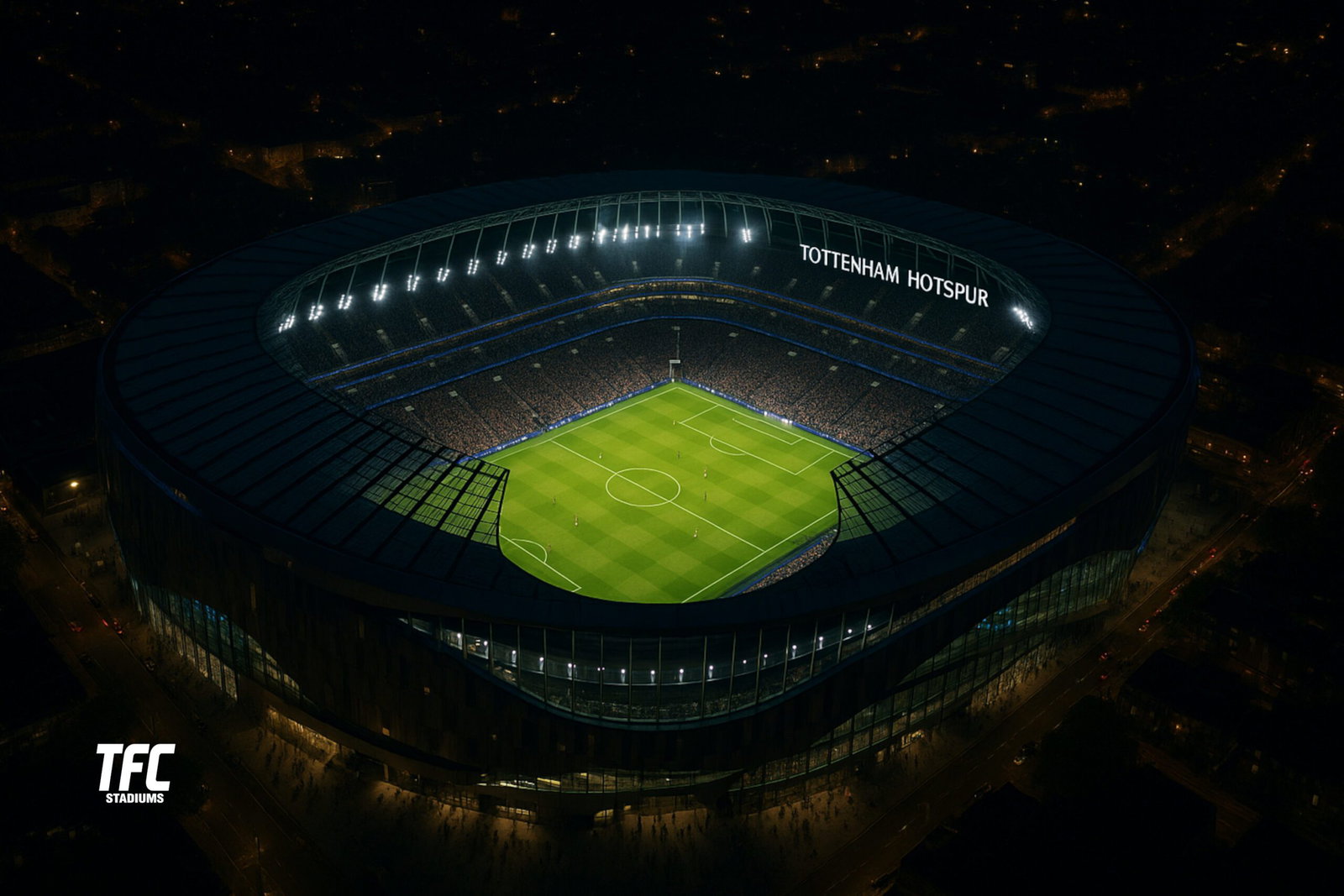
Tottenham Hotspur Stadium is not just one of the newest grounds in the Premier League, it is also the most technologically ambitious. From its dual-purpose design to the intricate planning behind fan access and digital infrastructure, every aspect was created with long-term flexibility, performance, and revenue generation in mind.
Planning and Vision
The idea of a new stadium was first seriously considered in the mid-2000s, when it became clear that White Hart Lane no longer met the club’s ambitions. By 2008, the Northumberland Development Project had been announced. It aimed not only to build a world-class stadium but also to regenerate the surrounding area in Tottenham.
Tottenham’s board wanted a venue that could host football, NFL, concerts, and more without compromise. This required not only massive investment but entirely new solutions to stadium design. The goal was to blend commercial innovation with fan-focused engineering.
Construction and Delays
The build, originally scheduled for completion by the start of the 2018–19 season, was delayed due to a range of logistical and technical issues. These included safety systems and electrical testing setbacks, particularly with fire alarms and automated systems.
Eventually, the stadium opened in April 2019, with Spurs hosting Crystal Palace in their first match at the new ground. The final cost came to over £1 billion, making it one of the most expensive stadiums ever built in Europe.
Design and Structure

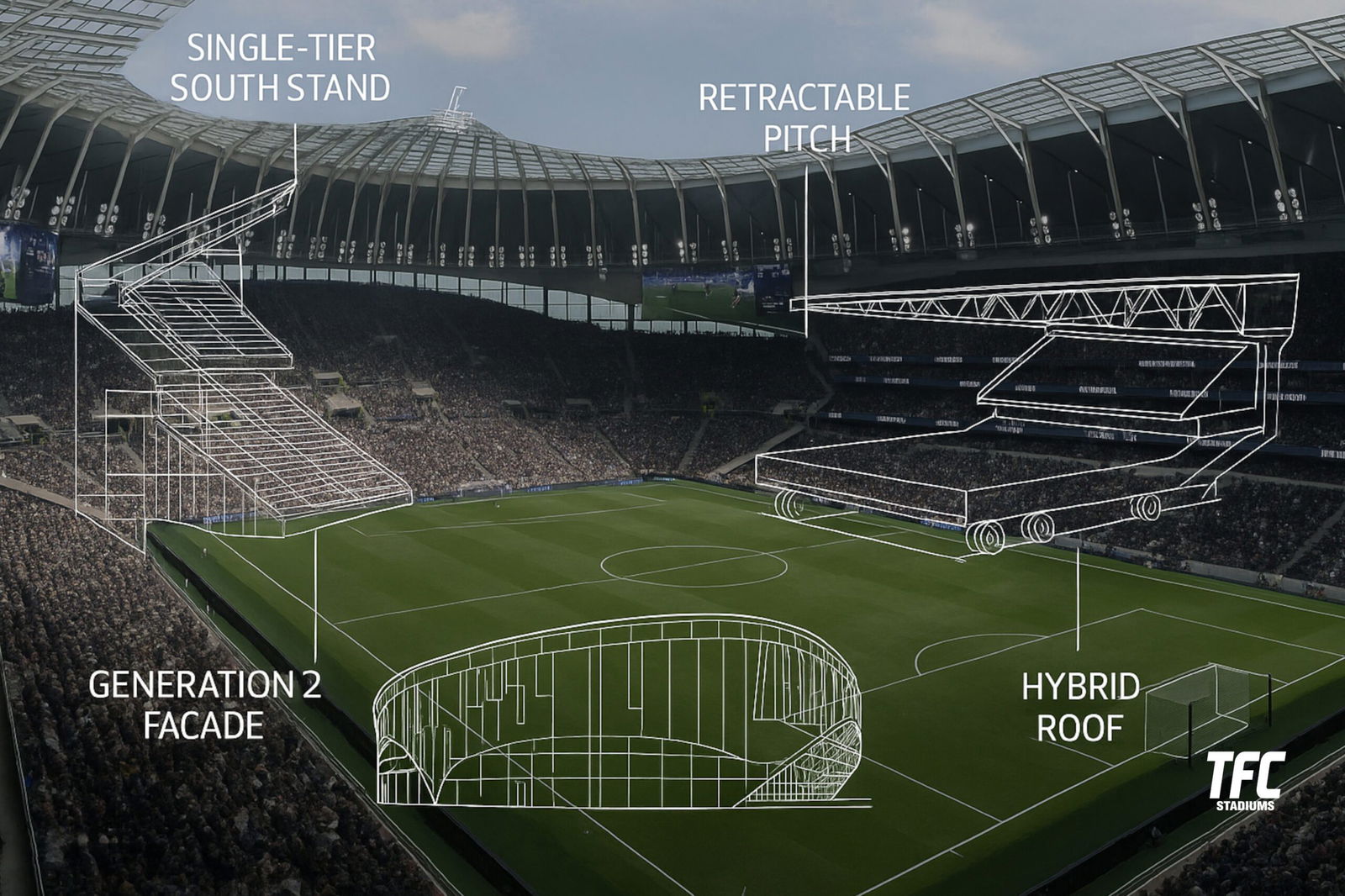
The stadium was designed by Populous, a firm known for sports venues across the world, including Wembley and Yankee Stadium. The bowl design brings fans closer to the pitch, with a steep single-tier South Stand that echoes the intensity of Dortmund’s Yellow Wall.
Key design elements include:
- 62,850-seat capacity, second only to Old Trafford in the Premier League
- South Stand holding 17,500 fans on a single tier
- Sky Lounge and Tunnel Club premium experiences offering behind-the-scenes views
- Retractable pitch that allows the stadium to switch between football and NFL surfaces
The use of a grass pitch that splits and rolls away in three pieces reveals a synthetic NFL field underneath. This allows rapid transitions between sports, with no damage to playing surfaces.
Technology and Innovation
Tottenham Hotspur Stadium is fully cashless and built with digital-first architecture. Its key tech features include:
- High-density Wi-Fi throughout the stadium
- 2,000 digital screens used for signage, menus, and live footage
- Advanced data systems for ticketing, crowd control, and security
- Smart turnstiles enabling faster entry with contactless technology
The sound and lighting systems were designed to be concert-grade from the outset. This has helped position the venue as a major stop on world tours for artists and a reliable host for major non-football events.
NFL and Multi-Use Functionality
Spurs struck a 10-year deal with the NFL, securing two games per season. The locker rooms, entrances, and even the media areas were built to American football specifications alongside those for Premier League standards.
The stadium has also hosted boxing, rugby, and major concerts, proving its versatility. This multi-use design has already begun to generate significant additional revenue.
Environmental and Community Impact
From the start, the club aimed to reduce environmental impact. The stadium uses low-energy lighting, advanced recycling systems, and green travel incentives such as cycle parking and free shuttle buses from local stations.
The wider regeneration scheme has included housing, schools, and retail projects. Tottenham has made a point of investing in local jobs and training programmes through its Foundation.
Commercial Performance
Despite its high cost, the stadium has positioned Spurs at the forefront of commercial innovation in football. Matchday revenue is among the highest in Europe, and the venue is open for business 365 days a year. With naming rights still officially unclaimed, the club continues to hold a powerful bargaining chip for future income.
TFC Stadiums takeaway
Tottenham Hotspur Stadium is a benchmark in stadium engineering. It wasn’t built simply to house a football club but to become a permanent hub for global sport and entertainment. In a league increasingly defined by broadcast income and fan experience, Spurs built something that isn’t just modern, but deliberately future-proofed.
About the Author