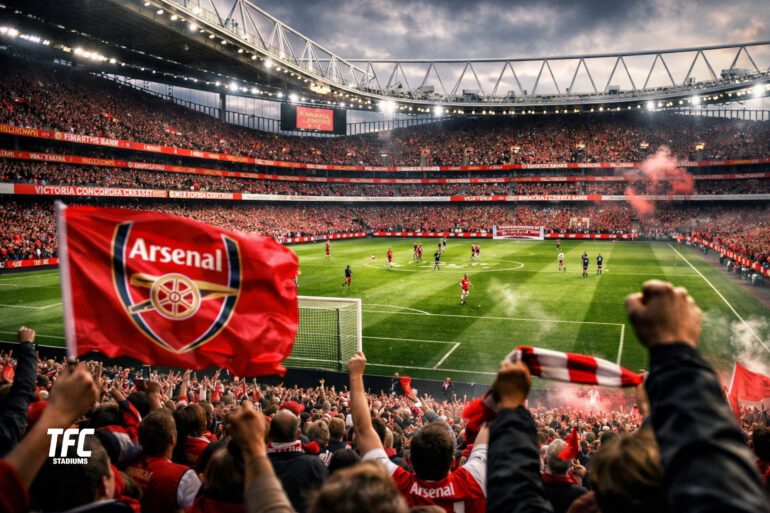
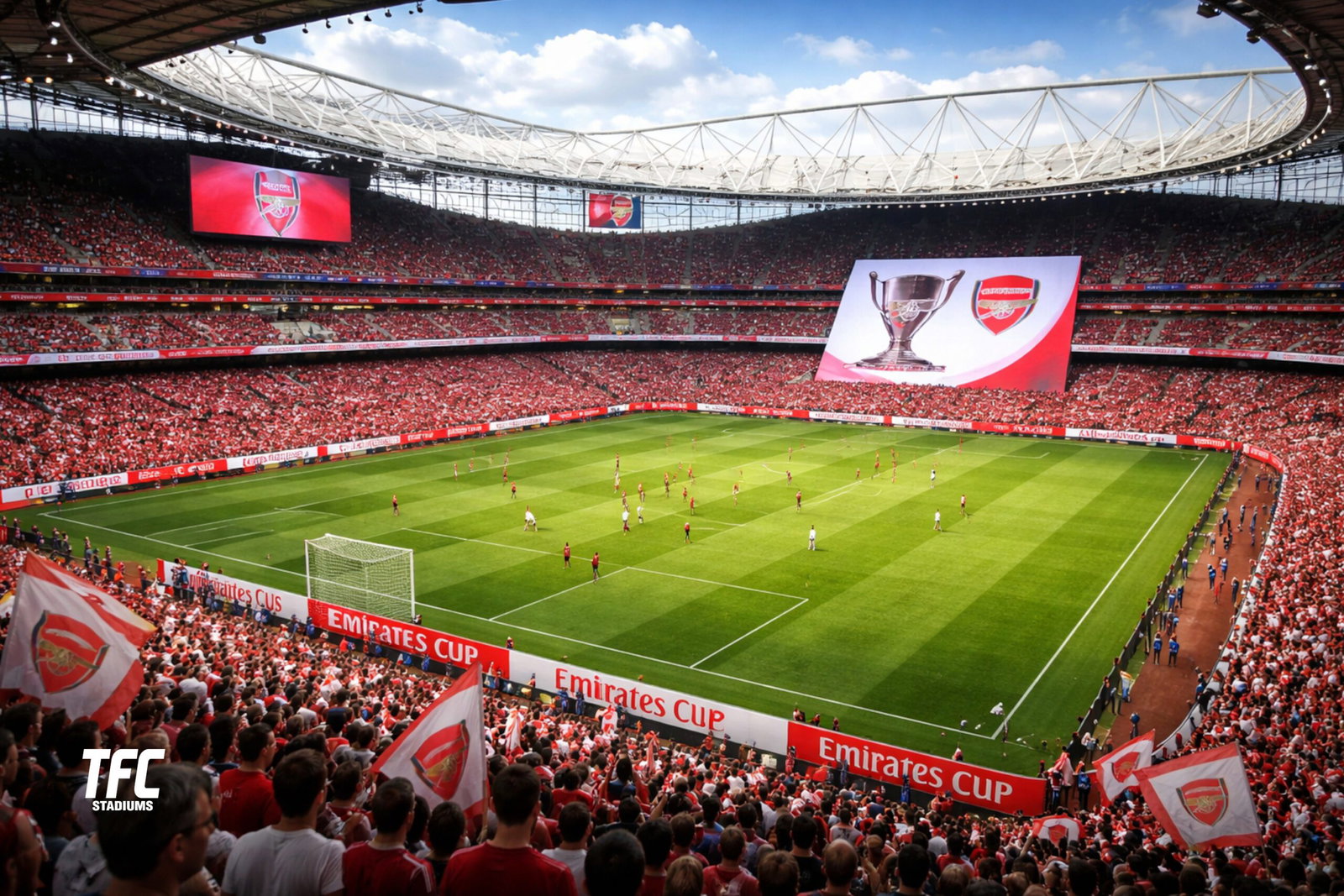
The Emirates Cup is Arsenal’s own pre season tournament, staged at the Emirates Stadium and designed to do two things at once. It sharpens the squad before competitive football returns, and it gives supporters a first proper look at the team after the summer break. It is friendly football in name only. The atmosphere usually says otherwise.
Launched in 2007, the competition quickly became a fixture of Arsenal’s summer calendar. Big European names, decent crowds, and just enough edge to make the results feel like they matter, even if everyone insists they do not.
Why the Emirates Cup exists
The tournament was created to mark Arsenal’s move into the Emirates Stadium and to establish a recognisable pre season event tied to the club’s new home. Unlike overseas tours, the Emirates Cup keeps things local. Supporters do not need flights or time off work. They just turn up, see new signings, and argue about midfield balance like the season has already started.
It also gives the club control. Arsenal choose the opponents, the format, and the pacing. That means strong but sensible competition, rather than the chaos of random friendlies spread across continents.
Format and how it usually works
The Emirates Cup has never been rigid. Some years feature four teams over a weekend, others are trimmed down to two clubs playing a single headline match. Points systems have varied too, with goals sometimes rewarded to encourage open play.
What stays consistent is the intent. These matches are competitive enough to test shape and fitness, but forgiving enough to rotate heavily. Managers experiment. Fans overreact. Everyone pretends not to care about the trophy, until Arsenal lose it.
Notable teams and past highlights
Over the years, the Emirates Cup has hosted a strong mix of elite and ambitious sides. European heavyweights like Bayern Munich and Juventus have appeared, as well as regular Premier League rivals and technically sharp sides from Spain, Germany, and France.
Some tournaments are remembered for standout performances from new signings. Others stick in the mind because Arsenal looked worryingly unprepared, which then somehow led to a decent league campaign. Pre season logic is a strange thing.
The atmosphere at Emirates Stadium
The Emirates Cup tends to draw a different crowd from league matches. There are more families, more tourists, and more optimism. Seats are full enough to create noise, but relaxed enough that people actually talk about what they are seeing.
For many supporters, it is their first visit of the season. New kits get their debut. Young players get cheers just for trying something bold. The stadium feels less tense and more curious, which suits pre season football perfectly.
Does winning the Emirates Cup matter
Officially, no. Practically, a little.
Winning the Emirates Cup does not predict league position, trophies, or long term success. What it can do is set a tone. A sharp performance builds confidence. A flat one fuels endless debate before August has even arrived.
For players returning from injury or youngsters pushing for minutes, these matches matter a great deal. For fans, they offer reassurance, or at least something concrete to talk about beyond training ground rumours.
How the Emirates Cup fits into Arsenal’s season
The Emirates Cup usually lands in the final stretch of pre season. By this point, fitness is close to match ready and tactical ideas are more settled. Line ups often resemble what will start the opening league game, give or take one final experiment.
It is also a useful reference point. If the press looks organised and the passing has rhythm, optimism grows. If not, the phrase “it’s only pre season” gets a heavy workout.
Why supporters still care
The Emirates Cup endures because it feels familiar. It is football returning to a familiar place, with familiar rituals, after weeks of speculation and silence. It bridges the gap between theory and reality.
You might tell yourself the result does not matter. You might even believe it. But when Arsenal lift the trophy, even a small one, it still feels like a good start.
About the Author