1. The Highest Football League Ground in England
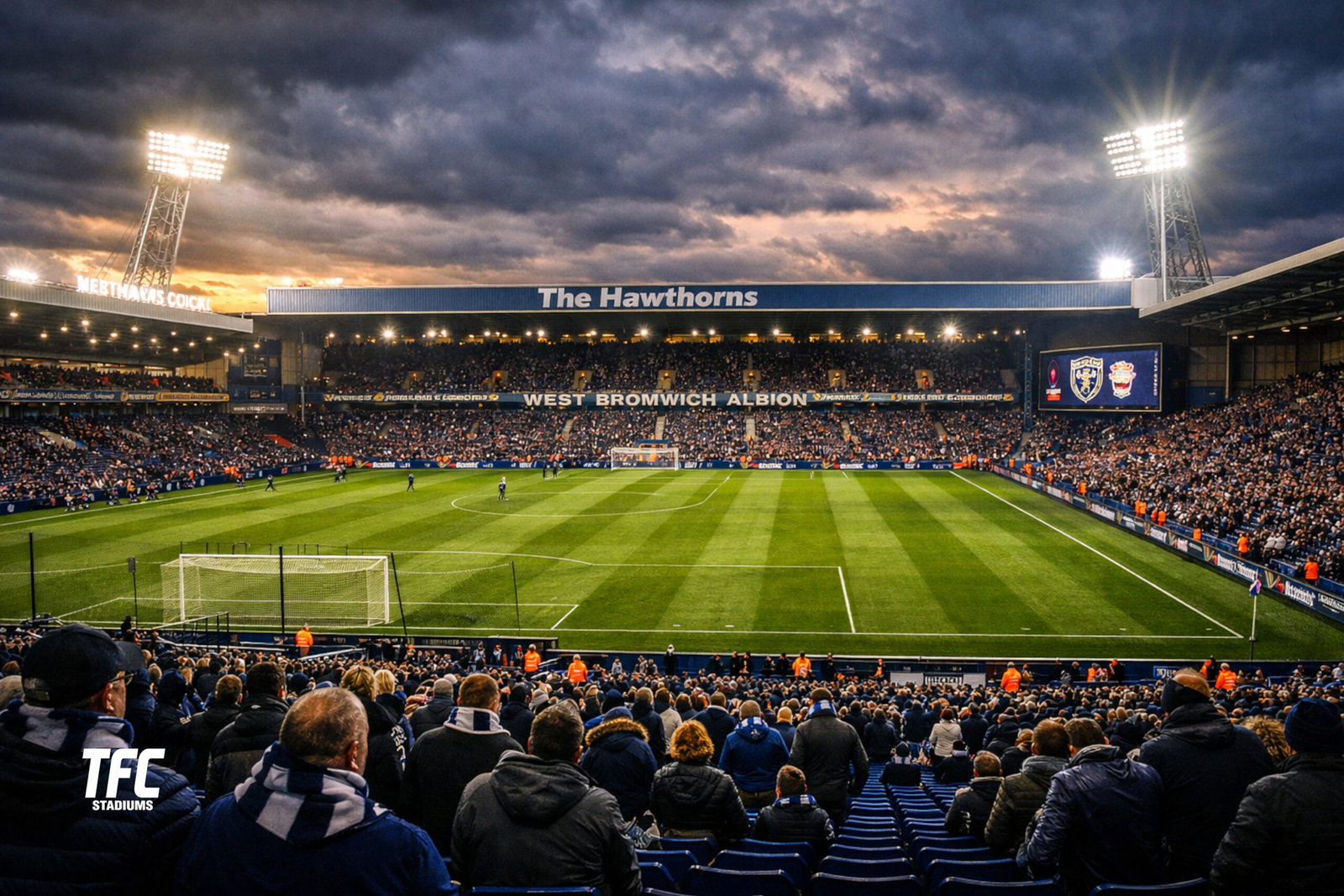
The Hawthorns sits around 551 feet above sea level. That makes it the highest ground used regularly in the English Football League. On cold winter nights, you feel it. The wind has opinions, and it is rarely kind to visiting wingers.
2. Opened in 1900, Built to Last
The ground opened in September 1900, replacing Albion’s previous home at Stoney Lane. While almost everything you see today has been rebuilt, the site itself has never changed. Few English clubs can say they have played on the same patch of land for well over a century.
3. Capacity That Reflects the Club
The Hawthorns holds just over 26,000 supporters. It is not oversized, not underwhelming, and rarely half empty when it matters. It suits a club that has spent its life moving between divisions without losing its sense of scale.
| Feature | Detail |
|---|---|
| Current capacity | 26,850 |
| All seated since | 1994 |
| Floodlights installed | 1954 |
| Pitch size | 105 x 68 metres |
4. The First Ground With Floodlights in a League Match
Floodlights arrived in the 1950s, but Albion went further. The Hawthorns hosted one of the earliest floodlit league matches in 1956. Night games quickly became part of the club’s identity, with European friendlies drawing big crowds and even bigger reputations.
5. Home of One of England’s Oldest Clubs
West Bromwich Albion were founded in 1878. The Hawthorns has been their home for nearly all of their top flight history. Promotion parties, relegation scraps, cup runs, and the occasional great escape have all played out on this same turf.
6. A Ground That Rewards Noise, Not Glamour
This is a proper football ground. Steep stands, tight sightlines, and very little corporate gloss. When the crowd gets going, especially in the Birmingham Road End, the noise sits low and heavy. It is not pretty. It is effective.
7. Record Attendance Came Long Before All Seating
The biggest crowd in the ground’s history came in 1937, when 64,815 packed in to watch an FA Cup tie against Arsenal. By modern standards it sounds unsafe. By historical standards it was a normal Saturday when football swallowed the town.
| Attendance Record | Match |
|---|---|
| 64,815 | West Brom vs Arsenal, FA Cup, 1937 |
| Modern average | 23,000 to 25,000 |
| Lowest league crowd | Just under 4,000 in the 1980s |
8. Constant Redevelopment, Same Feel
Each stand has been rebuilt at different times, yet the ground still feels cohesive. The East Stand, completed in 2001, was the last major project. The club has resisted turning the Hawthorns into something generic, which supporters quietly appreciate.
9. A Stadium Linked to One of England’s Great Sides
The 1953 to 1954 Albion team, champions of England and FA Cup winners, played here. Many still argue they were one of the finest attacking sides this country has produced. The Hawthorns was the stage, not the star, which feels fitting.
10. More Than a Matchday Venue
The ground has hosted England internationals, charity matches, and community events for decades. It has also served as a visible landmark for the Black Country, perched above the surrounding streets like a reminder that football here is not a hobby. It is part of local identity.
At a Glance, The Hawthorns
| Category | Detail |
|---|---|
| Location | West Bromwich, West Midlands |
| Opened | 1900 |
| Elevation | Approx. 551 feet |
| Nickname | The Shrine |
| Owner | West Bromwich Albion |
TFC Takeaway
The Hawthorns does not chase trends. It does not need to. It has survived modernisation, commercialisation, and more than a few rough seasons by doing the basics well. For many supporters, that matters far more than a retractable roof ever could.
About the Author