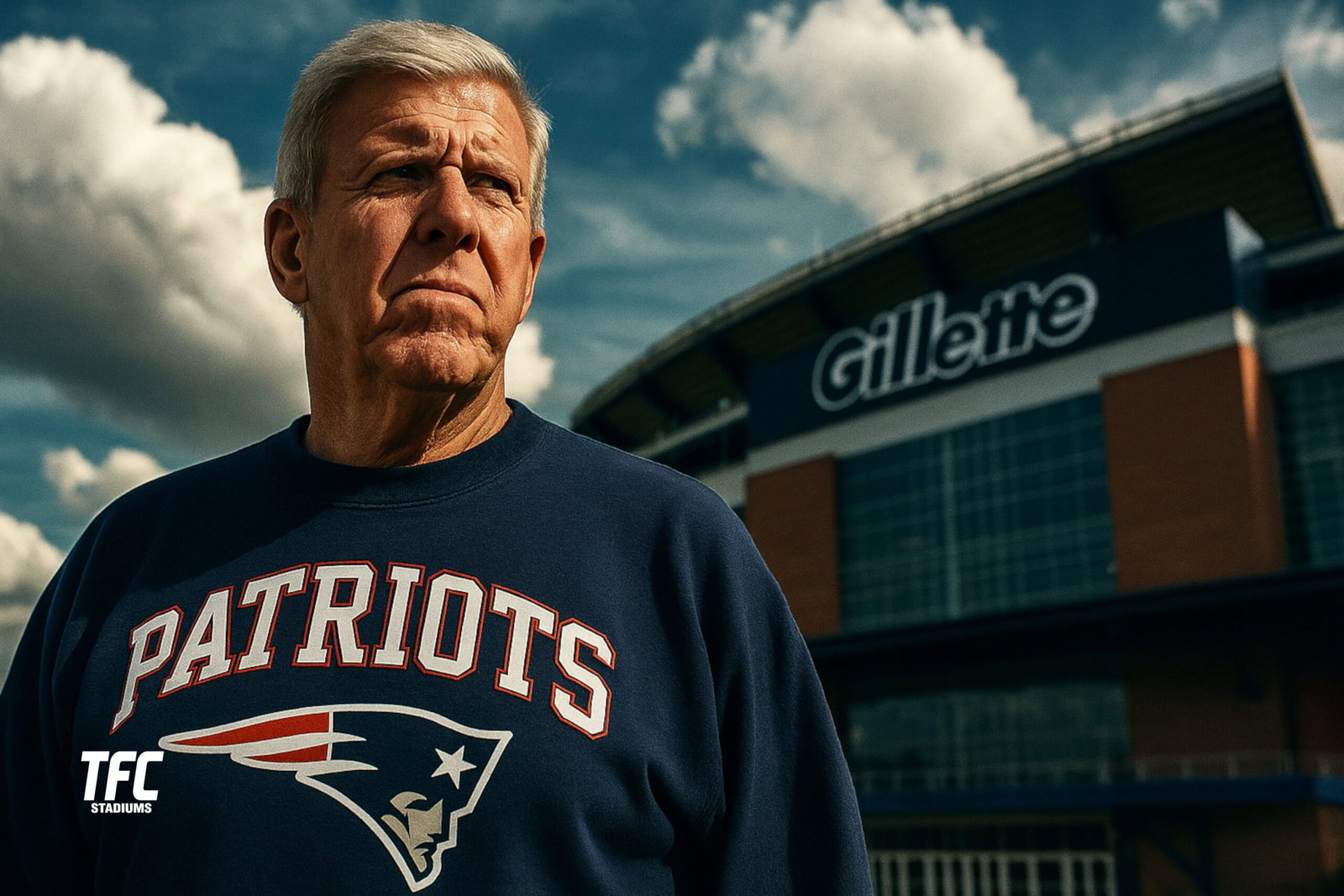
If you ever want to understand the delicate balance between football genius and front office politics, you could read a library of dusty autobiographies. Or you could study Bill Parcells’ later years in New England, a saga that mixed brilliance, bluntness and a stadium saga that aged everyone involved about fifteen years. The irony is that Parcells never actually coached a game inside Gillette Stadium. Still, his fingerprints are on the place the way duct tape is on an old playbook.
Below is the story of the stadium that came too late for him, the franchise he reshaped and the fallout that still gives Patriots fans that tight feeling behind the ribs.
The Road to a New Stadium
Gillette Stadium did not appear out of thin air. It was born from the franchise Parcells helped drag out of irrelevance. When he arrived in 1993, the Patriots were one of those teams that looked like they came pre-packaged with existential despair. Foxboro Stadium was outdated, undersized and had all the warmth of a January wind tunnel. Parcells wanted more for the club, and he pushed privately and publicly for the kind of infrastructure that could turn a struggling organisation into a real heavyweight.
His success on the field made the pressure impossible to ignore. Two playoff runs and a Super Bowl appearance forced ownership to think bigger. Parcells’ message was loud. If the team wanted to stand alongside the big boys, it needed a proper home.
Of course, timing is the great prankster of the NFL. The plans gained traction only for Parcells to walk out after the 1996 season. Hiring him was bold. Letting him leave when the franchise was finally rising felt like misplacing the winning lottery ticket.
Parcells and the Ownership Rift
Here is where the story shifts from football to theatre. Parcells clashed with ownership over control, drafting authority and the feeling that he had been asked to cook the meal without picking the groceries. It was vintage Parcells. You knew he was right because he sounded so annoyed about it.
His departure layered a strange freeze over the stadium project. Everyone knew the team needed a new home, but the atmosphere felt like the day after a family argument at Christmas. Gillette Stadium eventually went ahead under Robert Kraft, yet the man who had fought hardest for a modern venue was gone before the first steel beam went up.
How Parcells Shaped Gillette Stadium
Parcells never coached inside the new bowl, but the stadium is a direct outcome of his tenure. He redefined expectations. He rebuilt standards. He proved New England could win at scale, not just sneak the occasional nine and seven season when the stars behaved.
The demand for a better facility came from that newfound ambition. Gillette Stadium carries that legacy in its design. Bigger sightlines, stronger acoustics and infrastructure suited for a team aiming for January football instead of draft positioning. Parcells widened the horizon. The franchise then built the skyline.
What Gillette Might Have Looked Like Under Parcells
Parcells loved power football, big bodies and psychological warfare that began long before kickoff. If he had overseen a stadium opening, you sense he would have demanded a tunnel that made visiting teams rethink their life choices, a sideline configuration that forced opponents to stare directly into the wind and a locker room layout that felt like a Spartan gymnasium after a tough tax audit.
Instead, the honour went to Bill Belichick and Tom Brady. Maybe they sprinkled in a few Parcells touches anyway. Hard to prove, but it feels right.
The Legacy in New England
Parcells’ time in the region has a strange duality. Some remember the exit more than the rebuild, but the rebuild is the real story. He dragged the Patriots into professional adulthood. He created the culture that Belichick refined and Brady immortalised. Gillette Stadium is the physical symbol of that shift. It is the cathedral built on the foundation he poured.
He did not get his victory lap inside the new home. He did not get the banner ceremony or the chance to glare up at the luxury boxes while wondering whether the heating bill had gone up again. Still, the stadium exists because Parcells showed what the franchise could be.
Coaches rarely get monuments. Gillette Stadium is probably the closest he will ever come.
If Parcells had coached just one game in that place, the acoustics alone might have cracked a few helmets. But history has a wicked sense of humour, and the football gods are known for their cutaway scenes.
Parcells did not need a seat in Gillette to shape it. The stadium stands anyway, loud as ever, carrying the echo of a coach who insisted on thinking bigger.
About the Author