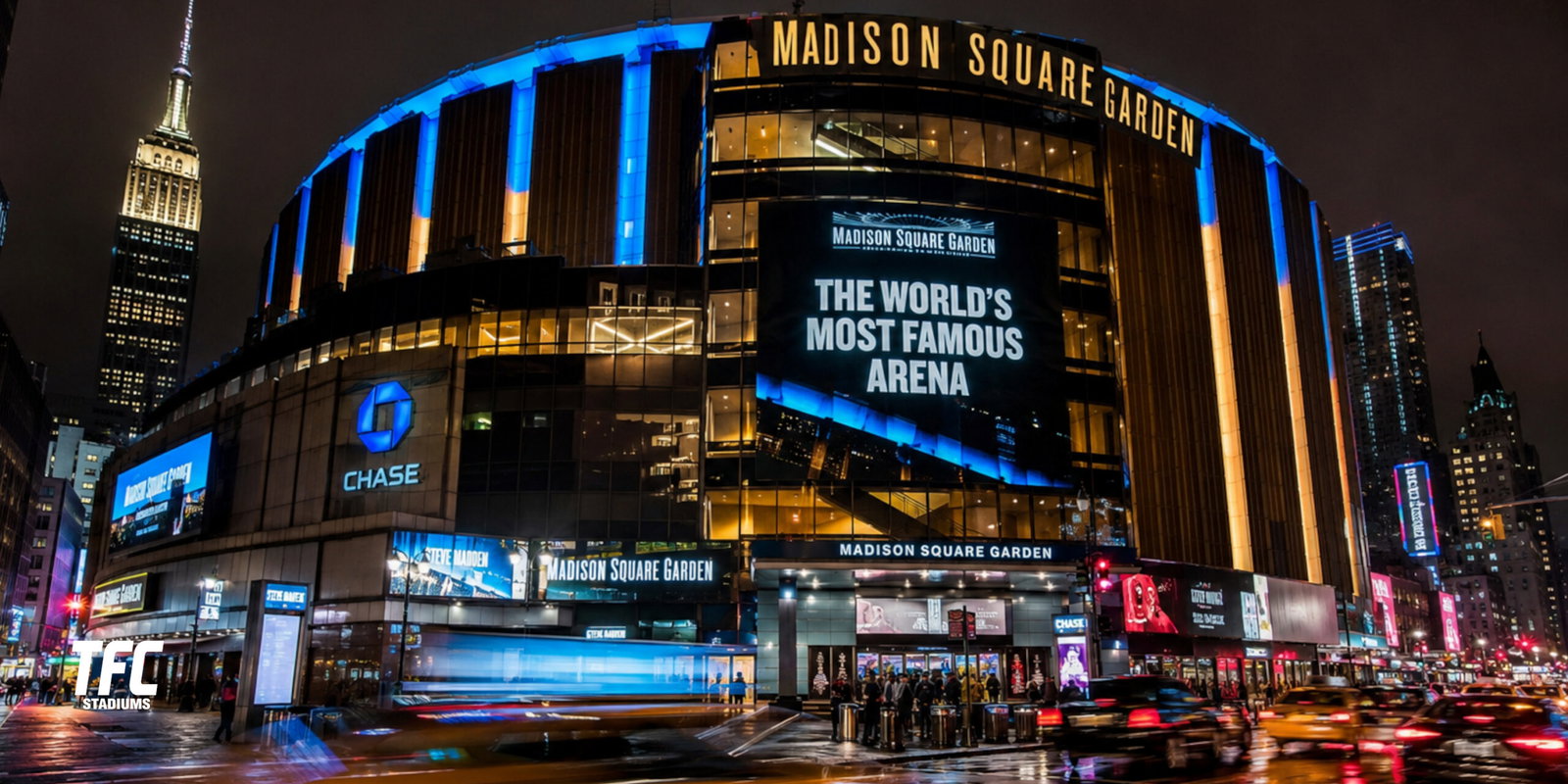
There are famous arenas, and then there’s Madison Square Garden.
Mention “The Garden” almost anywhere on the planet and people immediately know what you’re talking about. That is a rare achievement for a building. Most venues need a city attached to their name. Madison Square Garden doesn’t. It simply exists as part of the cultural vocabulary, alongside Hollywood, Broadway and Times Square.
Located above Pennsylvania Station in Midtown Manhattan, the current Garden opened in 1968 and is actually the fourth venue to carry the name. It hosts around 320 events each year, welcomes more than four million visitors annually and has become one of the busiest entertainment venues in the world.
For generations, athletes have dreamed of playing there. Musicians have measured their careers by selling it out. Film directors use it as instant shorthand for New York. Even people who have never visited can picture its famous ceiling, bright lights and electric atmosphere.
The Garden isn’t simply where events happen. It is often part of the story.
Why Madison Square Garden Matters So Much
Every city has an iconic venue.
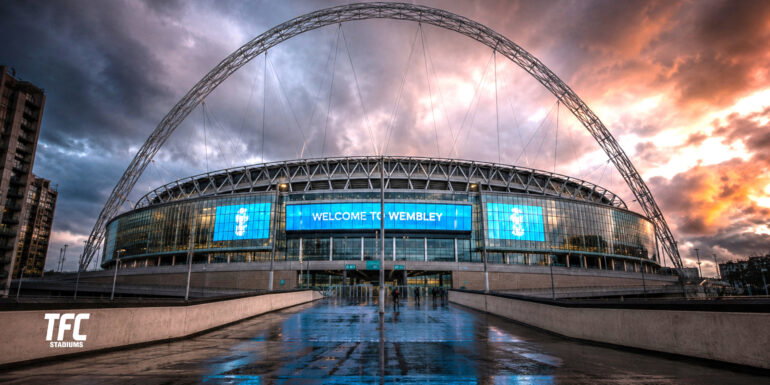
London has Wembley. Los Angeles has the Hollywood Bowl and Crypto.com Arena. Chicago has Wrigley Field.
New York somehow ended up with a building that comfortably lives in several different worlds at once.
Madison Square Garden hosts:
- NBA basketball
- NHL hockey
- Championship boxing
- UFC events
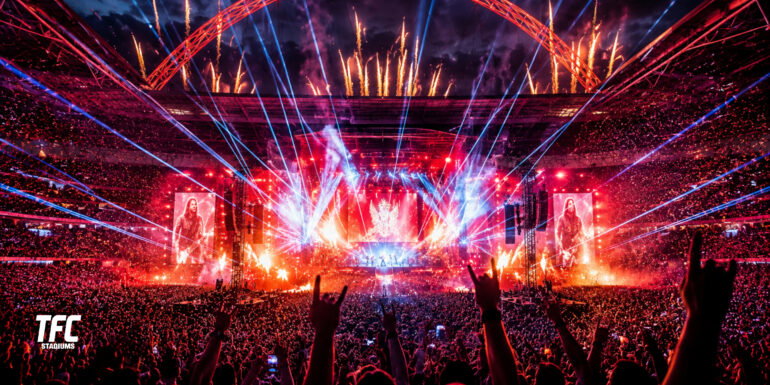
- Major concerts
- Political conventions
- College basketball
- Wrestling spectaculars
- Award ceremonies
- Cultural celebrations
Very few arenas successfully combine all of those identities.
Part of its appeal comes from geography. Sitting directly above one of the busiest transport hubs in North America means nearly anyone can get there. More importantly, performers know they are appearing in the media capital of the United States.
When you play the Garden, the whole entertainment industry tends to notice.
The Concert Venue Every Musician Wants to Play
For musicians, Madison Square Garden has become something close to a pilgrimage.
Selling out the Garden is still viewed as one of the biggest achievements in live music.
Artists from almost every genre have created defining moments there, including:
- Billy Joel
- Elton John
- Bruce Springsteen
- Madonna
- Beyoncé
- Taylor Swift
- Harry Styles
- U2
- The Rolling Stones
- Led Zeppelin
- Elvis Presley
Billy Joel’s residency deserves its own chapter.
Beginning in 2014, Joel performed one concert every month at Madison Square Garden for nearly a decade. The residency became one of the longest and most successful in music history, drawing millions of fans before concluding in 2024 after more than 100 performances.
It felt uniquely New York.
Joel wasn’t just playing concerts. He became part of the building’s identity.
Boxing’s Brightest Nights
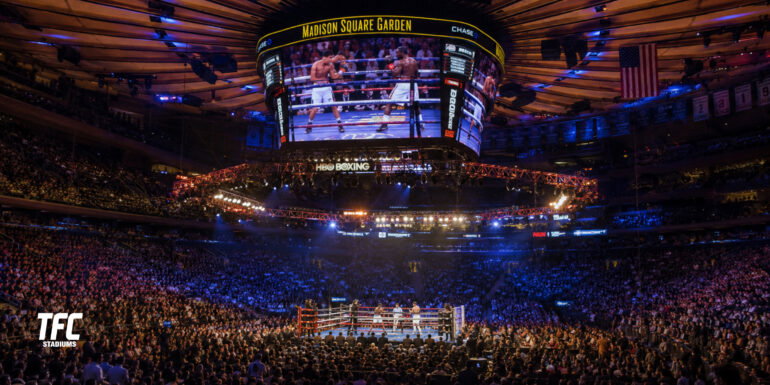
Before mixed martial arts became mainstream, Madison Square Garden was boxing’s cathedral.
Some of the greatest fighters ever stepped through its ropes.
Muhammad Ali.
Joe Frazier.
Sugar Ray Leonard.
Roberto Durán.
Mike Tyson.
Oscar De La Hoya.
More recently, Gennady Golovkin, Katie Taylor and Canelo Álvarez have continued that tradition.
The Garden somehow enhances drama. Fighters often speak about feeling a different kind of pressure walking into the arena.
Perhaps it’s the history.
Perhaps it’s the New York crowd.
Or perhaps it’s simply knowing that everyone before you had to survive the same spotlight.
Basketball’s Greatest Theatre
For NBA fans, Madison Square Garden represents something that statistics cannot measure.
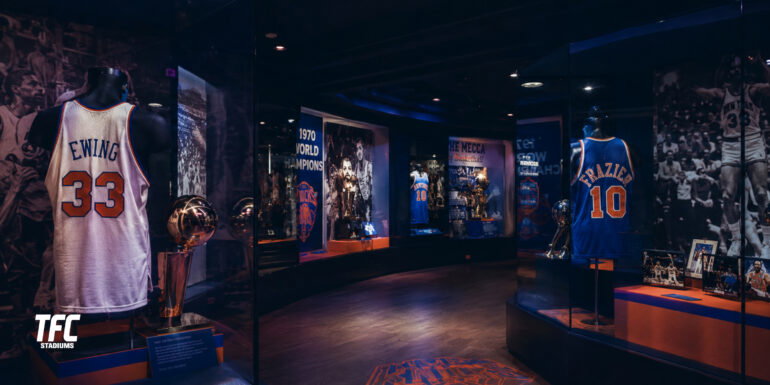
The New York Knicks have experienced long stretches without championships, yet visiting superstars still circle games at the Garden.
Michael Jordan loved performing there.
Kobe Bryant produced unforgettable scoring displays.
LeBron James has delivered numerous memorable performances.
Stephen Curry broke the NBA’s all time three point record at Madison Square Garden in 2021, fittingly doing so in one of basketball’s most famous buildings.
Players often describe the Garden crowd as unusually knowledgeable.
Good basketball gets appreciated.
Great basketball gets remembered.
The Home of Wrestling Spectacle
Professional wrestling and Madison Square Garden grew up together.
Long before massive football stadium events became common, WWE regularly treated the Garden as its spiritual home.
Many of wrestling’s defining moments happened under its roof.
Hulk Hogan became synonymous with the venue during wrestling’s boom years.
Bret Hart, Shawn Michaels, The Undertaker, Stone Cold Steve Austin, John Cena and countless others all built legendary moments there.
The Garden continues to hold enormous prestige within professional wrestling.
Winning a championship there still carries extra weight.
Even if you’re not a wrestling fan, you’ve almost certainly seen archive footage filmed inside the arena.
Hollywood Loves the Garden
Need to establish that a film takes place in New York?
Show Madison Square Garden.
The building has appeared in countless movies, either as itself or as part of the city’s skyline.
Some of the best known include:
- Rocky III
- King Kong
- Ghostbusters
- John Wick
- Creed
- Spider-Man
- Elf
Sometimes it serves as the setting.
Sometimes it simply appears in the background.
Either way, audiences instantly recognise it.
Unlike many sports arenas, Madison Square Garden has become a visual landmark rather than just a venue.
Television’s Favourite Arena
American television has long embraced Madison Square Garden.
Late night shows frequently reference it.
Sitcoms mention it.
Sports documentaries inevitably visit it.
Concert specials filmed there often become career defining broadcasts.
Award shows, comedy specials and charity events have all benefited from the prestige attached to the building.
When producers want viewers to think “big event,” the Garden is usually near the top of the list.
The Celebrity Factor
Part of Madison Square Garden’s cultural power comes from who is watching as much as who is performing.
Courtside seats have become their own form of entertainment.
Spike Lee is practically part of the furniture.
You’ll also regularly spot actors, musicians, athletes, politicians and business leaders scattered throughout the front rows.
Unlike many arenas where celebrities disappear into private suites, the Garden often places famous faces directly beside passionate fans.
It creates an atmosphere that feels unmistakably New York.
One minute you’re buying a pretzel.
The next you’re standing beside Martin Scorsese.
Only in Manhattan.
Why New York Gives the Garden Extra Meaning
Location matters.
Madison Square Garden sits in the middle of one of the busiest cities on Earth.
Outside the arena is constant movement.
Yellow taxis.
Steam rising from subway grates.
Office workers.
Tourists.
Street vendors.
Inside, that same energy somehow concentrates into a single room.
There are larger arenas.
There are newer arenas.
There are certainly shinier arenas.
Few possess the same sense of occasion before you’ve even found your seat.
The Economics of an Icon
Madison Square Garden is more than a cultural symbol. It is also a remarkable business.
Premium seating, corporate hospitality, naming rights, sponsorships, concerts, sporting events and television production generate hundreds of millions of dollars annually.
The venue has also helped sustain the surrounding neighbourhood, drawing restaurants, hotels, bars and retail businesses that benefit from year round foot traffic.
Unlike stadiums that sit empty for much of the week, the Garden rarely rests.
Its calendar is packed across every season.
That constant activity reinforces its position as one of the world’s most valuable entertainment properties.
Why Artists Still Chase the Garden
Technology has transformed live entertainment.
Streaming dominates music.
Social media creates overnight celebrities.
Virtual reality promises new experiences.
Yet performers still talk about playing Madison Square Garden with almost childlike excitement.
That says something.
You cannot stream the feeling of walking into an arena where Muhammad Ali boxed, Billy Joel sang, Michael Jordan soared, Elton John played, The Rolling Stones rocked, and generations of fans created memories together.
Buildings usually become outdated.
Madison Square Garden somehow became timeless.
Has Madison Square Garden Become Bigger Than Sport?
In many ways, yes.
Sport gave the Garden its reputation.
Music expanded its audience.
Film and television turned it into an international symbol.
Today, Madison Square Garden represents something bigger than basketball, hockey or concerts.
It represents arriving.
Whether you’re an athlete, musician, comedian or entertainer, performing there tells the world you’ve reached the highest level.
As someone who grew up on the West Coast, New York always looked larger than life. Every movie made it seem louder, faster and somehow cooler than reality. Then you finally visit Madison Square Garden and realise Hollywood wasn’t exaggerating all that much. You walk through the doors, hear twenty thousand people finding their seats, glance up at those famous rafters and understand why careers are measured by nights spent under that roof.
Some venues host history.
Madison Square Garden keeps collecting it.
About the Author