The Stadium that Defines Grandeur
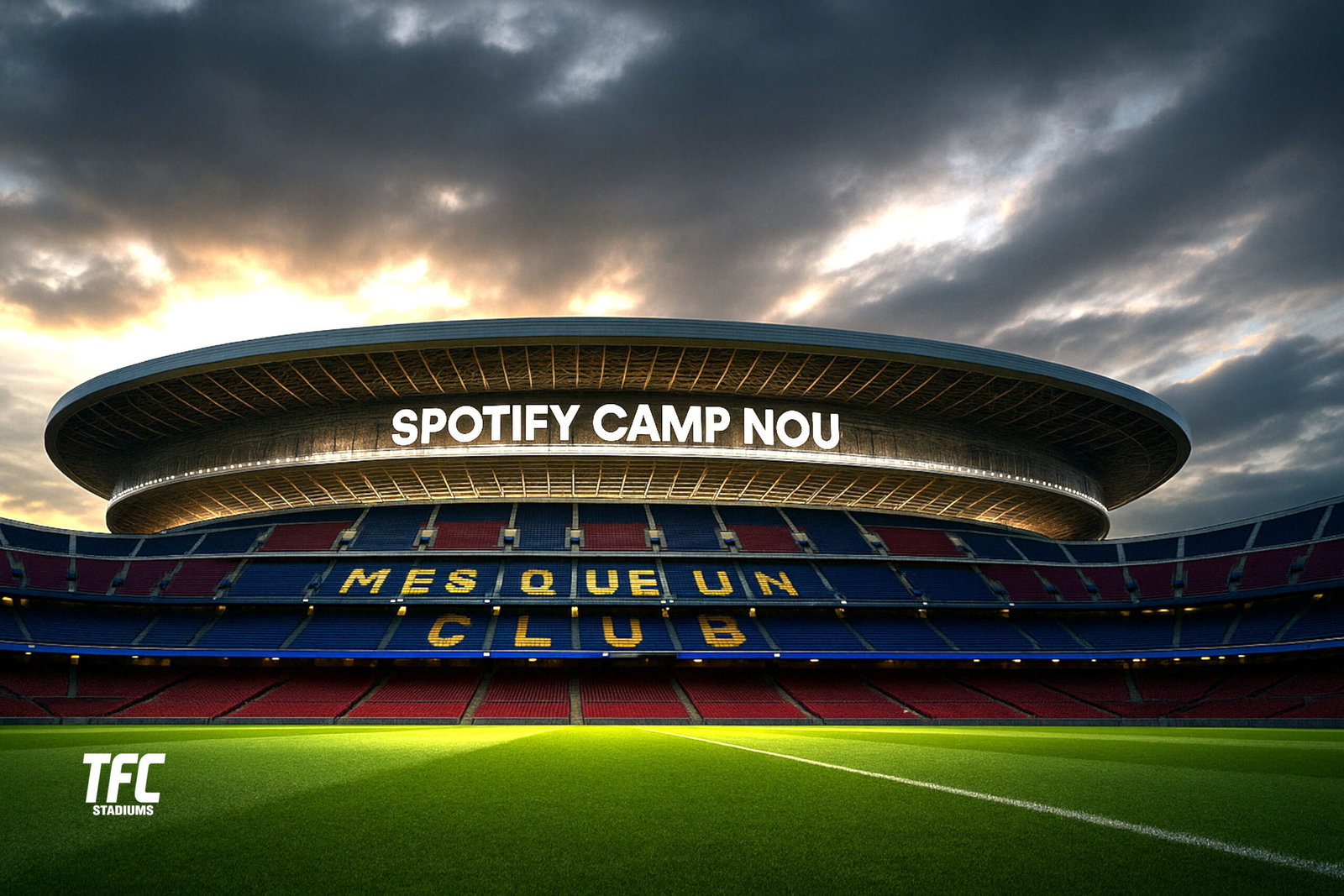
Camp Nou is an institution, even stripped of its banners, tourists, and chants of “Més que un club,” the sheer mass of concrete and steel commands silence. Opened in 1957, it became the architectural expression of FC Barcelona’s ambition. While other clubs built stadiums, Barça built a statement.
At full capacity, it could once hold close to 100,000 fans, making it the largest stadium in Europe. And when those stands fill with blue and red flags, the roar feels like it could lift the Pyrenees.
Architecture with Intention
There is nothing accidental about Camp Nou’s design. The steepness of the stands gives a sense of intimacy despite the vastness. Every sightline was calculated so even those in the gods can see the ball skim across the grass with perfect clarity.
The shape itself feels deliberate, almost sculptural, wrapping around the pitch like a colossal amphitheatre. It was made for spectacle. Floodlights cast long shadows that make even a pre-season friendly feel historic.
A Living Symbol of Catalonia
For locals, Camp Nou has always been more than football. It’s a gathering place, a cultural anchor, and occasionally, a political statement. During years when Catalan identity was suppressed, the stadium became one of the few public spaces where people could express who they were without fear.
When the crowd sings in Catalan, it’s not just a chant. It’s a declaration. Few stadiums carry that kind of emotional gravity.
Nights of Magic and Melancholy
The magic of Camp Nou is not limited to its architecture or history, but the moments it holds. Think of Ronaldinho’s grin against Real Madrid, Messi’s record-breaking nights, Iniesta’s orchestral calm, or Guardiola’s tactical masterpieces.
The same stands that once trembled with joy have also absorbed heartbreak: late eliminations, quiet exits, and now, the hum of cranes as renovation reshapes its future.
Still, even as it changes, the soul remains. When construction is done and fans return to fill those seats, the first roar will echo like an old hymn reborn.
The Power of Presence
Visiting Camp Nou in person changes your sense of scale. You stand at the pitch edge and realise how tiny the goals look, how high the stands rise, how the echoes carry. Even empty, it has presence.
It feels like history, ambition, and emotion have all been compacted into one immense bowl. And that’s why it inspires awe. Not because of its size alone, but because every inch of it tells you something about why football matters here.
The Spotify Camp Nou Transformation
The new Spotify Camp Nou is not just a facelift. It’s a complete reimagining of how a stadium can function in the modern era.
Key Plans Include:
- Expanded capacity: From around 99,000 to roughly 105,000 seats, reclaiming its title as the largest stadium in Europe.
- Sustainability focus: Solar panels, rainwater collection, and energy-efficient systems to make the venue greener and more self-sufficient.
- New roof: A sleek, fully covered design to improve acoustics and comfort while maintaining the iconic bowl shape.
- Digital experience: LED façades and enhanced Wi-Fi connectivity to merge Barça’s physical heritage with its digital future.
- Preserving identity: Architects have pledged to retain the original spirit of Camp Nou, ensuring that its emotional weight isn’t lost beneath the new steel and glass.
The renovation isn’t about changing what Camp Nou is, but about ensuring that its magic carries forward for another century.
TFC Closing Thoughts
Camp Nou is football’s version of a cathedral. Not ornate, but monumental. Not delicate, but deeply spiritual. It doesn’t ask for your admiration, it earns it.
You don’t visit Camp Nou to see architecture. You go to feel belief made concrete.
About the Author