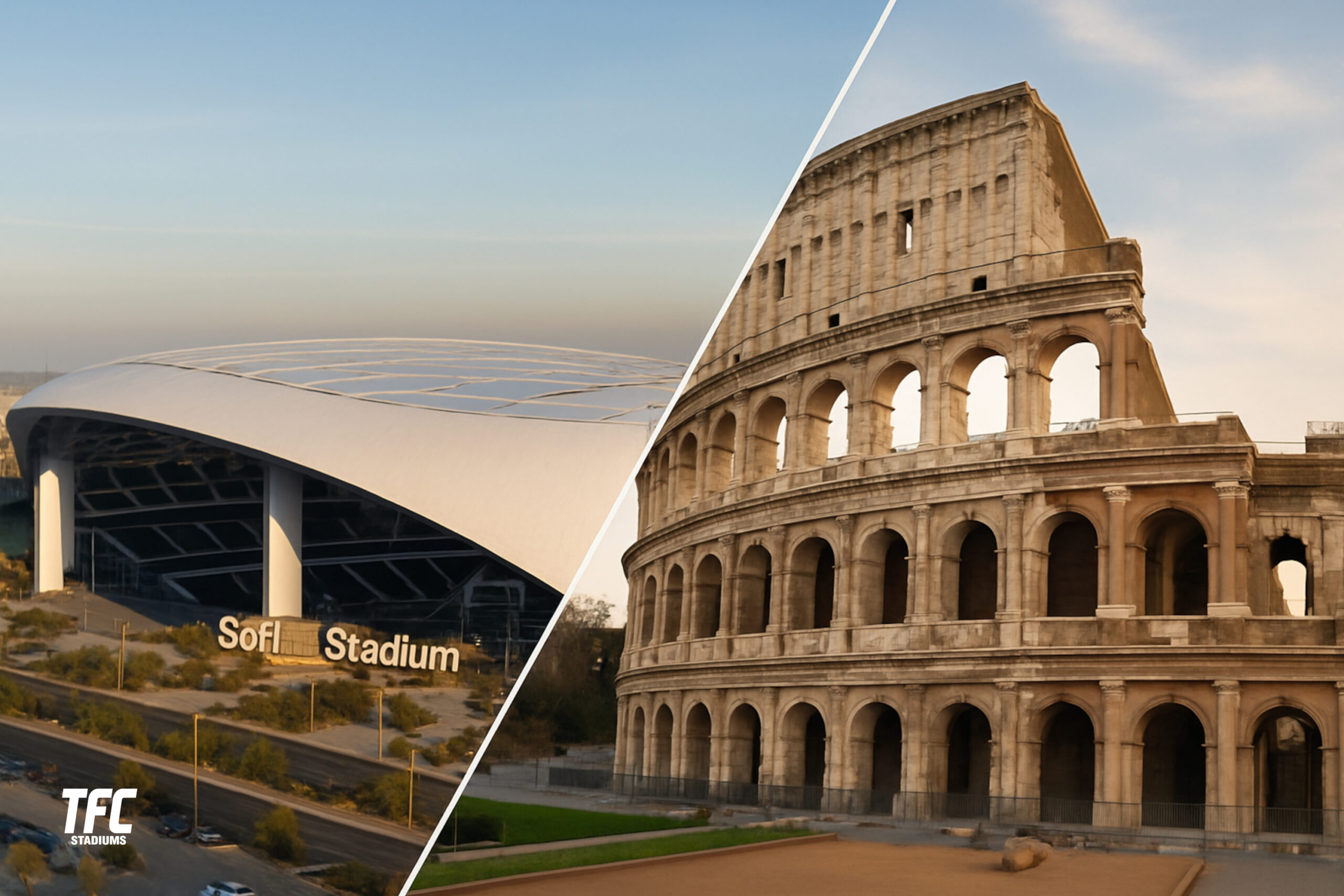

Few ancient structures have left a more lasting impression on architecture than the Colosseum in Rome. Completed in AD 80 under the rule of Emperor Titus, this amphitheatre was not only a feat of Roman engineering but also a blueprint for public spectacle. Its structural innovations, crowd control features, and focus on visibility laid the foundation for many of the design principles we now take for granted in modern stadiums.
At its core, the Colosseum was about experience. With a seating capacity of around 50,000 to 80,000, it was built to accommodate vast audiences, ensuring efficient ingress and egress through a network of vomitoria, the vaulted corridors that allowed rapid movement in and out of the seating areas. This principle is still reflected in today’s stadiums, where multiple entrances and exits are crucial for safety and crowd flow.
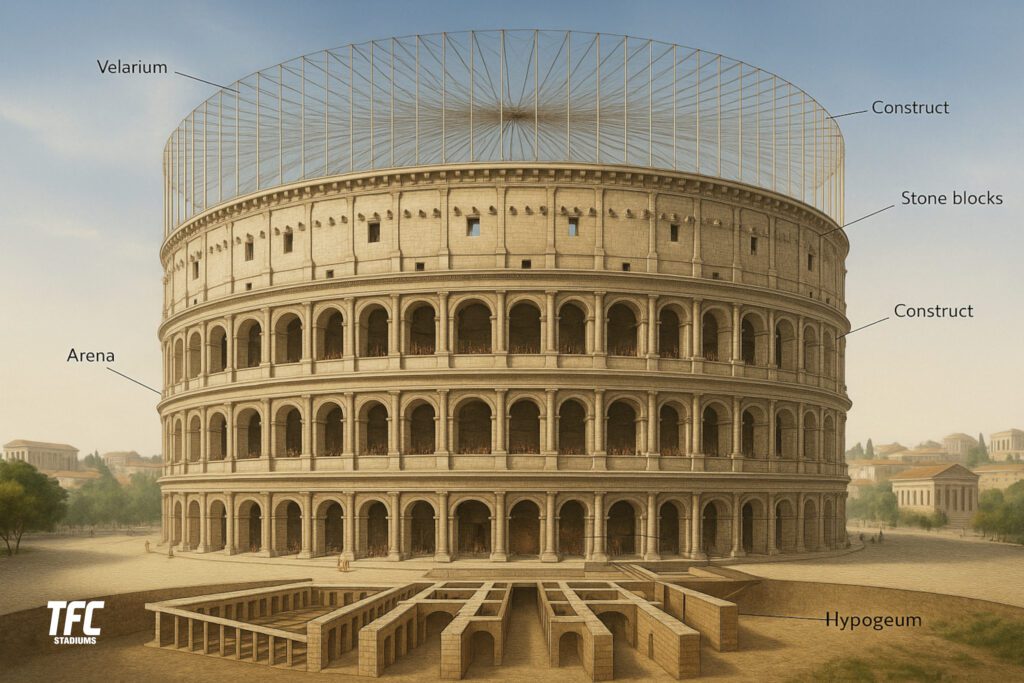
The tiered seating, arranged by social hierarchy, also anticipated modern considerations of sightlines and audience segmentation. Just as Roman senators were seated closer to the arena than plebeians, today’s stadiums allocate premium seating closer to the action, with more affordable options higher up. The ellipse-shaped design of the Colosseum gave spectators a clear view of the arena from almost every angle, an approach that continues to inform the elliptical or bowl-shaped layouts of modern venues.
Architecturally, the Colosseum combined function with form. Its outer facade used engaged columns in the Doric, Ionic, and Corinthian orders to add vertical rhythm and grandeur without compromising structural integrity. Modern stadiums often echo this layering of structural support and aesthetic appeal, albeit using steel and glass rather than travertine and concrete.
Another notable feature was the hypogeum, the underground network beneath the arena floor used to store animals, props, and gladiators. This concept of a hidden support infrastructure beneath the event space foreshadowed the service tunnels, locker rooms, and technical areas now standard in sports facilities.
The Colosseum also influenced the idea of stadiums as civic centres. In Roman times, games were not only entertainment but political tools used to reinforce imperial presence and social cohesion. Today, stadiums continue to play a similar cultural role, hosting events that unify communities and project a city’s or nation’s identity on the world stage.
In more technical terms, the Roman use of concrete and modular construction methods anticipated the prefabricated systems used in contemporary stadium builds. The speed with which the Colosseum was erected, relative to its scale, reflected a mastery of standardised construction, arches, and vaults that enabled ambitious public works.
Modern stadium architects still study the Colosseum’s design for insights into crowd dynamics, structural resilience, and spatial organisation. While today’s arenas rely on digital infrastructure and environmental technologies that would have been unimaginable to the Romans, the essential logic of the Colosseum endures: a space designed for mass human experience, efficiently managed and aesthetically impressive.
In short, the Colosseum was not just an ancient amphitheatre. It was the prototype for a global typology. Every time a football stadium opens its gates or a concert venue fills with thousands of spectators, it carries forward lessons first carved into stone nearly two thousand years ago.
About the Author