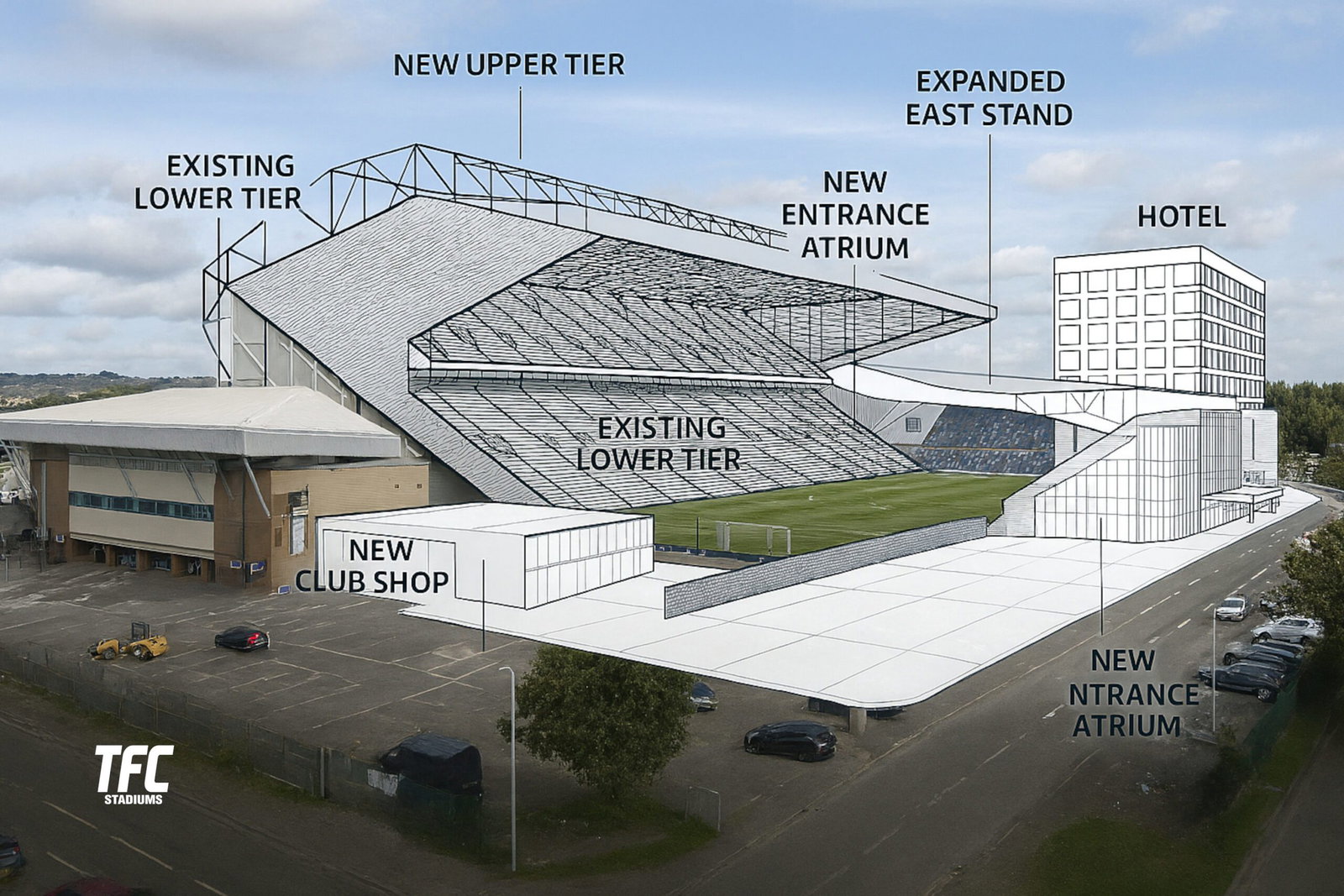
Elland Road has stood at the heart of Leeds for over a century. As the home of Leeds United, it carries a weight of history that few grounds in England can match. But even storied venues must evolve. With Leeds United harbouring long-term ambitions to return to the Premier League and reassert itself among the country’s elite, the club has been preparing for significant upgrades to its historic ground.
Why Elland Road Needs Expansion
Elland Road currently holds just over 37,000 fans. While that figure has served the club through periods in both the Championship and Premier League, it is now considered inadequate for a team with serious top-flight aspirations and a global fanbase.
Demand regularly outstrips supply for tickets, especially during competitive runs. The club’s ownership and supporters agree that expansion is vital not just for revenue, but for reinforcing the atmosphere and identity that Elland Road is famous for.
The Proposed Expansion Plan
Leeds United’s vision centres on expanding the West Stand. This is the oldest structure in the ground and the most logistically viable for redevelopment. The plan would increase capacity to around 50,000. This would bring Elland Road closer in size to other major Premier League venues such as Anfield or St James’ Park.
The redevelopment would involve:
- A full rebuild of the West Stand with modern facilities and increased seating
- Improved concourses, hospitality areas, and access points
- Enhanced accessibility and safety features
- Preservation of Elland Road’s traditional layout and acoustics
The club has made it clear that preserving the atmosphere is a priority. The steep stands and close proximity to the pitch, which give Elland Road its intimidating energy, will remain key features.
Financial Backing and Phasing
Much depends on Leeds’ league status and financial health. The current ownership, 49ers Enterprises, has expressed firm commitment to the expansion. They see the stadium project as central to long-term growth, both in commercial terms and fan engagement.
Phased development is expected. Rather than rebuilding the entire stadium at once, the focus will be on managing the upgrade in segments to allow matches to continue with minimal disruption.
Funding would likely come from a mix of private investment and long-term commercial partnerships. Naming rights and hospitality packages could also provide capital, though the Elland Road name itself is unlikely to change.
Impact on Local Area
The stadium sits within the Beeston district of Leeds, an area already impacted by matchday congestion. Upgrades would likely bring both challenges and benefits.
On one hand, increased footfall could pressure local infrastructure. On the other, redevelopment offers opportunities to improve transport links, local business revenue, and community engagement. There have been discussions about better park-and-ride schemes and expanded rail options to ease pressure on Elland Road’s surroundings.
Timeline and Expectations
While no fixed date has been set for construction to begin, the club has stated that expansion is a post-promotion priority. Should Leeds regain Premier League status and stabilise financially, groundwork could begin within two to three years.
In the meantime, preparatory steps are already underway:
- Architectural assessments and feasibility studies
- Consultation with supporters’ groups
- Internal budgeting and design development
A Ground with a Future
Elland Road is part of the cultural identity of Leeds. Any expansion will need to strike a balance between modernity and memory.
If executed properly, the new-look Elland Road could serve as a beacon for what a modern English football ground can be: not a sterile bowl, but a loud, characterful cathedral of football that continues to honour its past while embracing its future.
The question is not whether Elland Road should grow, but how it can do so without losing its soul.
About the Author