Allegiant Stadium, home to the Las Vegas Raiders and the University of Nevada, Las Vegas (UNLV) Rebels, stands as one of the most striking modern stadiums in the United States. Opened in 2020, it has already become an iconic feature of the Las Vegas skyline. This article explores the architecture, structural features, and engineering innovations that set Allegiant Stadium apart.
Architectural Vision
The architectural design of Allegiant Stadium was led by MANICA Architecture in collaboration with Mortenson | McCarthy Joint Venture. The goal was to create a bold and sleek silhouette that would fit with the aesthetics of the Las Vegas Strip while also respecting the heritage and identity of the Raiders franchise.
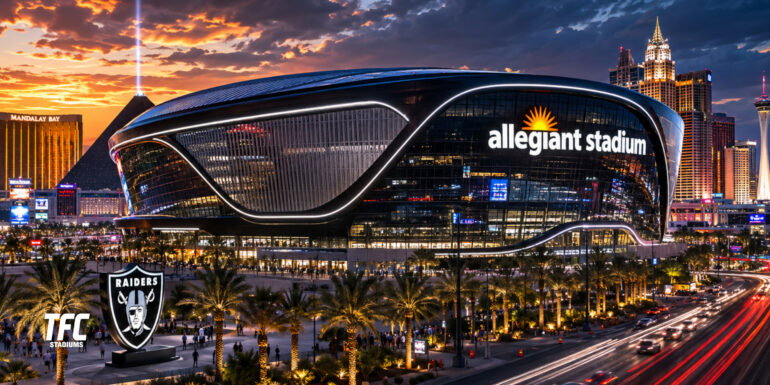
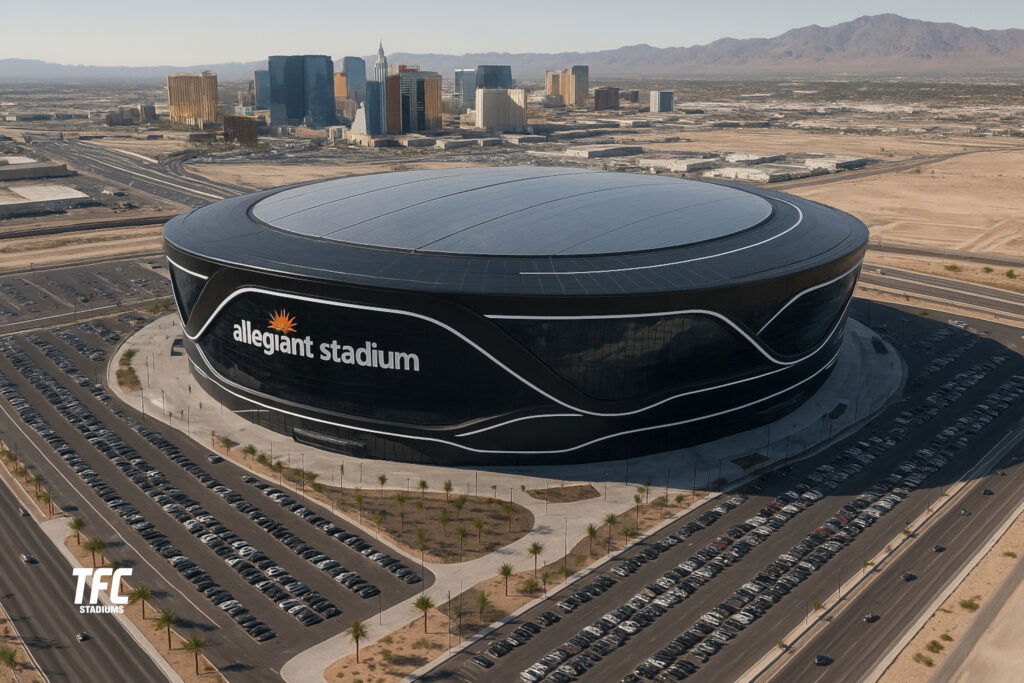
Its exterior, clad in black glass and silver fins, deliberately references the Raiders’ classic colour scheme. The shape of the stadium draws comparisons to a jet engine or a sci-fi helmet, both modern and aggressive in appearance. This strong visual identity makes it instantly recognisable from both ground level and the air.
Roof and Retractable Features
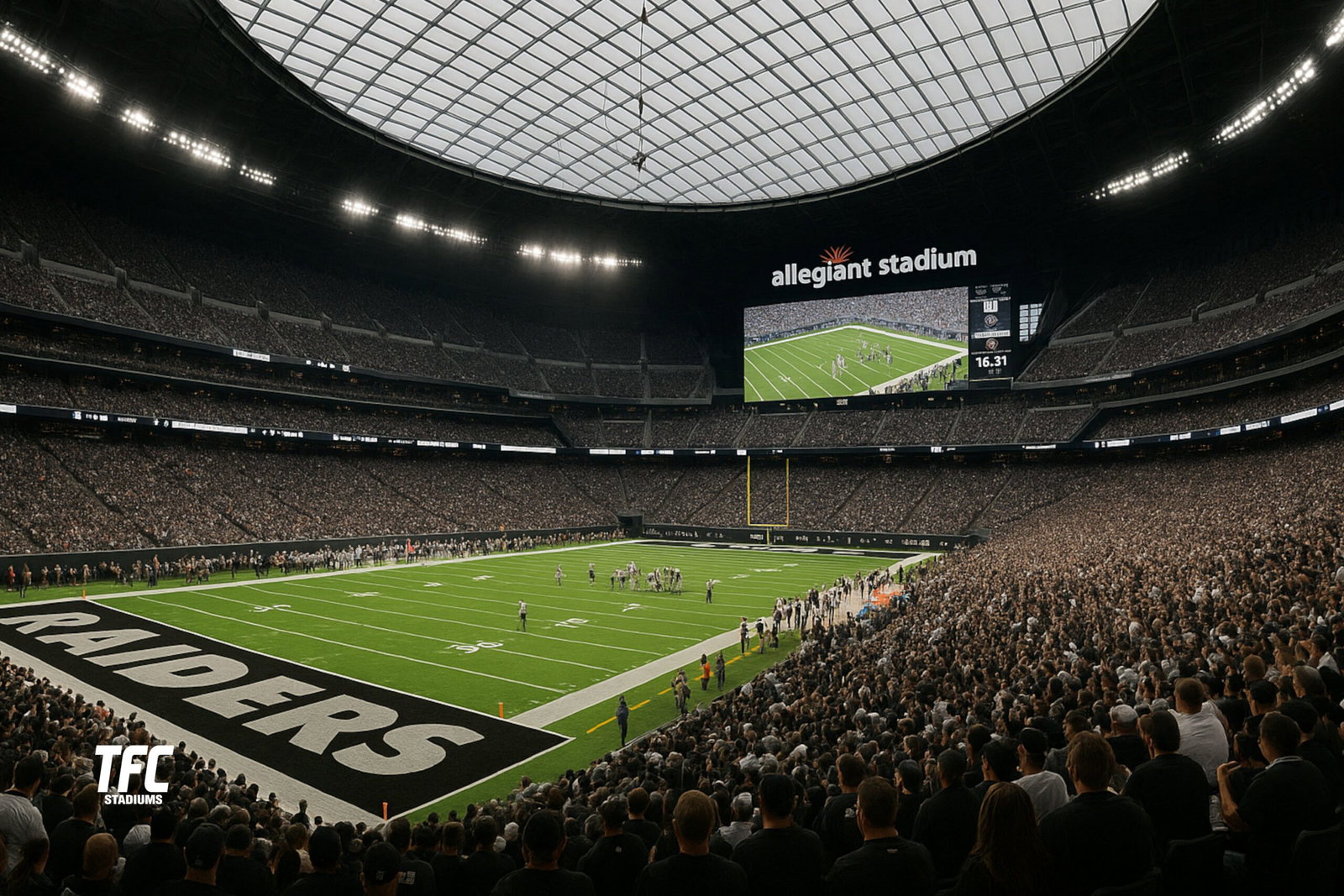
One of the standout features is the ETFE (ethylene tetrafluoroethylene) roof, a translucent material that allows natural light in while keeping the interior climate-controlled. Unlike traditional open-air stadiums, Allegiant is fully enclosed and air-conditioned, a necessary choice given the harsh desert climate.
Although it lacks a retractable roof, Allegiant Stadium incorporates a large retractable side wall on the north end. This 80-foot tall lanai window opens to offer views of the Las Vegas Strip, providing both natural light and a unique visual connection to the city.
Field Tray and Multi-Use Flexibility
Beneath the stadium lies one of its most innovative engineering achievements: a mobile natural grass field tray. Weighing around 9,500 tons, this movable system allows the Raiders to play on natural turf while UNLV and other events can use synthetic turf within the same space.
The tray is rolled in and out of the stadium on a track system and receives sunlight outside when not in use, similar to the system used at State Farm Stadium in Arizona. This flexibility has expanded the stadium’s potential, making it viable for NFL, NCAA, concerts, and large-scale entertainment.
Capacity and Seating Design
Allegiant Stadium can hold approximately 65,000 spectators, expandable to 72,000 for larger events such as the Super Bowl or college football championships. Seating is arranged to ensure excellent sightlines throughout, with premium seating and club-level experiences built into the lower and mid-tier levels.
The Black Hole, an area dedicated to the Raiders’ most fervent fans, was purposefully integrated behind the south endzone to preserve the identity and traditions brought from Oakland.
Sustainability and Technology
Despite its desert location, Allegiant Stadium incorporates several sustainability features. The building has achieved LEED Gold certification and makes use of advanced water conservation systems, reflective roofing, and energy-efficient lighting throughout.
On the tech front, the stadium is equipped with 1,700 Wi-Fi access points and full 5G connectivity. There are more than 2,300 screens placed throughout the venue, from concourse displays to high-definition ribbon boards. A 3D audio system and world-class acoustics support both sports and entertainment events.
Construction and Engineering
Construction broke ground in November 2017 and concluded in July 2020, coming in at around $1.9 billion. The stadium’s design accounts for seismic activity and wind resistance, with over 100,000 cubic yards of concrete and 28,000 tons of structural steel used. A crew of more than 12,000 workers contributed to the build.
The close proximity to McCarran International Airport posed height restrictions, influencing the choice to keep the roof non-retractable and compact in profile while still delivering visual impact.
A Stadium Built for Las Vegas
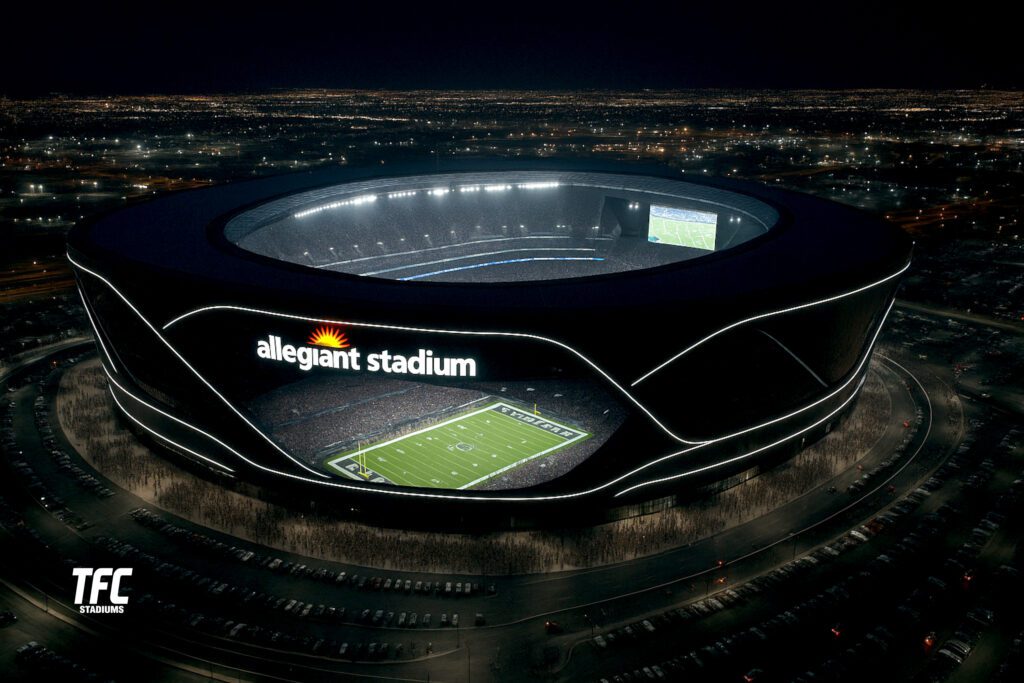
Allegiant Stadium is not just a sports venue; it is a Las Vegas experience. From its sleek exterior to the Strip-facing window, it was designed to reflect the spectacle and ambition of the city. Its flexibility, climate control, and high-tech infrastructure allow it to host everything from NFL games to music festivals and international football matches.
As Las Vegas continues to grow as a sports and entertainment hub, Allegiant Stadium stands as a showcase of modern stadium design, balancing innovation with functionality, and aesthetic strength with environmental consideration.
About the Author