Setting the scene
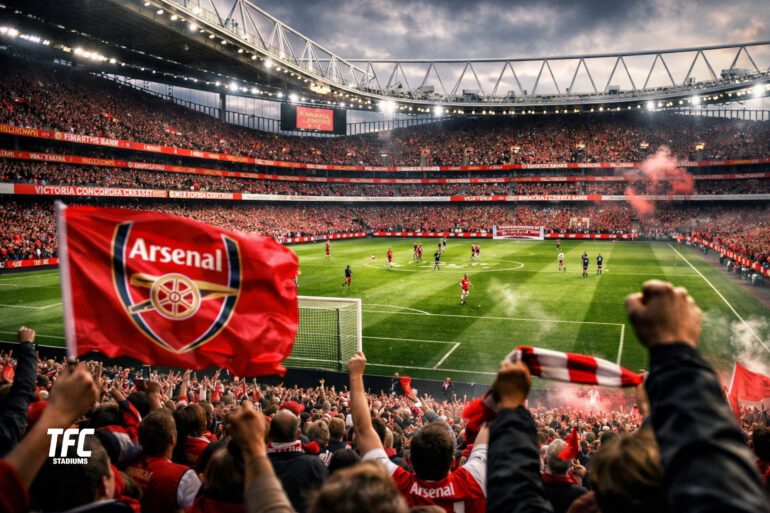
When Emirates Stadium opened in 2006, it looked calm and assured, a sleek replacement for Highbury that promised a bigger future. The road to get there was anything but smooth. Arsenal were not just building a stadium, they were relocating their entire footballing identity a few hundred metres north into a tight urban site, under heavy financial pressure, while trying to stay competitive on the pitch.
Land acquisition and location constraints
The Ashburton Grove site was a patchwork of industrial units, railway land, waste facilities, and small businesses. Acquiring it took years of negotiation and compulsory purchase orders. The location came with limits that shaped every design decision.
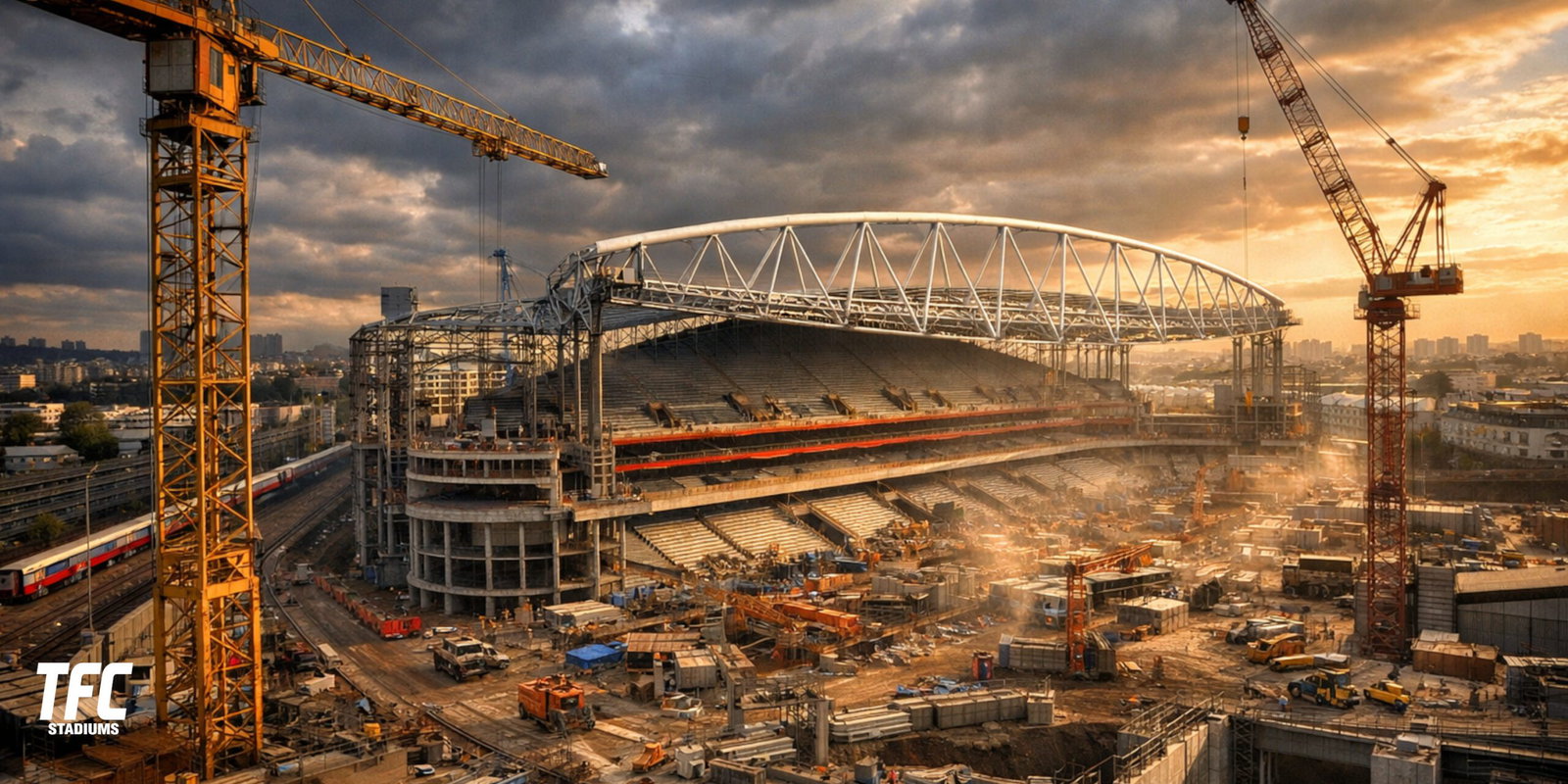
The stadium sits hemmed in by railway lines on two sides and residential streets on the others. This ruled out large-scale expansion later and forced a compact, vertical design. Construction logistics were awkward too. Materials had to be delivered through narrow access routes, often at restricted hours, which slowed progress and increased costs.
Engineering challenges on a confined site
Building a 60,000-seat stadium in a dense part of north London demanded precision rather than brute force. The roof structure was one of the trickiest elements. It had to be light enough to avoid overloading foundations while still covering the stands without columns blocking views.
Ground conditions added another complication. Parts of the site required deep piling to ensure stability, especially close to the railway lines. Any ground movement risked delays or legal disputes with transport authorities.
Key engineering facts
| Feature | Detail |
|---|---|
| Roof type | Steel truss with polycarbonate panels |
| Max roof span | Approx. 120 metres |
| Construction method | Phased build to limit disruption |
| Proximity to rail lines | Less than 10 metres in places |
Financing the project without breaking the club
The biggest challenge was not concrete or steel, it was money. Arsenal funded the project largely through loans secured against future stadium revenues and property development at Highbury.
This approach worked, but it came at a cost. Transfer budgets tightened dramatically for several seasons. Supporters felt it in the league table, even if the club stayed competitive.
Emirates Stadium finances at a glance
| Category | Approximate figure |
|---|---|
| Total project cost | £390 million |
| Stadium construction | £260 million |
| Financing method | Long-term loans and bonds |
| Opening year | 2006 |
The financial discipline required to service this debt shaped Arsenal’s strategy for nearly a decade. It is hard to think of another English club that built a stadium of this scale without a billionaire owner underwriting the risk.
Planning, community, and political hurdles
Local opposition was not insignificant. Concerns ranged from noise and traffic to the loss of industrial jobs. Arsenal had to commit to community investment, transport improvements, and local employment guarantees to secure planning approval.
Matchday crowd management was another sensitive point. Transport links needed upgrades, particularly Holloway Road station, which remains closed on matchdays due to safety concerns. These compromises are part of the stadium’s everyday reality.
Construction timeline
The schedule was tight and unforgiving. Any serious delay would have pushed the club into another season at Highbury, with major financial consequences.
| Year | Milestone |
|---|---|
| 1999 | Ashburton Grove identified |
| 2002 | Planning permission granted |
| 2004 | Major construction begins |
| 2006 | Stadium opens for the season |
Finishing on time was an achievement in itself, even if it left little margin for error elsewhere.
Early issues after opening
The first seasons revealed minor problems. The pitch drainage required adjustment, acoustics felt flat compared to Highbury, and some sightlines drew criticism. None were structural failures, but they fed the narrative that the Emirates lacked soul.
Over time, incremental changes to seating, banners, and acoustics softened those edges. Stadiums, like teams, take time to grow into themselves.
Where to buy tickets for Emirates Stadium
Tickets are primarily sold through Arsenal FC directly.
The official club website is the safest route, especially for league matches. Membership is usually required, with ballots used for high-demand fixtures.
Authorised resale platforms operate for season ticket holders, allowing fans to purchase returned seats at face value. Hospitality packages are available through official partners and include premium seating and dining options.
Avoid unofficial sellers advertising below-market prices. If it looks generous, it usually is not legitimate.
TFC Takeaway
Emirates Stadium is often judged on atmosphere or trophies, but its backstory deserves more credit. It was built under financial strain, on a restrictive site, and without external rescue money. Those choices shaped Arsenal’s modern era, for better and worse.
The stadium stands as proof that infrastructure decisions echo for decades. Every chant, every ticket sale, and every transfer budget still carries the imprint of the construction challenges faced in the early 2000s.
About the Author