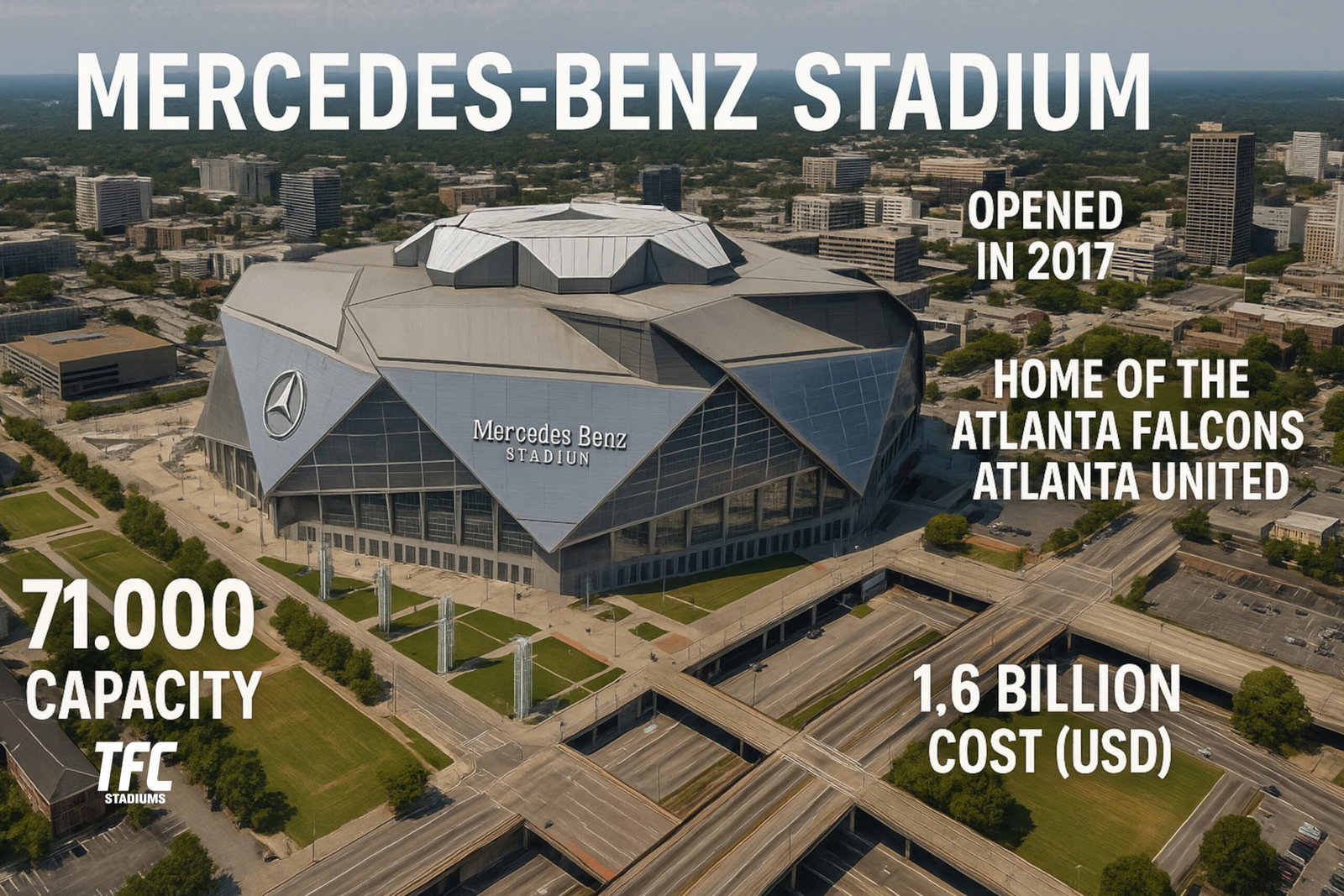
Mercedes-Benz Stadium in Atlanta, Georgia, is not just the home of the NFL’s Atlanta Falcons and MLS’s Atlanta United. It stands as one of the most technologically advanced and architecturally ambitious stadiums anywhere in the world. Since opening in 2017, it has set new standards for fan experience, sustainability, and design. Below are the facts and figures that underline its status as a world-class venue.
Seating Capacity and Flexibility
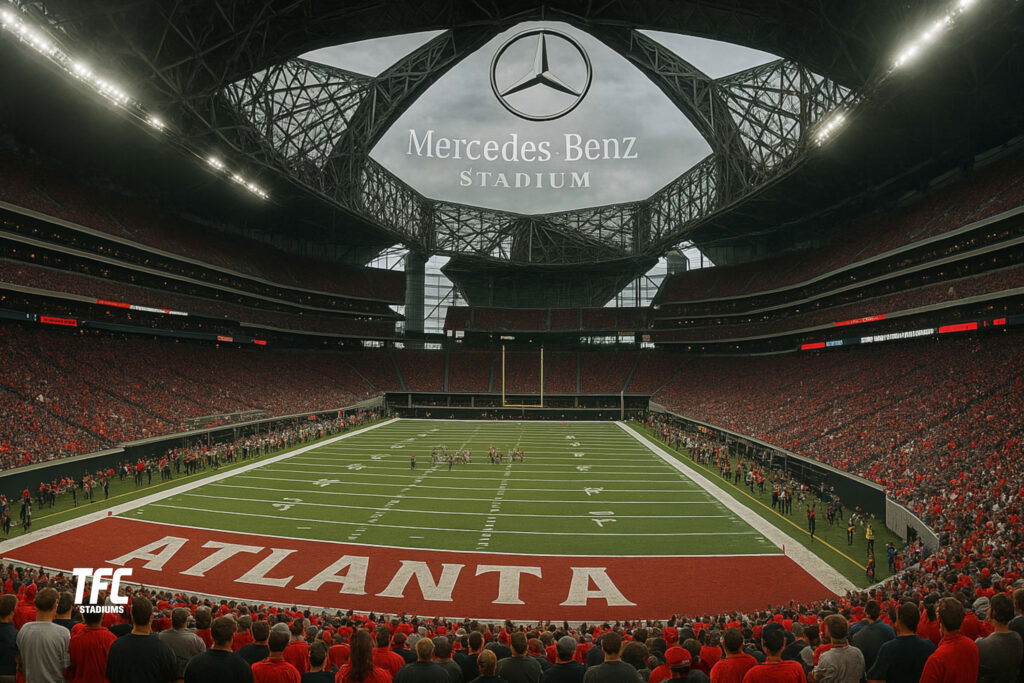
- Capacity for NFL games: Approximately 71,000, expandable to 75,000 for special events.
- MLS matches: Typically set at 42,500, but expandable to over 70,000 when demand requires.
- Maximum capacity: Can be increased to 83,000 for major events such as Super Bowl LIII and major concerts.
This flexibility allows the stadium to cater to a wide range of audiences without compromising comfort or visibility.
Record Attendance
- NFL: A record of 75,453 fans attended the 2022 NFC Championship Game.
- MLS: Atlanta United holds multiple MLS attendance records, with regular season crowds topping 70,000 on several occasions.
- Concerts and other events: Beyoncé, Taylor Swift, and others have drawn massive crowds, confirming the stadium’s appeal beyond sports.
Architectural Design
- Retractable roof: A unique eight-panel design inspired by the oculus of the Roman Pantheon. It opens and closes like a camera shutter and takes around 12 minutes to fully operate.
- Halo board: The 360-degree, 63,000-square-foot LED screen is the largest of its kind in the world.
- Window to the City: A massive glass wall facing downtown Atlanta provides stunning views and natural light, a rare feature for an indoor stadium.
The stadium’s architecture balances grandeur with practicality, allowing both day and night events to shine.
Sustainability and LEED Certification

- First professional sports stadium to achieve LEED Platinum certification.
- Water conservation: 47% reduction in potable water use compared to similar venues.
- Energy efficiency: Uses 29% less energy than a typical stadium of its size.
- Renewable energy: 4,000 solar panels installed on-site.
- Alternative transportation: Over 680 bicycle racks and connections to public transit encourage greener access.
Mercedes-Benz Stadium leads the way in environmental design, setting a benchmark for future builds.
Fan Experience and Innovation
- Fan-friendly pricing: Known for “Fan First” food pricing, with items such as hot dogs, pretzels, and soft drinks priced well below the league average.
- Wi-Fi capacity: Over 2,000 access points ensure smooth internet for more than 70,000 simultaneous users.
- Mobile-first: Fully integrated app-based entry, food ordering, and real-time seat upgrades.
This approach places the fan at the centre of the experience without sacrificing efficiency or scale.
Hosting Global Events
- Super Bowl LIII (2019): Hosted one of the most tightly contested Super Bowls in recent memory.
- College Football Playoff National Championship (2018): Alabama vs. Georgia drew over 77,000.
- 2026 FIFA World Cup: Selected as a host venue, reflecting its international standing.
- Annual Peach Bowl and SEC Championship Game: Consistently attracts top-tier college football talent.
Its ability to draw global events makes it one of the most in-demand stadiums in North America.
Construction and Investment
- Cost: Estimated $1.6 billion.
- Developer: Georgia World Congress Center Authority in partnership with AMB Group.
- Timeframe: Broke ground in 2014 and opened in August 2017.
The scale of investment reflects the ambition behind the project and the desire to create something that would stand apart.
TFC Takeaway
Mercedes-Benz Stadium combines innovation, sustainability, and scale in a way few other stadiums can match. Whether it is the retractable roof, the massive halo board, or the commitment to affordable fan experience, the stadium doesn’t just meet expectations. It reshapes them. With its ability to host global sporting events, major concerts, and community initiatives, it more than earns its place among the world’s elite venues.
About the Author