A ground built for a modern Derby
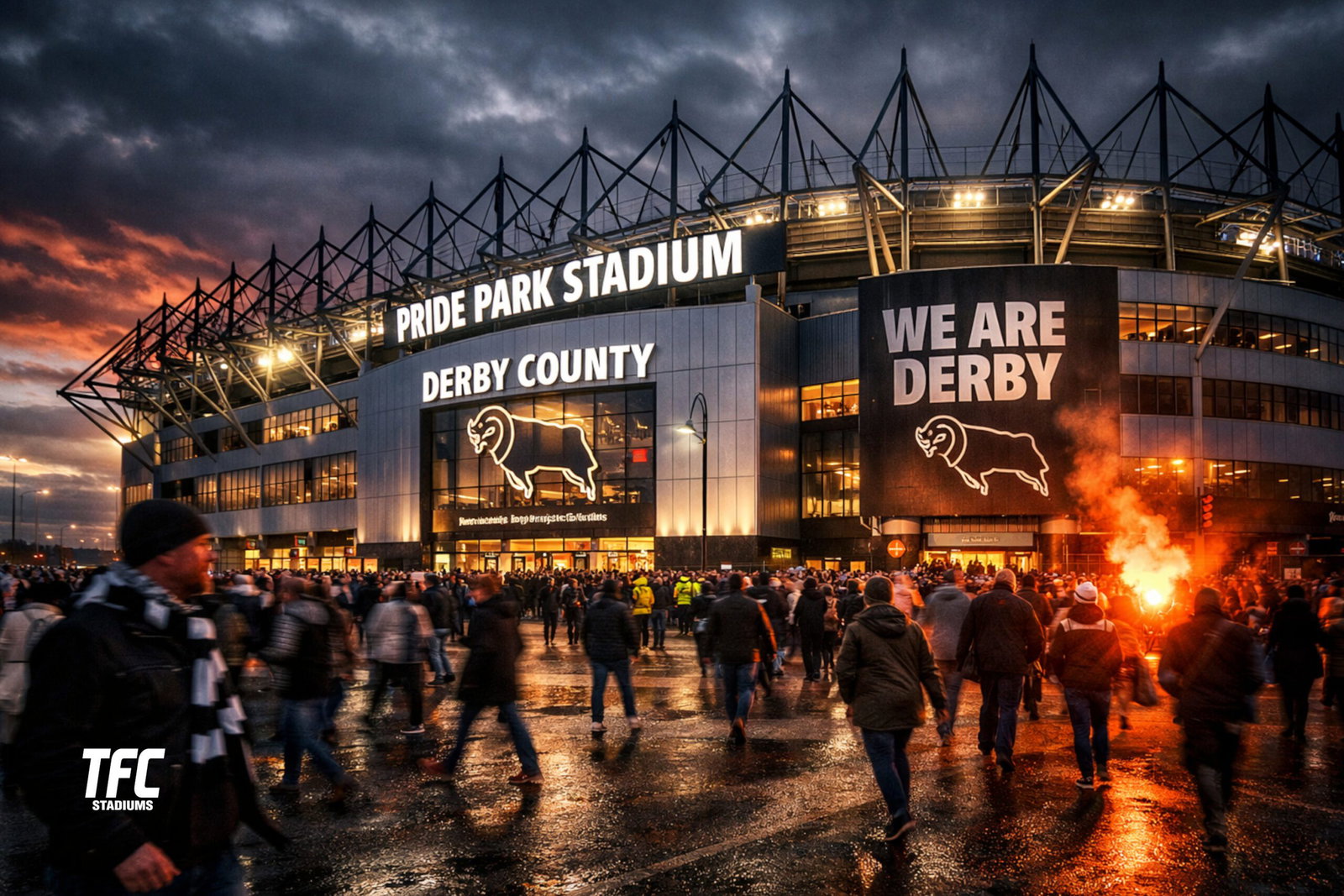
Pride Park Stadium opened in 1997 and marked a clean break from the Baseball Ground era. With a capacity just over 33,000, it was designed to meet Premier League standards from day one. The bowl shape keeps fans close to the pitch, which helps noise travel when the mood turns serious. It feels purposeful rather than flashy, very Derby in that sense.
Matchdays feel different here
Pride Park does not rely on spectacle. It leans on anticipation. The walk from the city, the sightlines opening up as you approach, and the tight concourses all add to a sense that something matters. When the stands fill, the sound tends to roll rather than spike, especially during big league fixtures and play off nights.
Home of Derby County through highs and lows
Few modern stadiums have seen such emotional swings in a short lifespan. Promotion pushes, relegation battles, administration, and revival have all played out here. Pride Park has hosted Premier League football, Championship marathons, and League One rebuilds, often with crowds that stayed loyal regardless of the division.
Capacity that suits the club’s identity
At roughly 33,600 seats, Pride Park avoids the half empty feel that plagues some larger grounds. Average attendances have often pushed past 25,000 even outside the top flight. During promotion seasons, utilisation regularly climbs above 85 percent, which keeps the atmosphere dense and reactive.
Sightlines and acoustics do the heavy lifting
The four stand layout offers clean views from almost every block. The South Stand, traditionally the loudest, feeds noise across the pitch rather than straight up into the air. It is not the loudest stadium in England, but it is one where chants carry with surprising clarity when the crowd is engaged.
Derby’s great rivalries live on here
Pride Park inherited the emotional weight of fixtures against old enemies and added a modern edge. Matches against Nottingham Forest and Leicester City have produced some of the stadium’s most intense atmospheres, particularly in league defining seasons.
Selected head to head league records at Pride Park
| Opponent | Home games | Derby wins | Draws | Losses | Goals for | Goals against |
|---|---|---|---|---|---|---|
| Nottingham Forest | 12 | 6 | 3 | 3 | 18 | 13 |
| Leicester City | 14 | 5 | 5 | 4 | 17 | 16 |
| Leeds United | 10 | 4 | 3 | 3 | 12 | 11 |
Figures reflect league matches since Pride Park opened.
Big moments suit the stage
Play off semi finals, survival deciders, and promotion clinchers tend to feel amplified here. The stadium does not overwhelm players, but it does tighten the space. Visiting teams often comment on how close the stands feel when Derby are pressing late in a game.
Location and access shape the day
Set just outside the city centre, Pride Park benefits from strong rail links and manageable road access. On sell out days, congestion builds quickly, but the layout disperses crowds well after full time. The surrounding area is functional rather than scenic, though most fans accept that trade off for convenience.
Hospitality without losing the football feel
Corporate areas exist but do not dominate the ground. Boxes and lounges sit back from the main seating, which preserves a traditional crowd profile. This balance keeps the noise coming from all sides rather than being swallowed by premium spaces.
A stadium that reflects Derby itself
Pride Park is not trying to impress tourists. It serves its club first. That honesty is part of the appeal. It has aged well because it was never chasing trends. For Derby supporters, it feels earned rather than inherited, a place shaped by results, resilience, and memory rather than marketing.
TFC Takeaway
Nearly three decades on, Pride Park Stadium stands as proof that modern does not have to mean soulless. It carries the scars and celebrations of recent football history while remaining adaptable for whatever comes next. For Derby County fans, it is not just where they watch football. It is where they measure progress.
About the Author