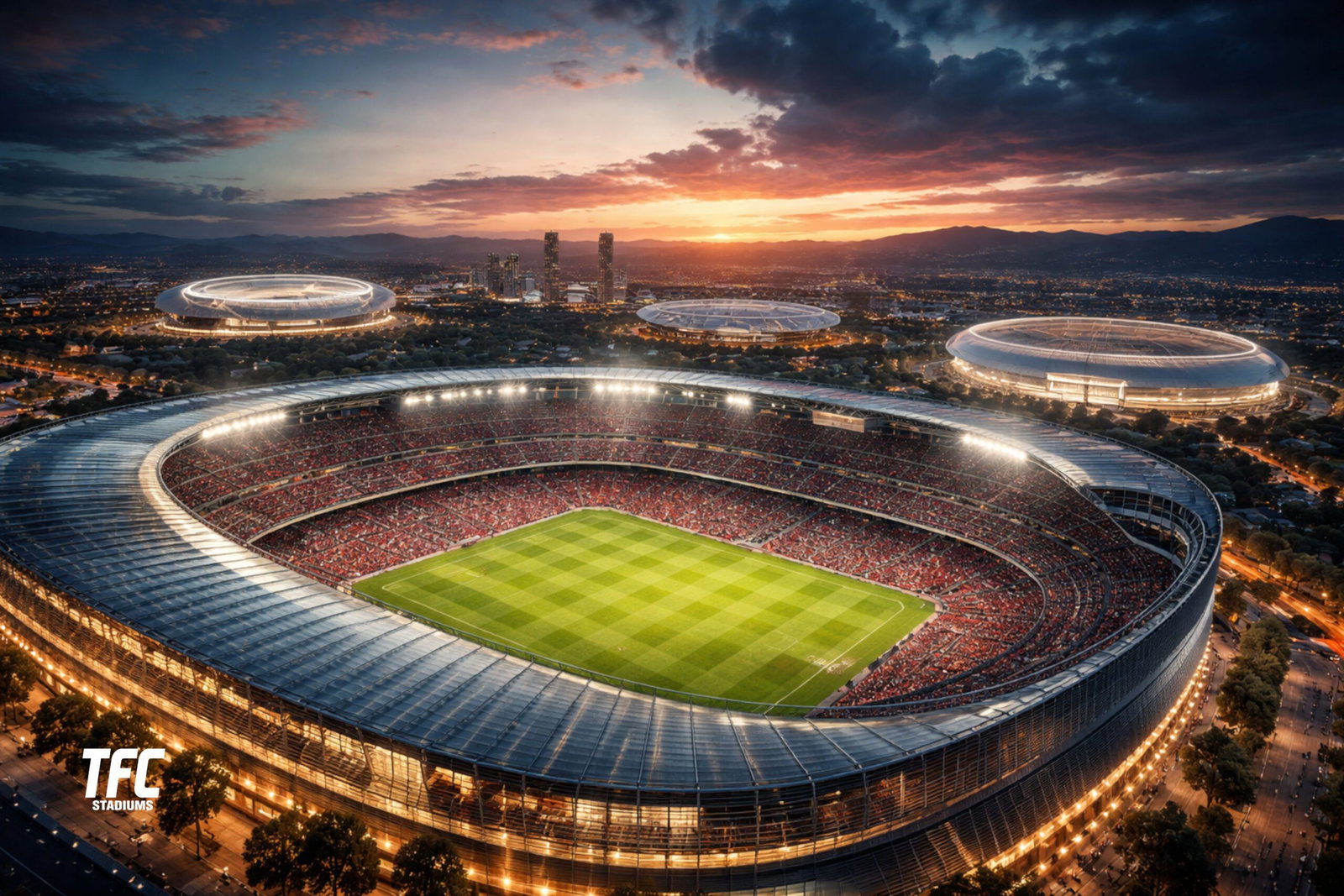
The New Generation of European Football Stadiums
Across Europe, a new cycle of stadium construction is finally moving from concept art to concrete. Some projects are completing long-delayed rebuilds, others are redefining scale and ambition, and a few are quietly reshaping regional football without global headlines. What links them all is a shift toward sustainability, revenue resilience, and stadiums designed to function every day of the year rather than once a fortnight.
This article looks at the most notable future and in-progress European stadiums, focusing on realistic delivery, updated capacities, and what these projects actually mean for clubs and supporters.
Stadiums Under Construction or Approaching Completion
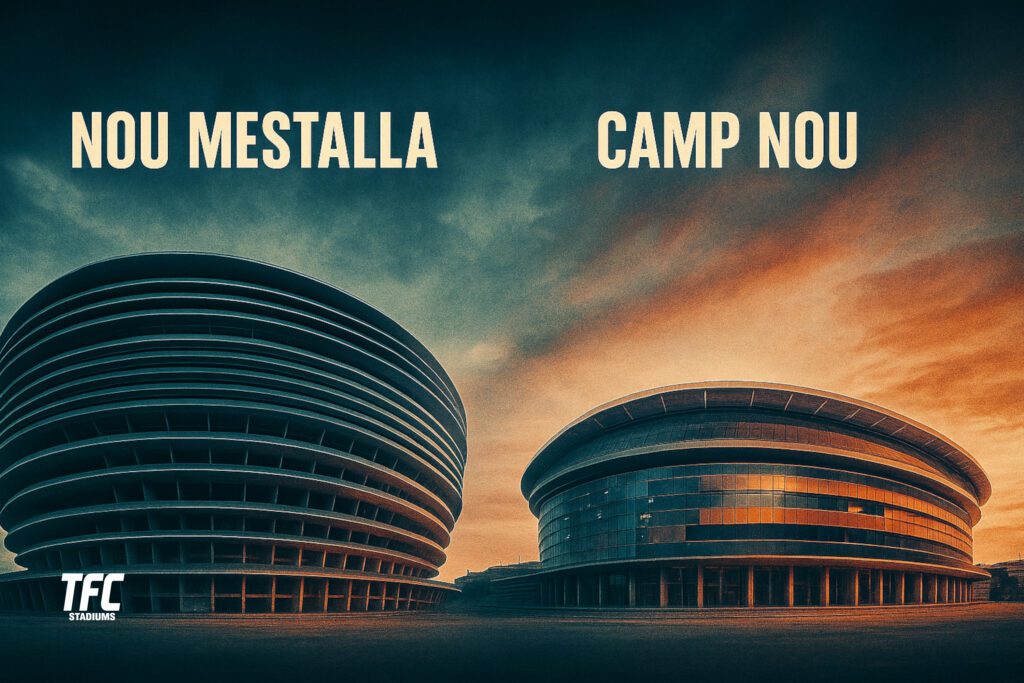
Spotify Camp Nou remains the most complex stadium redevelopment currently underway in Europe. Barcelona’s phased rebuild is designed to preserve matchday operations while transforming the venue into a modern, high-yield arena. Capacity is projected to reach roughly 105,000 seats, with improved sightlines, expanded hospitality, and a continuous roof structure that integrates solar generation. Completion is expected in stages through 2025 and 2026, with full functionality following shortly after.
Nou Mestalla is finally moving forward after more than a decade of stagnation. Construction resumed following renegotiated financing and a revised delivery schedule. The finished stadium is expected to seat around 70,000, giving Valencia one of the largest club venues in Spain. The new design prioritises proximity to the pitch, premium seating, and commercial spaces aimed at stabilising the club’s long-term finances.
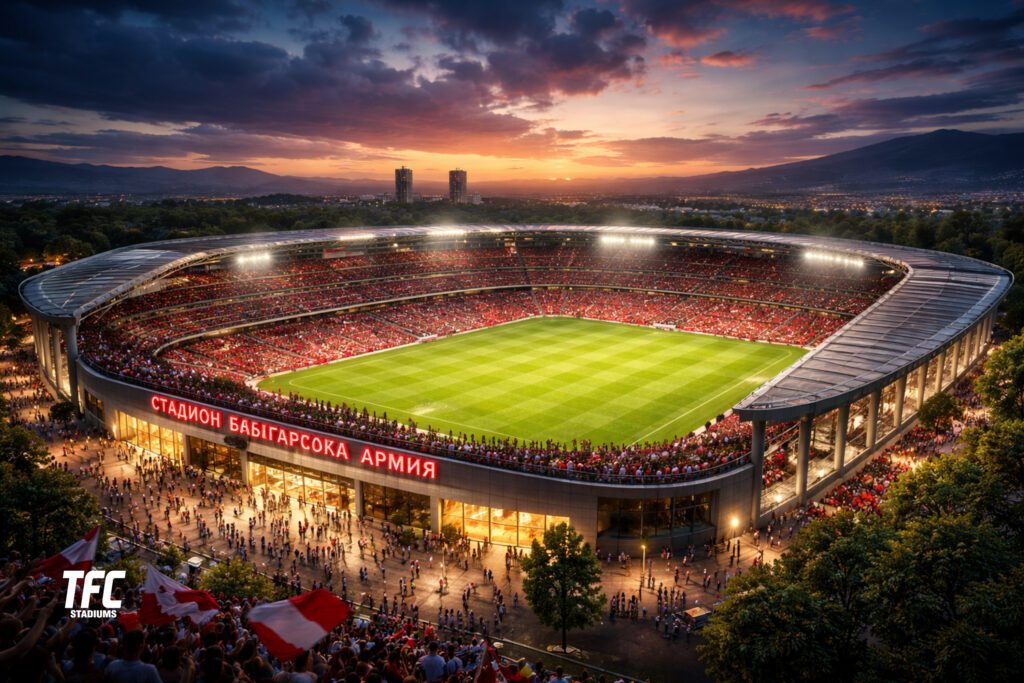
Stadion Balgarska Armia represents a different kind of modernisation. Built to UEFA Category 4 standards, the new stadium for CSKA Sofia will hold roughly 18,500 spectators. The emphasis is on compactness, acoustics, and atmosphere rather than sheer size, reflecting a broader trend in Eastern Europe toward efficient, regulation-ready stadiums.
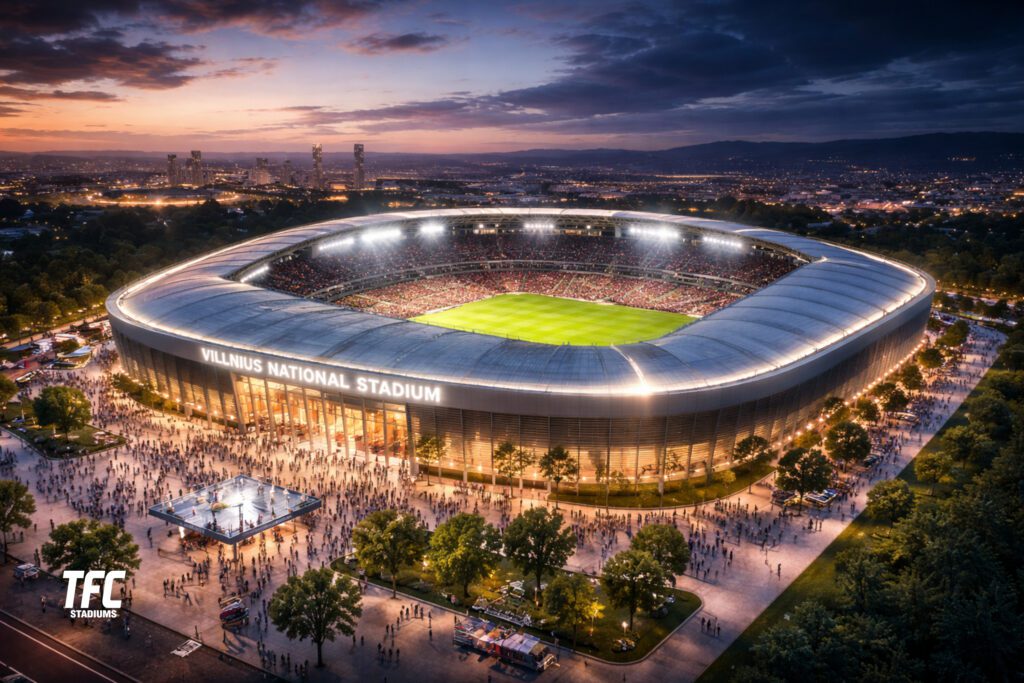
Vilnius National Stadium has undergone several redesigns, with the current plan settling at just under 20,000 seats. The project aims to serve football, athletics, and national events, with a focus on public accessibility and mixed-use facilities. After decades of false starts, the latest iteration is structured around realistic funding and phased delivery.
Heroes of Timișoara Arena is a smaller but telling example of modern stadium thinking. With a capacity slightly above 10,000, it prioritises local engagement, reduced operating costs, and flexible community use. Completion is targeted for 2026.
Current Construction Snapshot
| Stadium | Location | Capacity | Expected Completion | Strategic Focus |
|---|---|---|---|---|
| Spotify Camp Nou | Barcelona, Spain | ~105,000 | 2025–26 | Global flagship, year-round revenue |
| Nou Mestalla | Valencia, Spain | ~70,000 | 2026 | Financial reset, modern matchday |
| Stadion Balgarska Armia | Sofia, Bulgaria | ~18,500 | 2026 | UEFA compliance, atmosphere |
| Vilnius National Stadium | Vilnius, Lithuania | ~19,000 | TBC | Multi-sport national venue |
| Heroes of Timișoara Arena | Timișoara, Romania | ~10,000 | 2026 | Community-first design |
Proposed Mega Projects and Radical Redesigns
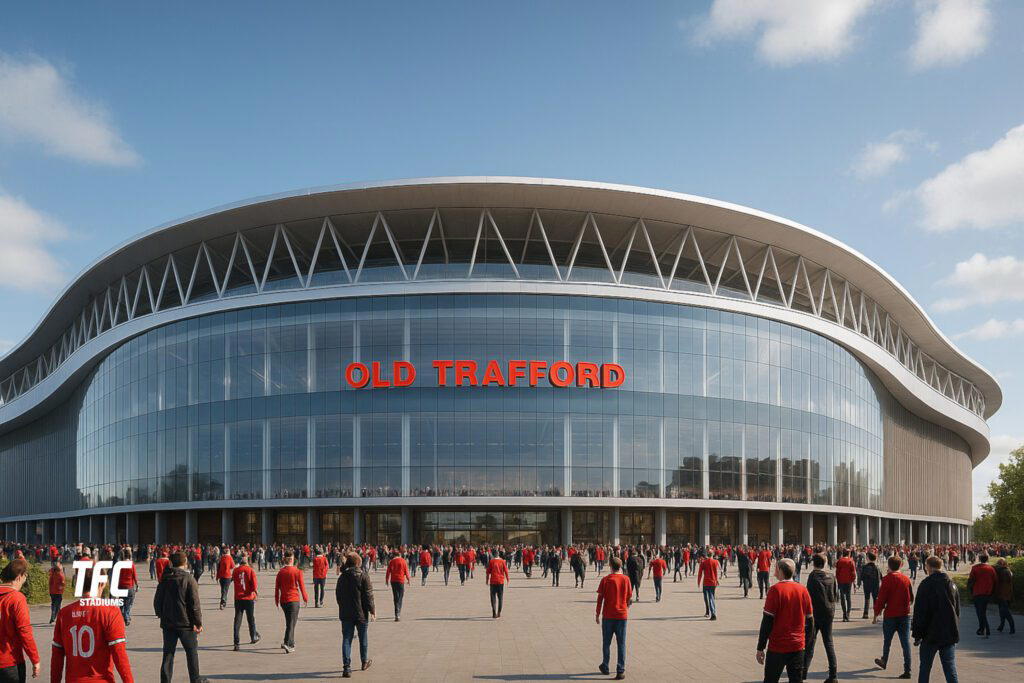
Manchester United New Stadium is the most ambitious stadium proposal currently on the table in Europe. Planned to exceed 100,000 seats, the project would eclipse Wembley as the UK’s largest football ground. The concept centres on a new build adjacent to Old Trafford, paired with large-scale urban regeneration. While timelines suggest completion around the early 2030s, financial structure and supporter impact remain under scrutiny.

San Siro Replacement continues to generate debate. AC Milan and Inter are aligned on replacing the existing stadium with a modern shared venue that better reflects contemporary revenue models. The proposal includes partial demolition of the current structure and construction of a new multi-use arena nearby. Political approval and heritage concerns remain the key obstacles.
Estádio da Luz Redevelopment has been discussed publicly as a long-term ambition rather than an active project. Concepts include a major capacity increase and integrated indoor sports facilities. At present, this remains speculative, but it signals how Europe’s biggest clubs are thinking far beyond simple stand expansions.
What These Stadiums Tell Us About Modern Football
Several clear patterns emerge across these projects.
Capacity alone is no longer the primary goal. Many clubs are targeting the right size rather than the biggest possible size, balancing demand with atmosphere and operating costs.
Revenue resilience matters more than spectacle. Hospitality zones, conference facilities, retail, and public plazas are now central to stadium planning, not optional extras.
Sustainability has moved from branding exercise to infrastructure requirement. Solar roofing, rainwater reuse, and energy-efficient materials are becoming standard rather than novel.
Urban integration is no longer negotiable. Stadiums are increasingly tied to transport hubs, housing projects, and public spaces, reflecting pressure from cities and planning authorities.
Tournament Pressure and Infrastructure Readiness
Upcoming international tournaments continue to influence stadium planning. Host nations are favouring venues that already meet broadcast, accessibility, and security requirements rather than speculative builds. This has encouraged upgrades and redevelopments instead of entirely new stadiums in some markets, while accelerating long-delayed projects in others.
The Road Ahead
European stadium development is entering a more disciplined phase. Grand visions still exist, but delivery schedules, financing models, and post-matchday usage are now under sharper scrutiny than ever. The stadiums that succeed will not just look impressive on opening day. They will still make sense twenty years later.
About the Author